

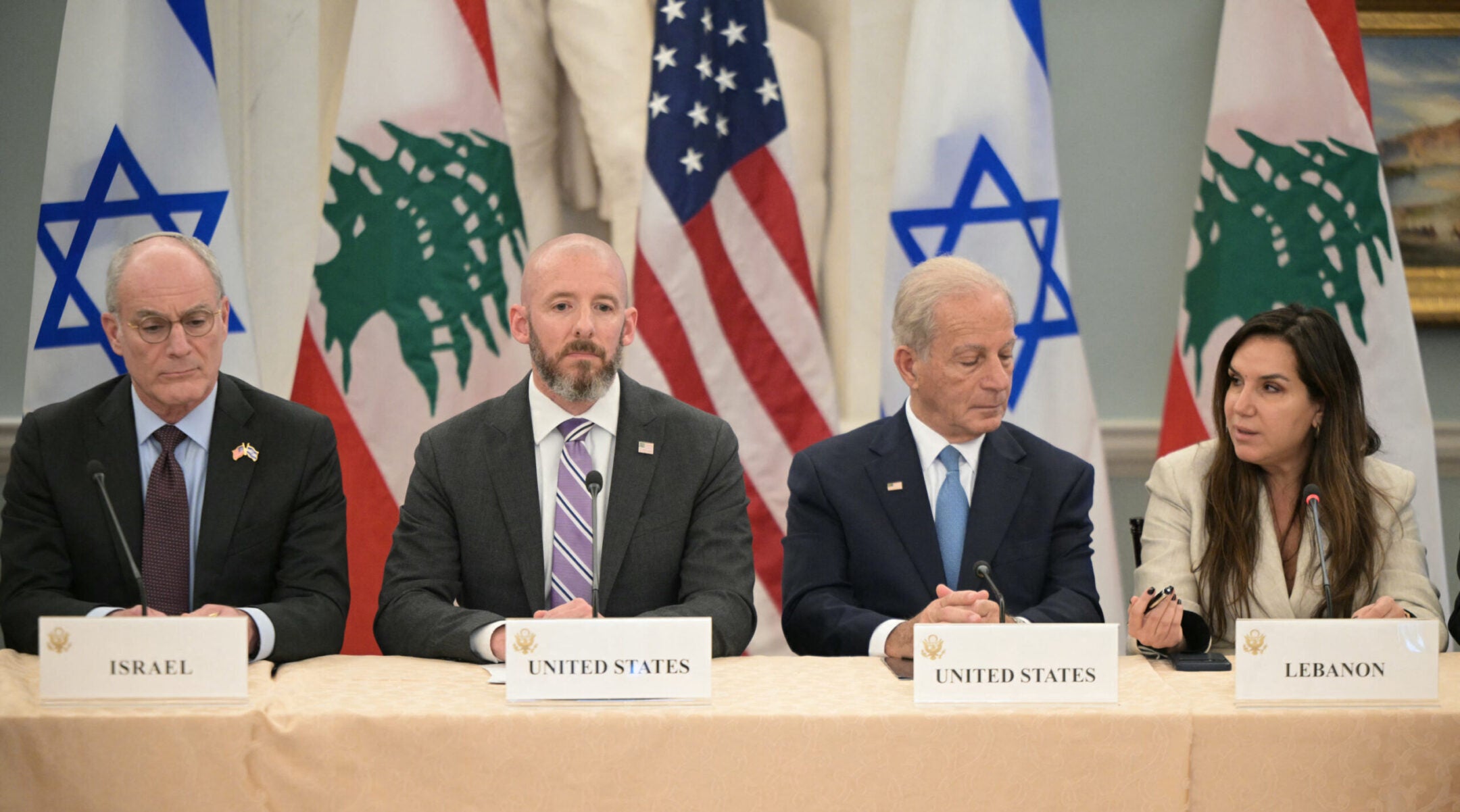
Hezbollah appears to have rejected a ceasefire that the United States brokered between Israel and Lebanon, where the Iranian proxy is based.
The deal reportedly would have allowed Israel to remain in southern Lebanon, where it has established a buffer zone, but not permit any attacks in Beirut unless Hezbollah attacked Israel within its own borders. It would also have required Hezbollah fighters to leave the buffer zone.
A top Hezbollah leader said accepting a demand to leave southern Lebanon would amount to “surrender” for the group.
“What we are concerned about is an end to the aggression, ceasefire and Israel’s withdrawal,” Secretary-General Naim Qassem said in a televised statement on Thursday, the Associated Press reported. “We did not make any commitment to any party to stop resisting as long as there is occupation.”
Dozens of Israeli soldiers have died in the fighting, which Hezbollah is increasingly prosecuting with the use of drones.
The rejection comes as the U.S. House of Representatives voted to rebuke President Donald Trump and his war on Iran on Wednesday, narrowly passing a resolution that limits Trump’s power to continue the war without congressional approval.
Four Republicans voted with Democrats on the bill, in a sign of how opposition to the war, which Trump launched jointly with Israel in February, is crossing party lines ahead of high-stakes midterm elections in the United States.
The bill would not require presidential signoff but is seen as unlikely to substantively change Trump’s handling of the war, which he has insisted does not require congressional approval.
Trump called the vote “meaningless” in a post on Truth Social on Thursday morning.
“Yesterday, in a meaningless vote, the House voted, 4 bad Republicans and all of the Dumocrats, to limit my War Powers, right in the middle of my final negotiations to end the War with the Islamic Republic of Iran,” he wrote. “Who would do such an unpatriotic thing.”
The bill now goes to the Senate, where a similar measure has advanced in recent weeks, also with support from a handful of Republicans. It comes at a delicate time, as an uncertain ceasefire struck in early April has now stretched on without a resolution for longer than active hostilities unfolded. Trump has failed to achieve the terms for a deal to permanently end the war that he said he wanted, and this week said he thought the constant negotiations had grown “very boring.” Hezbollah’s apparent rejection of a ceasefire deal is another setback.
Iran has continued to battle during its ceasefire with the United States, though not against Israel: On Wednesday, it struck Kuwait’s main airport, killing one and injuring 60.
Also on Wednesday, Trump confirmed reports that he had called Israeli Prime Minister Benjamin Netanyahu “f—ing crazy” during a call on Monday in which Trump pressed Netanyahu to strike a ceasefire with Hezbollah, Iran’s proxy in Lebanon. Trump told a New York Post podcast that he was “a little perturbed at his constantly fighting with Lebanon” but that he liked Netanyahu and worked well with him.
Reporting the stories that define our era. When history unfolds in real-time, the Jewish world turns to (JEWISH REVIEW). Your support ensures we can document the complexities of war and the resilience of Jewish communities with integrity.