
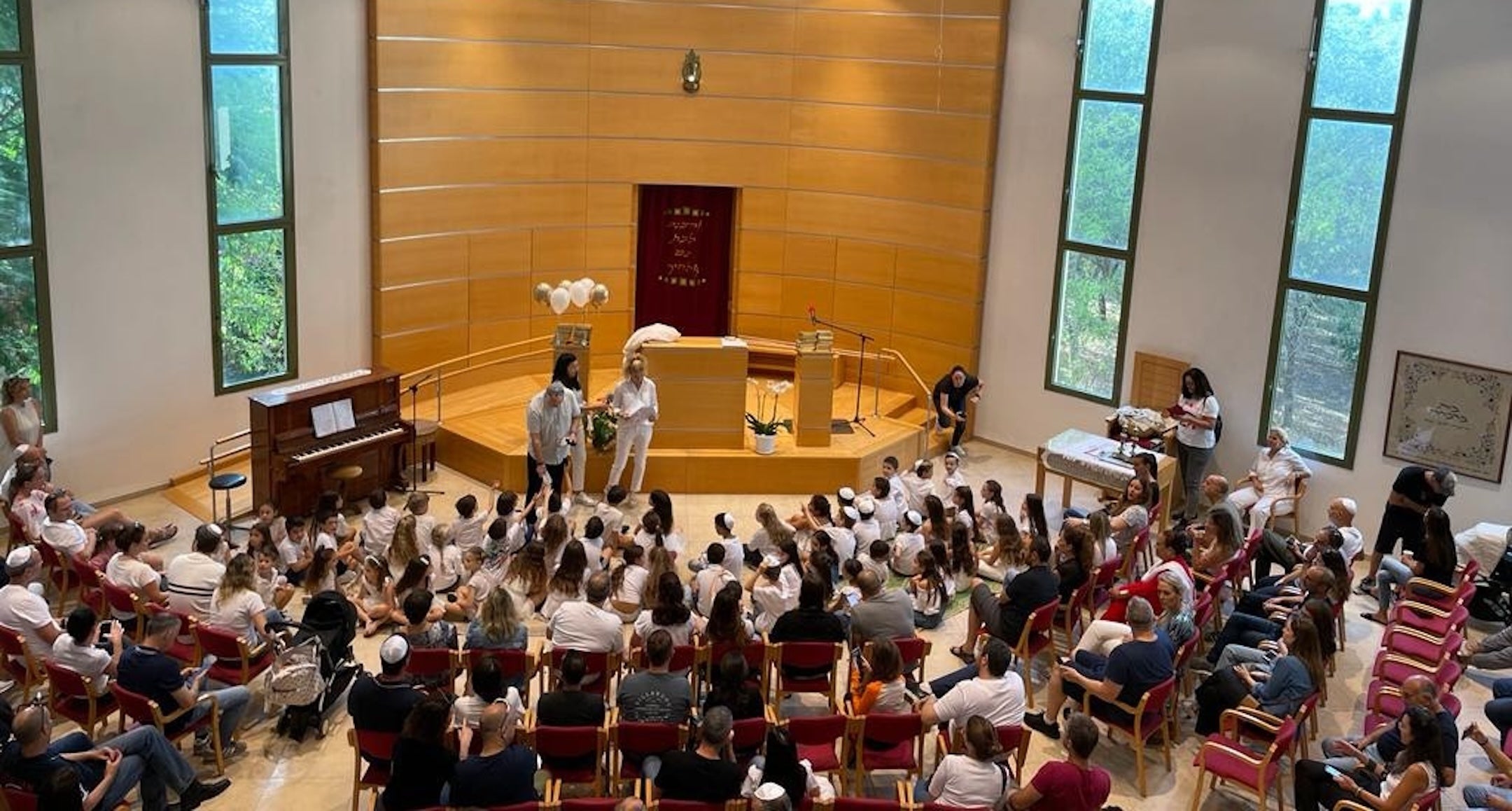
TEL AVIV – A window was broken at a Reform synagogue on Sunday in the central Israeli city of Ramat Hasharon less than two weeks after a similar incident occurred in Jerusalem in an incident the mayor called an act of vandalism.
Congregation Darchei Noam called the incident a hate crime, and Ramat Hasharon Mayor Itzik Rochberger condemned the incident and called for police investigation.
Police said the damage was most likely caused by rocks thrown at the building during the night but said the motive remained under investigation.
Rabbi Eli Levin, who leads Darchei Noam, said a heavy paving stone had been used to smash the window.
“This wasn’t children playing and a stone accidentally being thrown,” Levin told (JEWISH REVIEW).
The incident came just over a week after vandals broke into Kol HaNeshama, a prominent Reform synagogue in Jerusalem’s Baka neighborhood. In that occurrence, a group of youths smashed a window, entered the prayer hall, damaged artwork and tore down Pride flags displayed by the congregation. No worshippers were present at the time. Police opened an investigation but have not publicly announced any arrests.
“The smashing of the windows tonight at the Reform synagogue in the city is a serious act of vandalism and we will not let it pass without response,” Rochberger said, calling on police to thoroughly investigate the attack and bring those responsible to justice.
He added that Ramat Hasharon was committed to “freedom, tolerance, pluralism and coexistence” between religious and secular residents and said the city would not allow extremists to intimidate residents or damage the fabric of communal life.
“We will stand together against any attempt to harm the character of Ramat Hasharon and the values on which it is founded,” Rochberger said.
Democrats MK Gilad Kariv, a Reform rabbi who previously headed Israel’s Reform movement, linked the attack to recent violence against Reform congregations, businesses operating on Shabbat and anti-government protesters.
“They will smash and break – we will repair and build,” he wrote on X.
Darchei Noam was founded in Ramat Hasharon in 1981 and serves residents of that city, Herzliya and northern Tel Aviv. The congregation holds egalitarian services in which women and men participate equally and also runs educational programs, bar and bat mitzvah preparation and community volunteer activities, according to its website.
The congregation spent years fighting for the right to build a permanent synagogue. After the municipality declined to allocate land to a non-Orthodox congregation, the dispute ultimately reached Israel’s High Court of Justice, which ruled that the community could receive a plot.
Darchei Noam said it would hold its regular Friday night service as planned and called on supporters to attend in a show of solidarity following the attack.
“We will continue and we will not be deterred,” Levin said. “We will continue to hold egalitarian ceremonies and celebrate the holidays in our Jewish-Israeli way.”
The incident came as Ramat Hasharon and nearby Herzliya have been locked in disputes over businesses operating on Shabbat. In June, a Tel Aviv court dismissed a petition seeking to force the Ramat Hasharon municipality to enforce its existing Shabbat closure bylaw at the BIG Fashion Glilot shopping complex after the city pledged to apply the law under a new enforcement policy.
The municipality has simultaneously sought Interior Ministry approval to amend the decades-old bylaw to permit businesses to open on Saturdays in designated areas. Rochberger has repeatedly defended that effort, saying Ramat Hasharon should remain pluralistic and protect both freedom of religion and freedom from religion.
Just a few hundred meters away from the synagogue, businesses in the Neve Israel neighborhood of Herzliya have repeatedly been vandalized after opening on Shabbat. The local Othello ice cream shop was attacked three times before its owners stopped opening on Saturdays, citing safety concerns, while the windows of the nearby Pasta Basta restaurant were smashed in late July. Pasta Basta continued operating on Shabbat.
Herzliya Mayor Yariv Fisher has urged residents to support businesses that remained open on Saturdays.
“This will only spur me to keep working day and night to ensure that Herzliya remains a beacon of liberalism,” Fisher wrote on Facebook. “I invite the public to support all the city’s restaurants, entertainment businesses and cafes.”
Jerusalem has seen a parallel fight over Shabbat commerce in recent weeks. Cafe Basimta, near the Mahane Yehuda market, has faced weekly demonstrations by haredi Orthodox protesters since early July over its decision to remain open on Saturdays. Police have been deployed repeatedly at the site as protesters and counterprotesters faced off. A 75-year-old woman was arrested this month on suspicion of repeatedly vandalizing the cafe by damaging its lock and throwing garbage at the premises.
As the Year Turns, Support the Journalism You Trust. (JEWISH REVIEW) covers the stories shaping Jewish life around the world — with the depth this moment calls for. As you reflect on the year ahead, consider a gift that keeps independent Jewish journalism strong.