

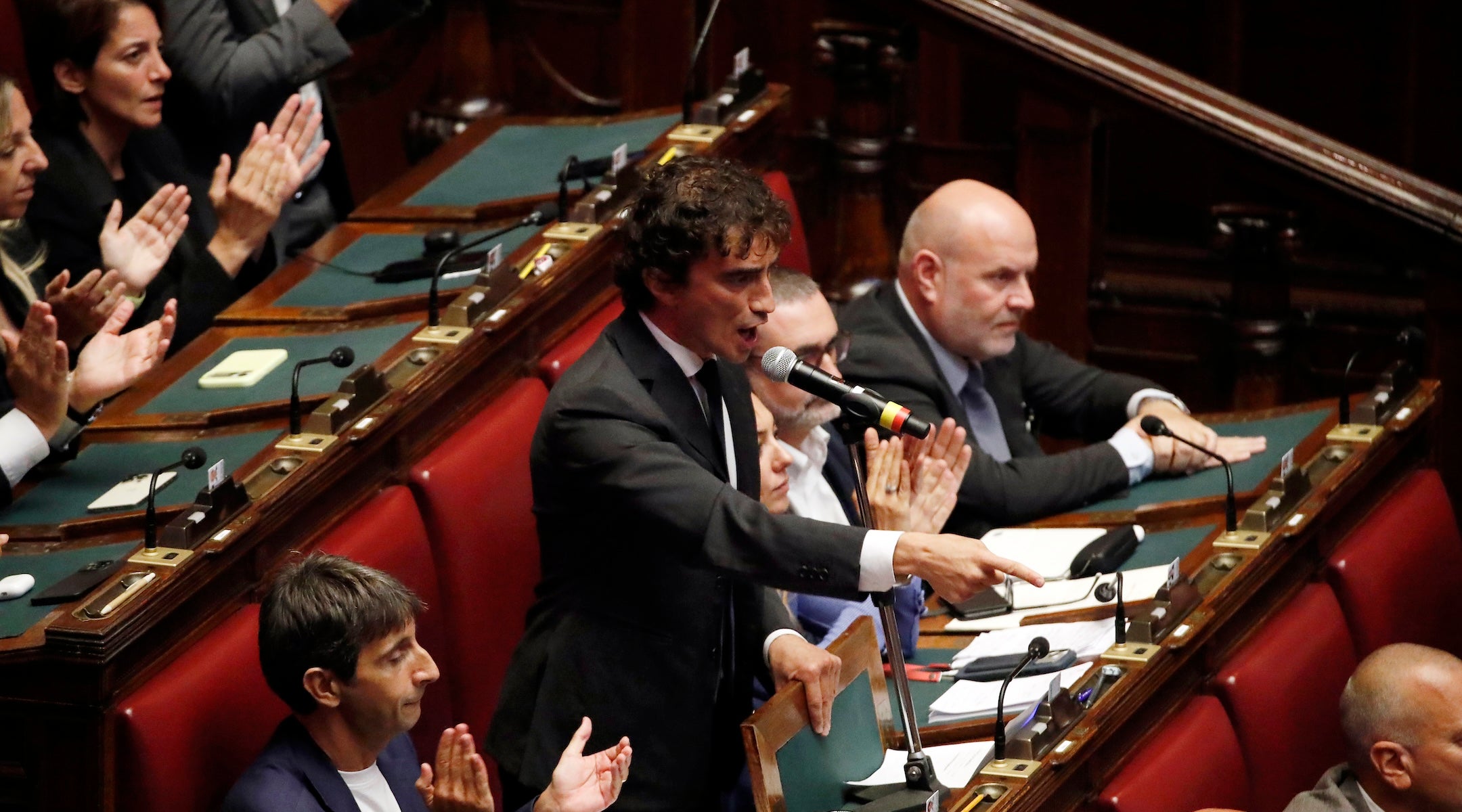
Italy has passed a bill aimed at combating antisemitism, prompting backlash from opponents who say that it could restrict criticism of Israel.
The legislation, which enshrined a contentious definition of antisemitism, was approved on Tuesday in the Italian parliament’s lower house. It received 147 votes, with 93 lawmakers against it and five abstaining.
The measure incorporates a working definition of antisemitism from the International Holocaust Remembrance Alliance (IHRA) into national law. This definition is supported by many mainstream Jewish organizations and has been adopted or endorsed by 48 countries, though many have not made it legally binding.
Opponents say the definition conflates antisemitism with some forms of Israel criticism. The IHRA framework lists contemporary examples of antisemitism that include denying Jewish people the right to self-determination, calling Israel a “racist endeavor” and comparing “contemporary Israeli policy to that of the Nazis.”
While Italy’s new law codified this definition as a reference for combating antisemitism, it did not define new criminal offenses or penalties.
The legislation also established the role of a national coordinator for fighting antisemitism. This official will oversee a three-year strategy that spans monitoring antisemitic incidents, combating online hate and boosting education while strengthening the security of Jewish communities and promoting Jewish culture.
Italy’s Antisemitism Observatory, part of the Jewish Contemporary Documentation Center in Milan, recorded 963 antisemitic incidents in 2025 — about four times higher than in 2022.
Livia Ottolenghi, the president of the Union of Italian Jewish Communities, said in a statement that she was “very satisfied” with the law, adding that it was “unfortunate that there wasn’t broader participation.”
Meanwhile, the measure was condemned by Erika Guevara Rosas, Amnesty International’s senior director for research, advocacy, policy and campaigns. She said Tuesday marked “a bleak day for freedom of expression” as the law “heightens the risk of far-reaching forms of censorship and self-censorship.”
Italy’s center-left opposition, a group that ranges from moderate to left-wing parties, was divided over the legislation. Their loose alliance wants to unseat Prime Minister Giorgia Meloni’s right-wing government in the country’s 2027 elections.
Laura Boldrini, a member of the center-left Democratic Party, backed an amendment to the law that would have replaced the IHRA definition with the Jerusalem Declaration, an alternate framework that she said did not conflate antisemitism with opposition to Israel’s actions. The Jerusalem Declaration devotes considerable space to defining what is not antisemitic in Israel discourse.
“The majority does not really want to fight antisemitism,” Boldrini said on X. “It wants to censor criticism of the Israeli government, which is committing genocide and war crimes and crimes against humanity.”
Count yourself in. Independent Jewish journalism runs on thousands of readers. Join them with a year-end gift. We can’t do it without you.


