

This article was produced as part of (JR)’s Teen Journalism Fellowship, a program that works with Jewish teens around the world to report on issues that affect their lives.
On a ropes course last fall, Sloane Frieze, 16, of Brookline, Massachusetts, found herself standing next to a group of strangers, all Jewish teens at an orientation for Jewish Teen Initiative, a program that connects Jewish youth in greater Boston. As the teens worked through the course together, the awkwardness gave way to connection. Before that day, Frieze said, she didn’t have many Jewish friends. Now, she calls those strangers “dear friends.”
“I experienced Jewish joy when, for the first time, I instantly connected with them,” she said.
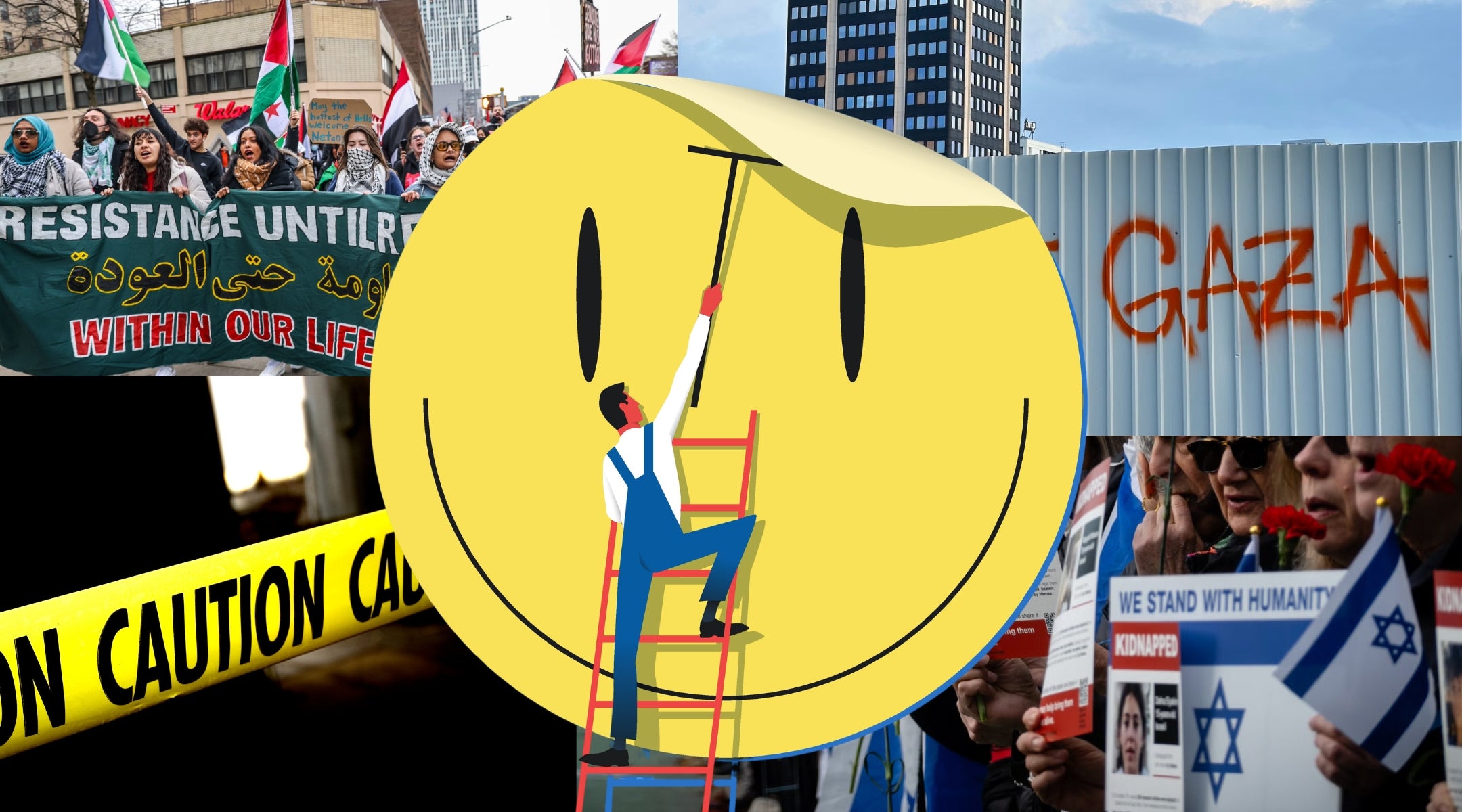
Describing her experience, Frieze used a phrase that has become a buzzword in Jewish circles since the rise in antisemitism and Jewish anxiety that followed Oct. 7: “Jewish joy.” Public figures from Jewish influencer Jonah Platt to novelist Jennifer Weiner to Dan Senor, host of the “Call Me Back” podcast, have invoked the phrase as an alternative to defining Jewish life through conflict, persecution or the need to defend one’s right to be Jewish.
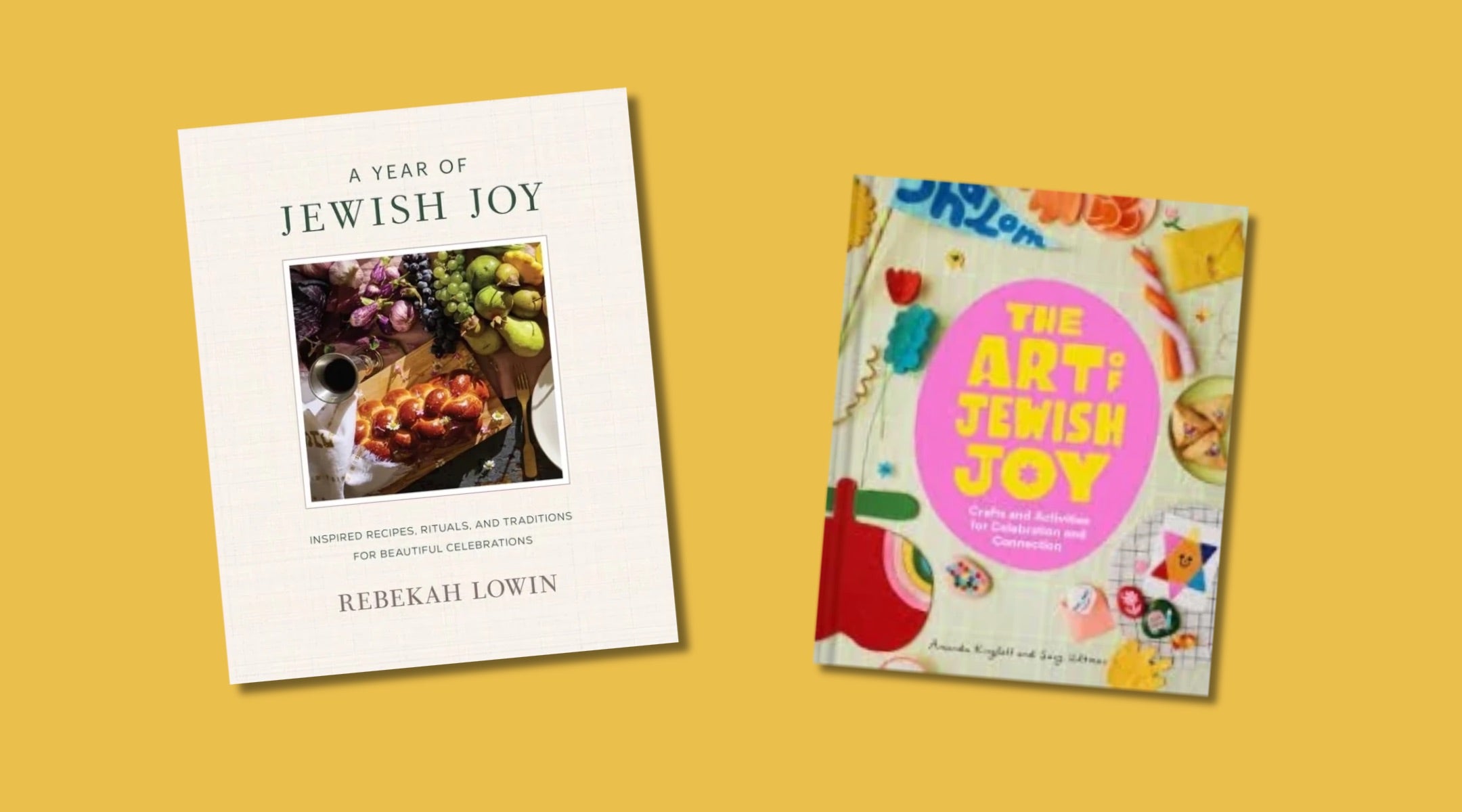
The idea of “Jewish joy” is increasingly finding expression in cultural ventures and philanthropy. This week the American Jewish Joint Distribution Committee launched its Jewish Joy storytelling campaign, a platform for Jewish influencers to describe what brings them “joy and meaning.” Author Rebecca Lowin’s 2026 book “A Year of Jewish Joy” includes recipes and crafts. Since 2024, Jean Meltzer’s Jewish Joy site has promoted Jewish literature and culture through book clubs and curated packages. Meanwhile, the philanthropies Slingshot and the Jewish Leaders Network have each made “Jewish joy” a funding priority in 2026.
For many Jewish teens, “Jewish joy” describes both the connections they form with one another and the relief of celebrating their identity when public conversation about Judaism often centers on hatred and fear.
Ellen Robbins, 16, of Newton, Massachusetts, said Jewish joy can feel “sort of radical and out of place” because antisemitism receives more attention than Jewish happiness.
For Robbins, that joy emerges through “spending time with family whether it’s during Jewish celebrations or not.” Her examples range from Hanukkah with extended family to Yom Kippur break-fasts at friends’ homes.
Asher Berk, 15, of Brookline, Massachusetts, said, “I feel the most Jewish definitely at my summer camp,” where everyone is “super happy and feels super good about themselves.” His first association with Jewish joy is “security and safety.” “Hanging out with Jewish friends always makes me happy,” Berk said. “And knowing that we share being Jewish just makes our fun feel even better.”
The shared experience of Jewish joy is what makes the experience so meaningful, said Shira Goodman, chair of the Jim Joseph Foundation, an organization that funds Jewish education and engagement efforts (including 70 Faces Media, the parent organization of (JR)). “Joy is not just ‘I had fun skiing,’” she said. “I think joy comes from connection and purpose.”
Research funded by the Jim Joseph Foundation’s Project Prism study points the same way. In a survey of more than 2,000 Jewish adults ages 22 to 40, 55% cited family and 44% cited friends as sources of Jewish connection, compared with 19% who cited Jewish organizations. Asked to rate their motivations for participating in Jewish life, the highest score went to “Enjoying Jewish culture (food, humor, music, festivals).”
Although the study did not survey teens, its findings echo what Berk and other teens shared: Jewish joy often grows through personal relationships in happy-making settings.
For Peter Cohan, 16, of Boston, who is not affiliated with a specific movement, that feeling comes through Jewish friends, shared traditions and the annual Passover seder at Milton Academy, where he is a student. He calls “Jewish joy” a kind of “cultural motto,” and said he feels more culturally and ethnically Jewish than religious.
“Milton is a very diverse school, so having spaces — like our yearly Shabbat dinner or Passover seder — within the context of the larger community lets me feel more comfortable,” Cohan said. “I’m not there for the matzah balls; I am just there to be me.” For Cohan, Jewish joy is the freedom to just “live, laugh, love” without the feeling that he must explain or defend his identity.
Josh Foer, a founder of Lehrhaus, a Jewish tavern and educational space in Boston, says that engaging young Jews cannot depend on duty alone. While his parents’ generation was Jewish “out of obligation,” today “we can be Jews because we chose to.”
Jewish institutions, Foer argues, have to offer experiences that young people find meaningful enough to choose over competing demands of their time. At Lehrhaus, programming for Jewish sci-fi fans and Jewish punk fans attracts people who might not otherwise enter a Jewish space.
Lehrhaus describes its mission as putting “gathering, joy, and text at the center of Jewish life.” But in Foer’s view, engagement is not the same as joy, but creating a space people actively enjoy may allow both to flourish.
“Young people are looking for low obligation ways to engage,” he said. “Taste and sensibility and coolness” matter more than many Jewish organizations realize, he said, because people decide quickly, from the art on the walls to how they are greeted, whether a space feels inviting to them.
But turning joy into an institutional goal carries risks. In a recent essay, Rabbi Ari Perten argued that treating joy as the main goal of Jewish life can reduce Judaism to a feel-good marketing product and exclude quieter forms of connection, learning, grief and uncertainty. “Judaism is bigger than a single emotional register,” wrote Perten, vice president of Jewish Learning at Mem Global.
The teens interviewed did not describe joy as the absence of more difficult feelings, like mourning, confusion, repentance or anger. Berk of Brookline said antisemitism is “kind of scary to talk about.” Cohan said it can be hard to speak openly about his Jewish identity amid the Israel-Gaza war. Their answers suggest that meaningful Jewish joy requires a space where they can put their guard down without having to hide those feelings in order to belong.
That may be why Berk recognized both the promise and the limitation of the phrase. “It does feel like a slogan,” he said, “but it can definitely feel real.”
Count yourself in. Independent Jewish journalism runs on thousands of readers. Join them with a year-end gift. We can’t do it without you.