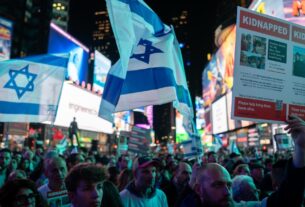

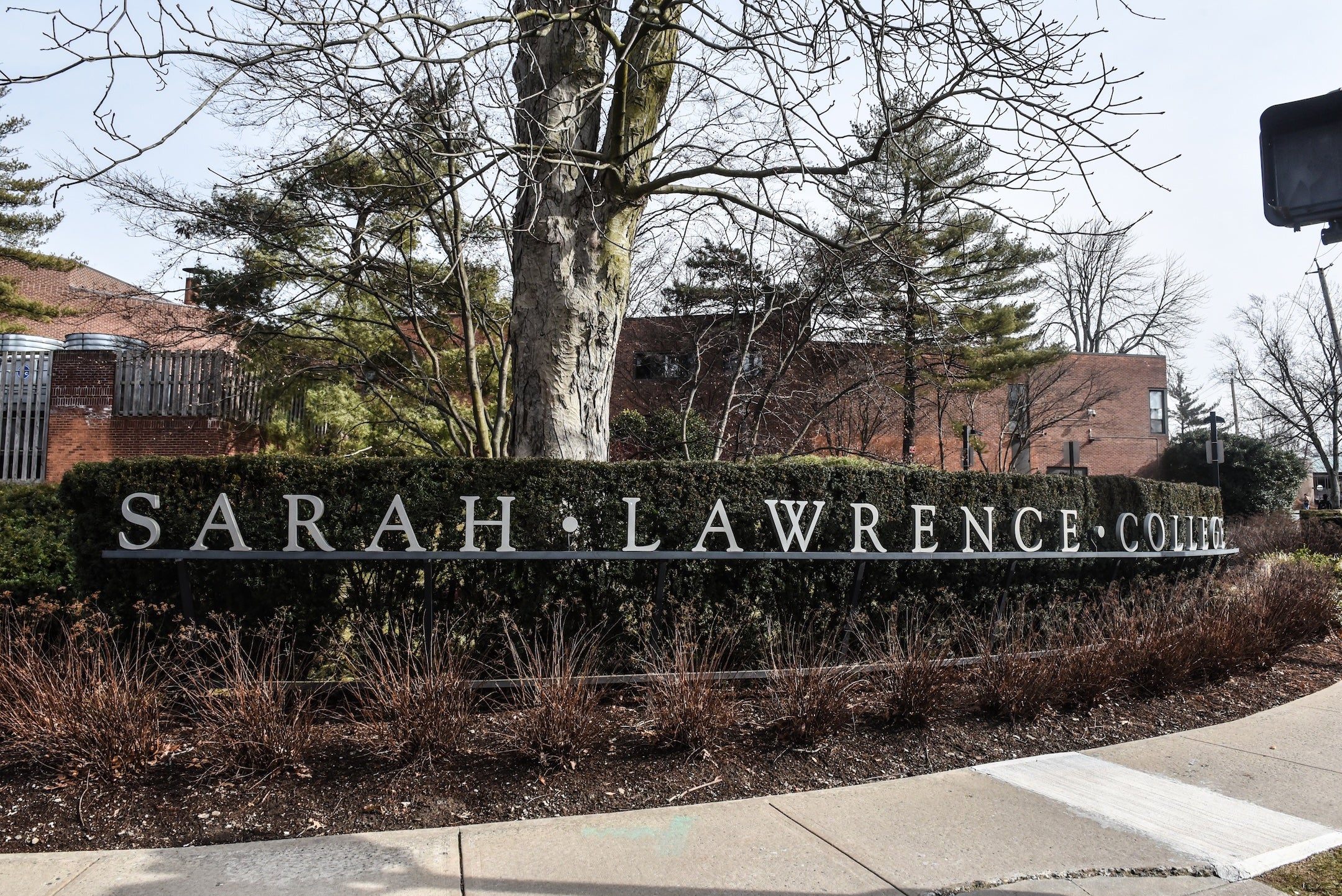
Sarah Lawrence College has changed policies to more easily overrule decisions made by its student senate, after the senate rejected a J Street chapter last year, likening the liberal Zionist group to white supremacists.
The private college instituted its rule change after the (JEWISH REVIEW) reported in May that administrators had declined to intervene when its student senate blocked Jewish students from forming a J Street U chapter. At the time, student senators had proclaimed that J Street was akin to “a white supremacist organization.”
Now, Sarah Lawrence’s leadership says, the student senate will no longer hold that level of power.
“New organizations that meet the published requirements for membership, leadership, bylaws, nondiscrimination, and organizational purpose will be recognized by the College,” reads a September letter to select campus faculty sent by dean of students Dave Stanfield. “Recognition no longer requires a Student Senate vote.”
Yet months into the new semester, there is still no J Street U chapter at Sarah Lawrence. The leading advocate for the chapter on campus last year graduated in May. A co-organizer who remains on campus says he doesn’t have the bandwidth to restart efforts to form the chapter on his own.
“It’s quite convenient that right after our leader has to graduate and move on, they change the rules to make it easier to apply,” Asher Modell, the Sarah Lawrence student, told (JEWISH REVIEW).
The J Street controversy at the progressive college reflected how campus Israel politics have shifted in the three years since the Oct. 7, 2023, Hamas-led attacks in Israel and war in Gaza that followed. J Street itself has called for phasing out direct U.S. military subsidies to Israel, months before President Donald Trump publicly announced a similar goal.
The group has also received pushback from institutional Jewish groups to its right: This fall, the University of Michigan Hillel ended its affiliation with the campus J Street U chapter, citing a broader policy against affiliation with Israel advocacy organizations. J Street U disputed that explanation, saying the decision effectively targeted its chapter.
Yet the student senate at Sarah Lawrence, a school where liberal Jewish pundit Ezra Klein had been protested last year as a “Nazi normalizer,” viewed J Street’s Zionism as beyond the pale. Under Sarah Lawrence’s administrative guidelines, student government had enjoyed a large degree of autonomy in campus affairs.
Stanfield’s letter announcing the change did not mention J Street by name, and the dean did not immediately respond to questions from (JEWISH REVIEW). But he referenced “our conversations last year regarding the student organization recognition process,” and sent the letter to a select group of faculty and staff who he said had “engaged with us on the issue last year.”
Members of that group celebrated the rule change to (JEWISH REVIEW). Many of them had lobbied Sarah Lawrence to override the student senate after the college became the first school ever to stop a chapter of J Street U, the lobbyist’s campus arm, from forming.
“It’s about time,” Matthew Ellis, an endowed chair of Middle East studies at the college, told (JEWISH REVIEW). “After the J Street chapter was denied, many of us on the faculty felt that something was gravely wrong with the adjudication process. I’m glad that the process has now been streamlined to undercut any possibility of political discrimination.”
Joel Swanson, a Jewish Studies professor at the college, told (JEWISH REVIEW) that the rule change had been in the works since before the J Street incident. The broader issue, he wrote in an email, was “student and faculty concerns about viewpoint discrimination.”
“I see it as a positive step toward ensuring that a diversity of perspectives and organizations are represented on campus,” he said.
Modell, though, is convinced the J Street controversy was central to the college’s decision to make the rule change. “They wouldn’t have done it otherwise,” he told (JEWISH REVIEW).
For Modell, the environment at Sarah Lawrence was a big part of his motivation for becoming involved in J Street. Prior to college he had called himself an anti-Zionist, he told (JEWISH REVIEW). But that changed after coming to the college and witnessing his fellow students’ responses to the Oct. 7 attacks.
“The environment itself moved me close to the center,” he said, describing hostile environments at the encampment protests and on signs posted around campus.
Modell has remained involved in J Street. He attended the organization’s recent campus conference in Washington, , the only college student unaffiliated with a campus chapter to do so. The group made an exception for him, he said. He told (JEWISH REVIEW) he would still be concerned about promoting J Street U activities on campus today.
“I feel like anything of that sort would get protested,” he said.
Count yourself in. Independent Jewish journalism runs on thousands of readers. Join them with a year-end gift. We can’t do it without you.