
Dovid Hofstedter was visiting Belarus five years ago when he discovered that a historic Jewish school had turned into something else.
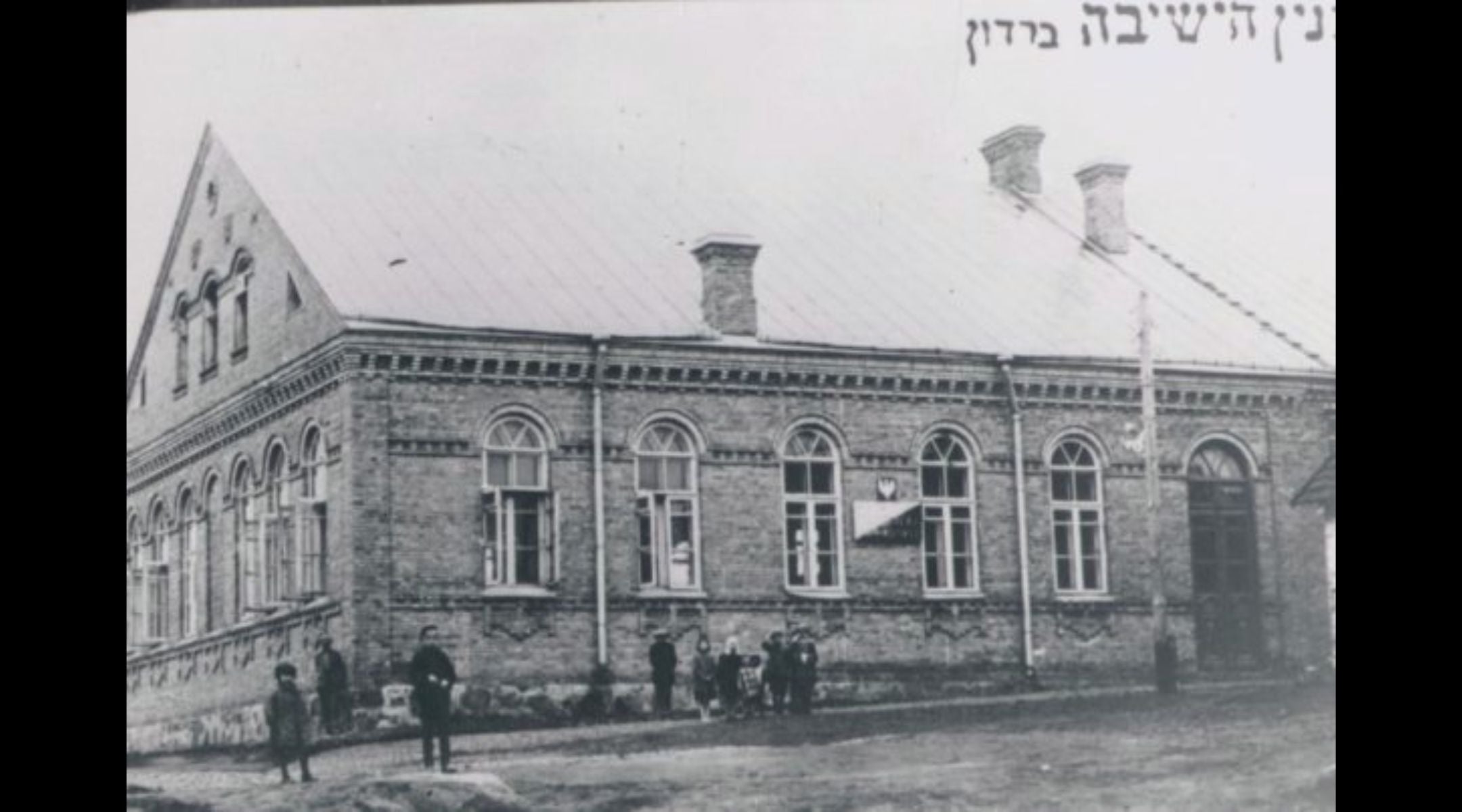
Hofstedter, a Canadian rabbi, was joining a group of rabbis from around the world at the Radin Yeshiva, nestled in the small town of Radun in western Belarus. The school was founded in 1869 by the famed Lithuanian rabbi Israel Meir Kagan, known as the Chofetz Chaim, and housed 300 students before World War II.
As Hofstedter delivered a lecture in the building, he was surprised to see it fill up with locals, who then gradually wandered out. He realized they didn’t know the building had once housed a yeshiva in a town where no Jews live today.
Instead, people had walked in expecting a play — and left when they didn’t get one.
The Radin Yeshiva had been converted into a theater, with a stage and red seats, Hofstedter told the Jewish Telegraphic Agency. Like many Jewish sites across Eastern Europe, where the Nazis’ annihilation was followed by decades of Soviet rule that stifled Jewish memory and communal life, the school’s history had been buried.
“In other places that I’ve been to in Eastern Europe, some yeshivas were used as a post office,” said Hofstedter. “Some were used as government buildings.”
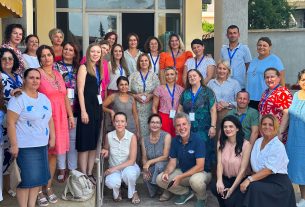
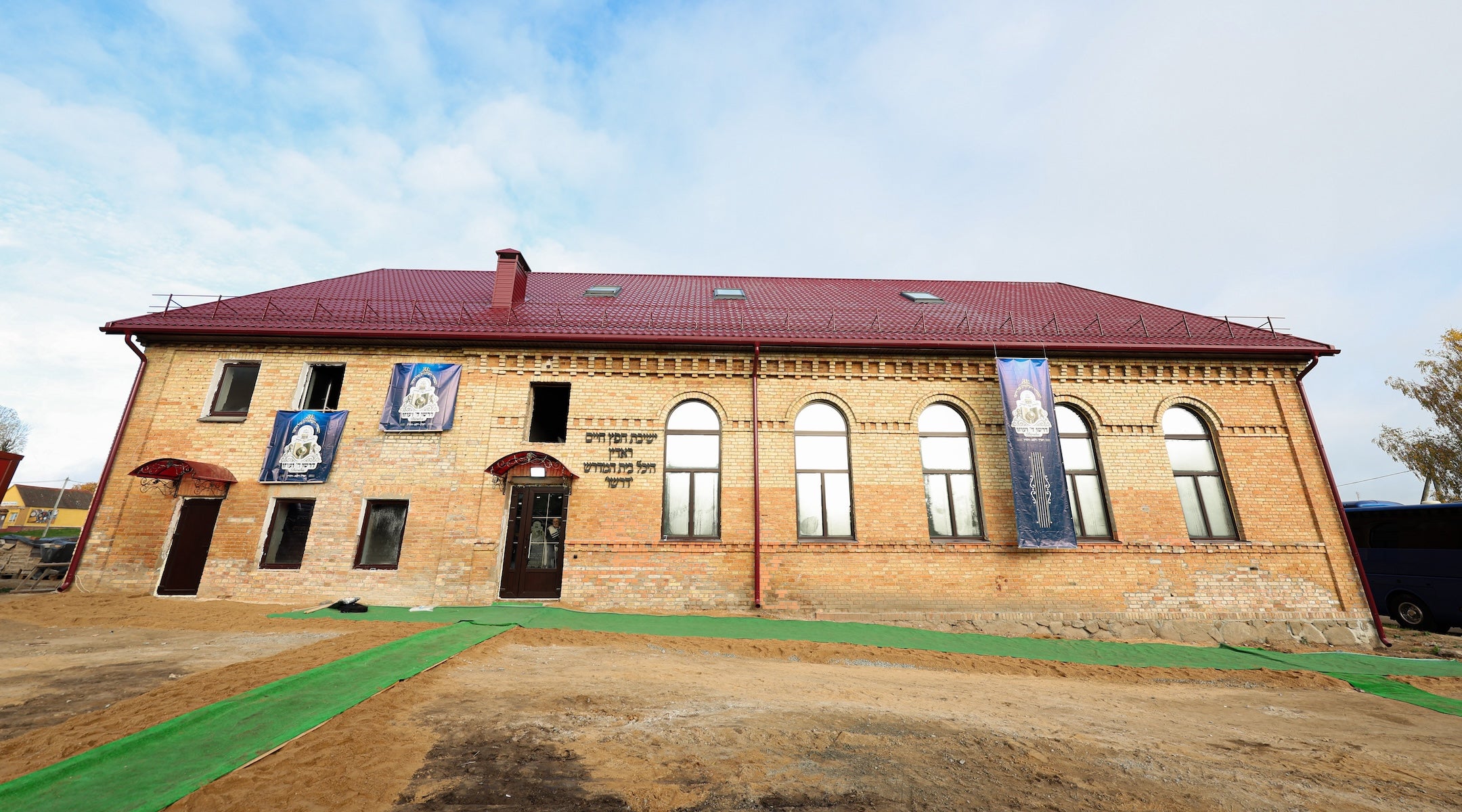
This month, Hofstedter and another group of 100 international rabbis filled the building again, this time to inaugurate the reopened Radin Yeshiva, now fully restored to serve Torah students as a functioning school.
Yad Yisroel, a nonprofit dedicated to strengthening Jewish life in Belarus, bought the yeshiva building from the municipality of Radun (or Radin, according to its Yiddish pronunciation) in 2025. That spurred a year of planning and construction, headed internationally by Hofstedter, who founded the Torah study organization Dirshu, and locally by Moshe Fhima, who directs Yad Yisroel’s projects and leads a yeshiva in the southern city of Pinsk.
The restoration team replaced the building’s roof and windows, which had deteriorated over years of neglect. Inside, they installed a new Torah ark and recreated the wooden lecterns and chairs that filled the yeshiva before World War II. A library of books is being transported from Israel to stock the school’s shelves.
The Radin Yeshiva closed after the outbreak of World War II, when the Soviet Union occupied the region and Soviet authorities seized the building. Nazi Germany captured Radun in 1941. Some yeshiva students escaped to Japan, where they received aid from the American Jewish Joint Distribution Committee. Rabbi Mendel Zaks, the Radin Yeshiva’s then-leader and the Chofetz Chaim’s son-in-law, fled in 1941 to the United States and reestablished the yeshiva in New York City. In the 1950s, the new school moved upstate to Suffern, New York, where it remains active.
Meanwhile, more than 2,000 Jews from Radun and neighboring villages were interned in a ghetto; most were killed by the Germans and local police.
Hofstedter believes that the Radin Yeshiva will draw interest from Jewish communities across Belarus. Though the country’s 30,000 to 50,000 Jews today are largely secular, Hofstedter said a subset of the community has shown interest in reconnecting with facets of their Jewish identity that were quashed under the Soviets, and the yeshiva can serve as a focal point for that rediscovery. Many of its students will also come from abroad, as Orthodox Jews make regular pilgrimages to study the Chofetz Chaim’s teachings and visit his gravesite.
The Chofetz Chaim, who lived from 1838 to 1933 and whose sobriquet is the title of his first and most famous book, was widely hailed as the leading Jewish scholar of his generation. His establishment of the Radin Yeshiva brought the town fame in the Jewish world of Eastern Europe, where current-day Belarus and Lithuania were home to many “Litvak” Jews who followed a rigorous, anti-Hasidic religious tradition. He remains influential among Orthodox Jews globally for his works codifying Jewish law and ethics, especially his guidance on refraining from “lashon hara,” or “evil speech” about others, said Hofstedter.
There are recent signs of renewed attention to Belarusian and Lithuanian sites of Jewish heritage, according to Alena Kuliounich, the deputy chair of the Union of Belarusian Jewish Public Associations and Communities. The Volozhin Yeshiva, another jewel of Lithuanian Jewish history founded in 1803, reopened as a museum in 2024. Today, no more than a handful of Jews are estimated to live in Volozhin, now in western Belarus.
“Volozhin demonstrates that a historic Jewish site can attract considerable interest even in the absence of a substantial local Jewish community,” Kuliounich told JR.
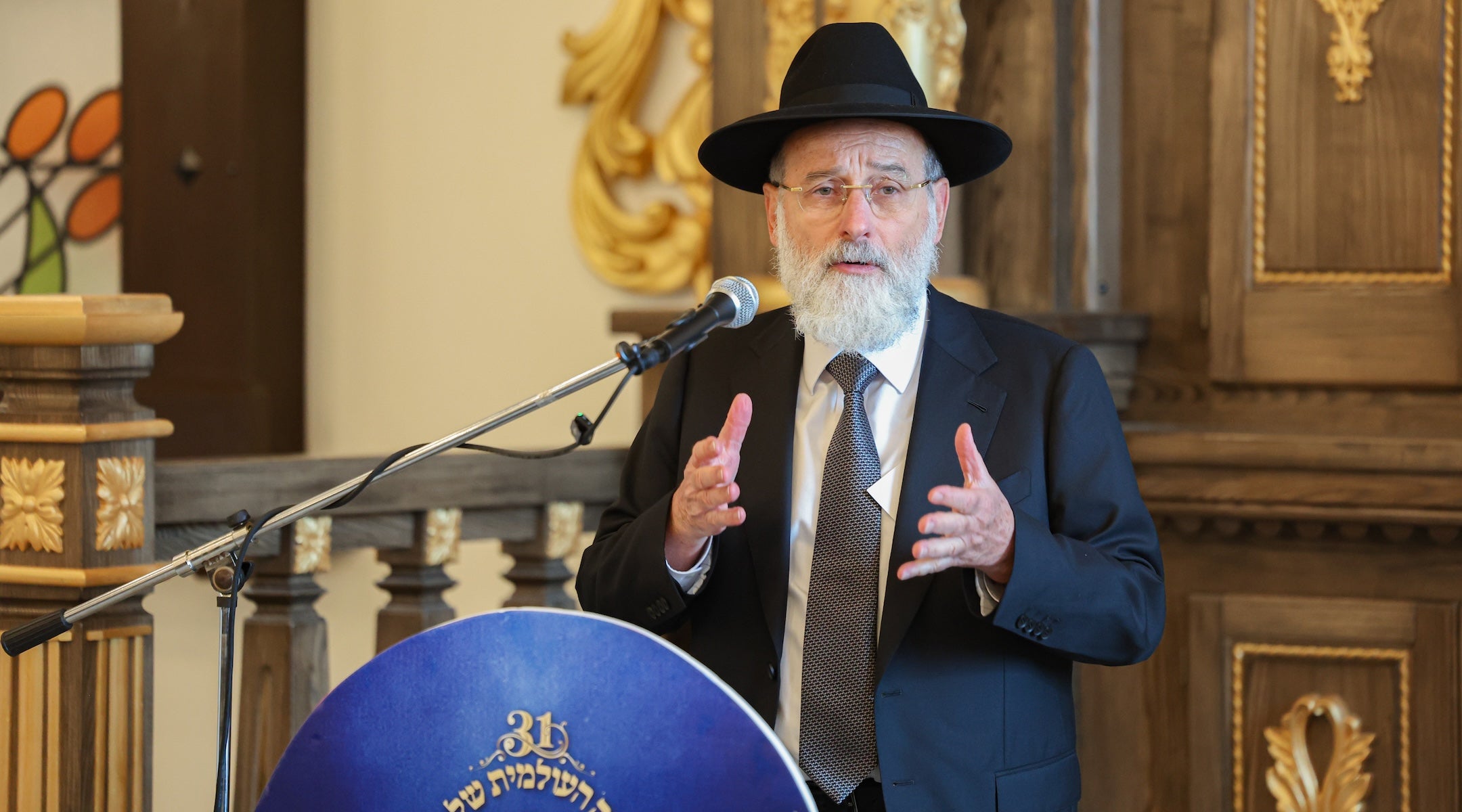
Hofstedter, whose parents survived the Holocaust in Auschwitz and Mauthausen before rebuilding their lives in Toronto, had a different vision for the Radin Yeshiva. He explicitly did not want it to become a museum.
“We didn’t want to just have some sort of tribute to the past,” said Hofstedter. “We wanted to be in continuity with the future, the teachings of the Chofetz Chaim for future generations.”
At the Radin Yeshiva’s rededication ceremony, he was moved to watch rabbis from the United States, Israel, Britain, France and elsewhere join to celebrate the Chofetz Chaim. The Lithuanian sage’s teachings are followed by Jews across Orthodox movements. It was rare to see rabbis with a range of backgrounds and beliefs “come together with such a feeling of solidarity,” said Hofstedter.
“There was an enormous amount of emotion at that gathering,” he said. “After almost 100 years, to be able to come back to the Chofetz Chaim’s yeshiva, to rejuvenate it and have the yeshiva functioning — it was just incredible.”
A Season of Big Decisions. From the Knesset campaign to American midterms, Jewish communities are weighing what comes next. Help JR keep delivering the deeper context.