
The Anti-Defamation League is alleging “systemic exclusion of Jewish and Israeli artists” in a trio of reports released Thursday focusing on the publishing, museums and entertainment spaces.
The reports, which the ADL calls its “State of the Arts” initiative, were shared with the Jewish Telegraphic Agency in advance of their publication and come as Jews have expressed alarm about their treatment in a post-Oct. 7 cultural landscape. They include:
- Grades for 40 museums on Jewish and Israeli representation that the ADL says “reveal a pattern of erasure by omission,” including comparatively few recognitions of Jewish American Heritage Month.
- A “trend report” based on interviews with more than 30 Jewish authors and publishing professionals alleging boycotts and exclusions from the publishing industry based on their identities.
- A survey of 65 incidents of “Jewish, Israeli and openly Zionist artists fac[ing] growing scrutiny, protest, disruption and cancellation” from performance venues or pressure from pro-Palestinian groups since the Oct. 7, 2023, Hamas attacks in Israel.
- ADL-approved guidelines for how venues should host and engage with Jewish artists.
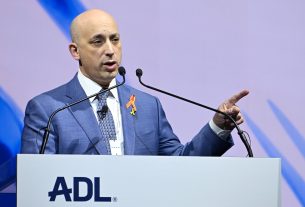
The reports will be accompanied by a launch event Thursday evening at the Jewish Museum in New York, to be attended by ADL CEO Jonathan Greenblatt as well as Jewish entertainers including actor Selma Blair and author and influencer Alyssa Rosenheck.
“We started to hear from patrons of the arts and artists and other people connected to museums that there was a real problem,” Shira Goodman, the ADL’s vice president of public affairs and special initiatives, told (JR) in an interview about the genesis of the project.
As a result, the ADL started tracking Jewish and Israeli artists who had been targeted by protests. The group also heard from Jewish authors about the publishing industry, leading to an expansion of the project. Goodman said the team was motivated by the chance to leverage “boards of trustees and boards of directors, and donors, who might be able to have influence.”
“By shining a light on some of this, we might be able to have an effect and an impact,” she said.
The project follows the ADL’s campus antisemitism report cards, which launched in 2024 and assign letter grades to dozens of universities based on how well the group feels they have combated anti-Jewish sentiments. Criticized by many in higher education, and by some major Jewish groups including Hillel International, the report cards have nonetheless prompted several campuses to change or update their policies around Jewish issues.
That success led to the formation of a new ADL unit focused on ratings and assessments. Now, the watchdog’s attention is turning to the art world — at a moment when many eyes are trained on Jews and Israelis in those spaces.
Over the summer, a report from the literary free-speech group PEN America reached similar conclusions to the ADL on the exclusion felt by some Jewish and Israeli authors. The report led to deep internal divisions within PEN and the resignation of its president, who argued that the organization was not standing up for the free-speech rights of boycotters. New Jewish publishing initiatives aim to counteract what they say is the exclusion of Jewish voices in mainstream publishing.
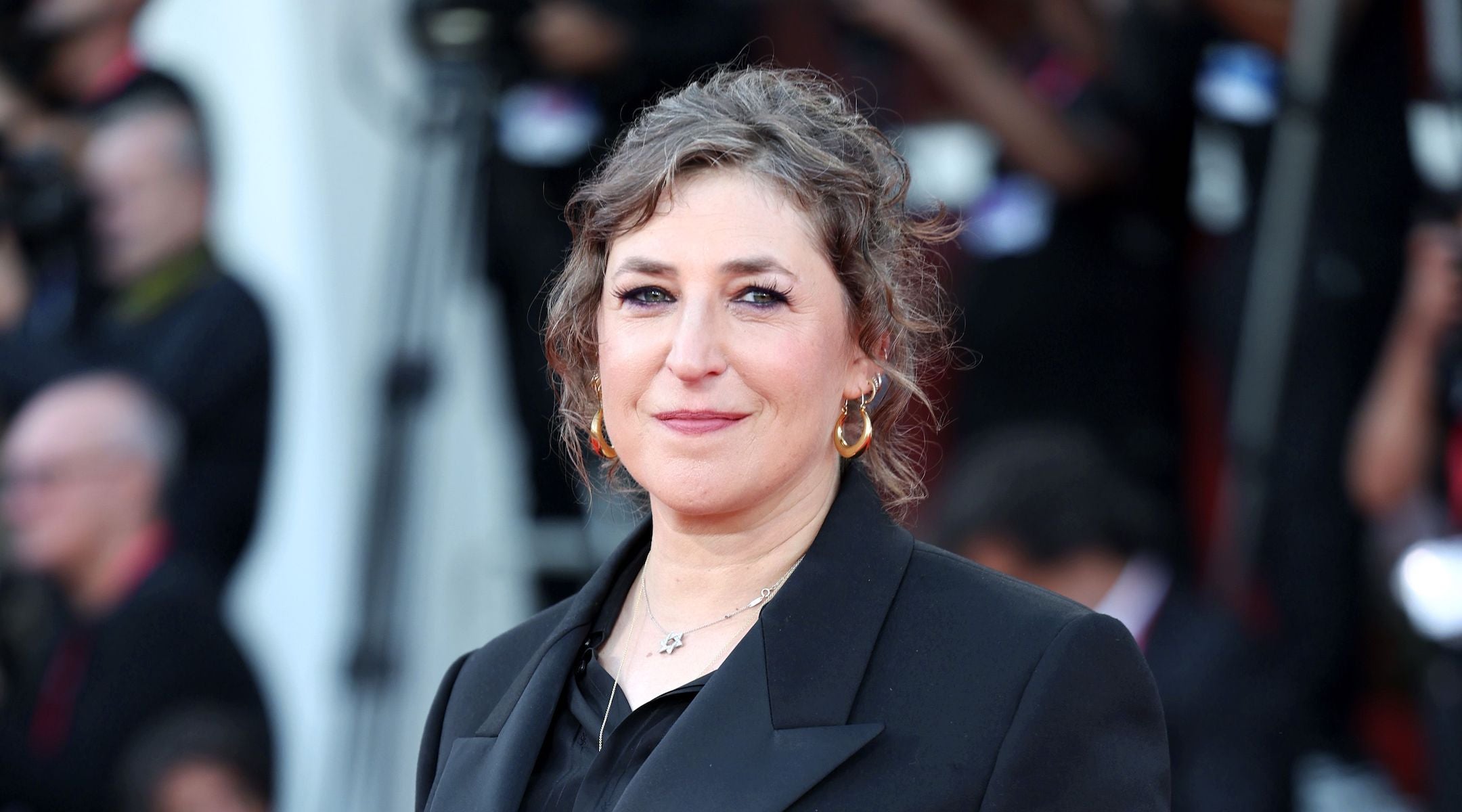
Since Oct. 7, several pro-Israel Jewish artists, ranging from Jerry Seinfeld and Mayim Bialik to Matisyahu, have seen their events targeted by pro-Palestinian protesters. The ADL’s report catalogs all these incidents and more, including demonstrations staged by neo-Nazis against Jewish-themed theatrical shows, which the ADL’s staff said they see as equivalent to pro-Palestinian protests.
“They’re equally disruptive and exclusionary of Jewish voices,” Luda Isakharov, associate director of the ADL’s Ratings and Assessments Institute, told (JR). “We treat them the same in our grading.”
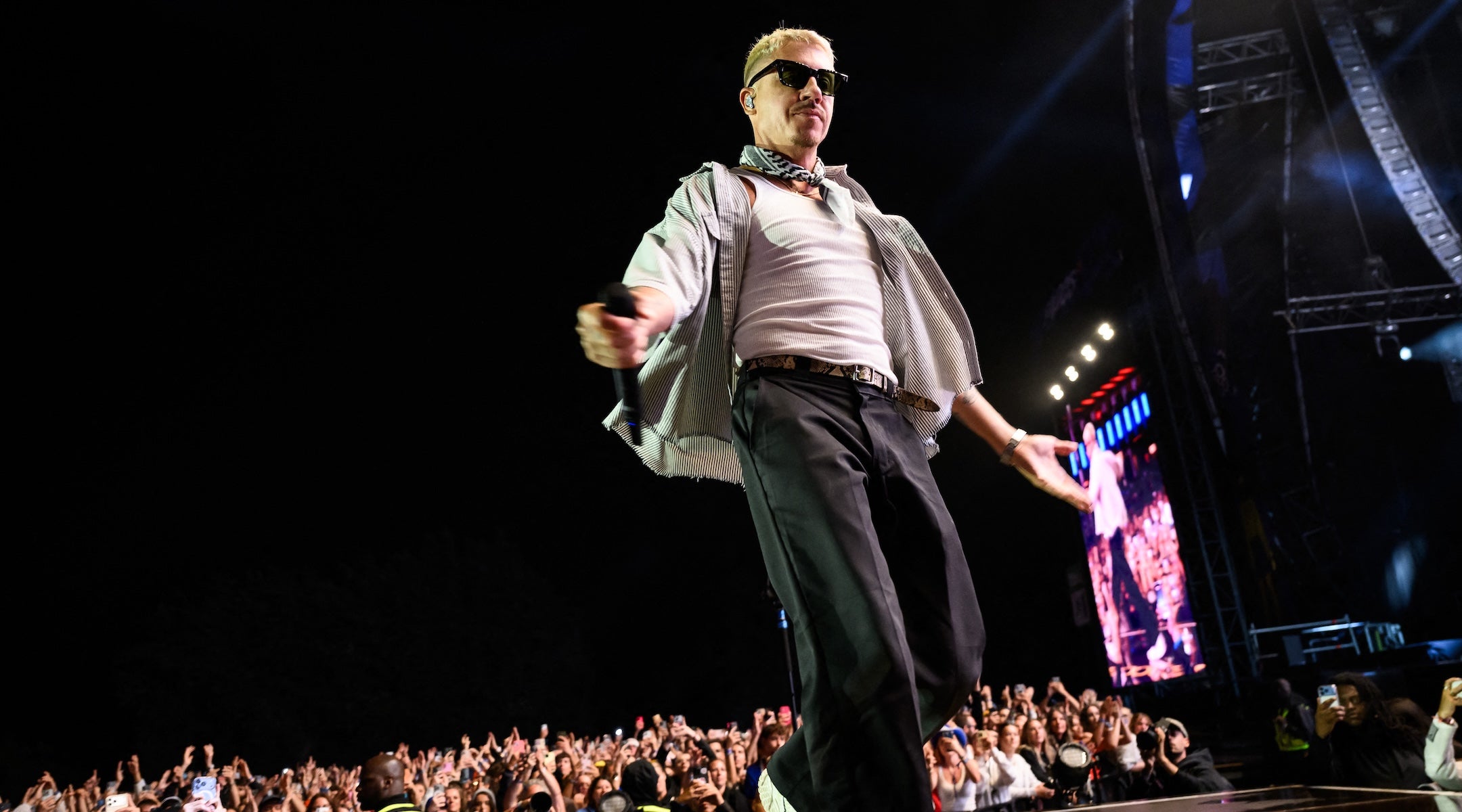
In recent weeks, two Israel-related arts controversies have further complicated the picture of how Jews in the cultural landscape orient themselves around the issue. Jewish mogul Robert Kraft pressured Ed Sheeran to drop Macklemore from his tour over the latter’s onstage rhetoric about Israel. And the Israeli documentary “NAZA” is being targeted by right-wing Israelis over the film’s detailing of the conduct of war in Gaza.
ADL researchers had no involvement in PEN’s publishing report, Goodman said; their own report argues that PEN didn’t go far enough. And while Greenblatt himself posted approvingly of Kraft’s role in the Macklemore dust-up, Goodman said the ADL has not yet thought through how it would record incidents like the Kraft controversy or the “NAZA” disputes, in which Jews or Israelis are the ones leading the protesting.
“We’re encouraging people to let speech go forward, to let concerts go forward,” she said. “Typically we have not been supportive of boycotts.” The report’s incident catalog, the ADL said, instead focuses on Jewish or Israeli artists targeted on the basis of their identities.
Goodman added, “We do speak out because we want celebrities to know how painful their language is, and the examples that they can set and what the impacts are.”
Both the Kraft and “NAZA” incidents occurred after the ADL had finalized its report. An earlier example of attempted cancellation directed at the “NAZA” filmmakers, when the mayor of Miami Beach briefly threatened to evict a theater showing the directors’ previous movie in 2025, failed to make the ADL’s catalog, although the directors are Jewish and Israeli.
One conclusion to draw from entertainment spaces’ relationship to Jews and Israelis, the ADL told (JR), is that many often cite heightened security concerns as a reason not to engage with the topic.
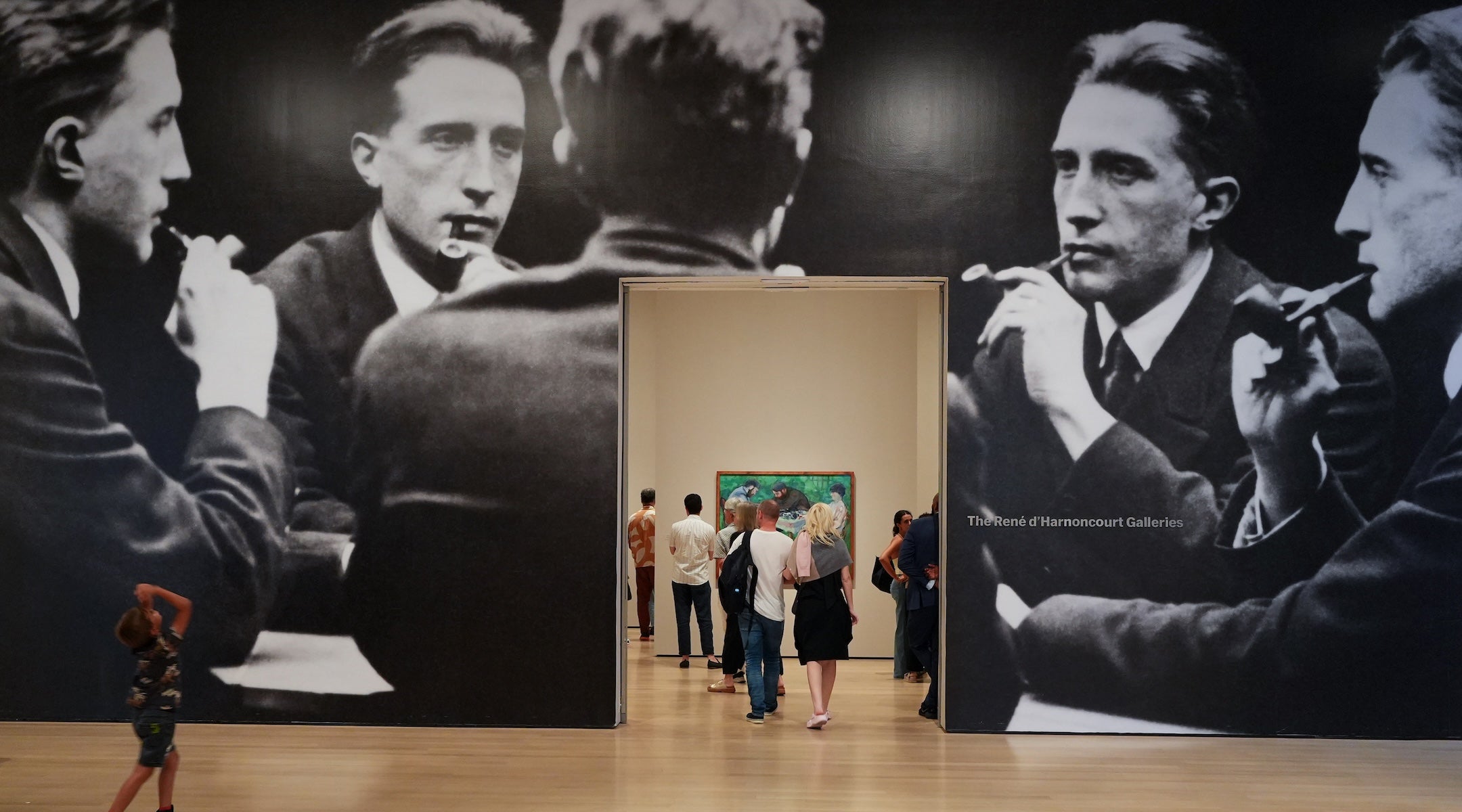
The museum report, similar to the campus report cards, assigns ratings to each of the 40 surveyed institutions, including major museums such as the Museum of Modern Art and the Guggenheim. Grades range from “Gold Standard,” which the ADL assigned only to the Berkeley Art Museum, to “Critically Deficient,” which it gave to 12 museums, including the Whitney and the Los Angeles County Museum of Art.
The criteria include the number of Jewish and Israeli artists in each museum’s collection and whether or not they are presented with “Jewish framing.” Among those approvingly cited as representative of Jewish or Israeli art are left-wing Jewish artists such as Nan Goldin, as well as Arab-Israelis whose “art was very critical of Israel,” according to Isakharov. Goldin’s name does not appear in the early copy of the report shared by (JR), though other Israel-critical Jewish artists do.
The ADL also recorded whether a museum had been the site of a pro-Palestinian protest, and whether it had a process in place for identifying art that had been stolen by the Nazis from Jewish families.
Museum ratings also factor in an institution’s policies around anti-discrimination for Jews and Jewish programming — including for Jewish American Heritage Month, which ADL researchers said only one of the surveyed museums currently observes. Meanwhile, according to the ADL, 60% of the same museums observe other ethnic heritage months.
Some museums have already reached out to the ADL to say they would be sharing more of their policies related to anti-Jewish discrimination, Isakharov said.
Meanwhile, the ADL’s publishing report, similar to PEN’s, relies largely on anecdotal evidence about Jewish authors and subjects reportedly being passed over by agents, publishers or literary venues after Oct. 7.
“Much of what’s going on is happening below the surface,” Isakharov told (JR). “It’s oftentimes a last-minute drop, a gut feeling that authors have, and that makes it so hard to prove.”
One of the authors the ADL plans to spotlight prominently is Rosenheck, a photographer, influencer and author of the memoir “White. Blond. Jew.” She will be speaking at the ADL’s launch event Thursday. Rosenheck has a previous relationship with the ADL, having appeared at its “Never Is Now” summit last year, and has also spoken at the Republican Jewish Coalition.
Rosenheck’s book launch event in Nashville was cancelled by an independent bookseller earlier this year citing security concerns, an incident condemned by the local federation.

“This is what literary antisemitism looks like,” Rosenheck is quoted as saying in the ADL report, referring to her experience with the bookstore as well as negative posts about her book online.
Some Jewish scholars of publishing trends are critical of reports that suggest Jewish authors and subjects are facing discrimination. Such conclusions, they say, fail to make the case that Jews have been treated unfairly outside of industry norms.
Wellesley College professor Josh Lambert and Emory University professor Dan Sinykin, in a joint report also published Thursday, accuse the ADL’s study of being promoted by “political motivations.”
“The ADL’s report features quotes by a handful of right-wing activists (without acknowledging them as such), conflates Jews and Zionists, and opposes boycotts — all familiar strategies to suppress leftist Jewish and pro-Palestinian expression,” Lambert and Sinykin write in the left-wing magazine Jewish Currents.
The two present their own data suggesting that Jewish- and Israeli-themed fiction, after declining in 2024, actually entered an upswing in 2025. They also challenge some of the claims made by the PEN report’s key interview subjects, including the number of Jewish books one Jewish agent claimed to have signed since Oct. 7. Their story has prompted a correction on the PEN report.
As the Year Turns, Support the Journalism You Trust. (JR) covers the stories shaping Jewish life around the world — with the depth this moment calls for. As you reflect on the year ahead, consider a gift that keeps independent Jewish journalism strong.