
The Church of England’s legislative body voted Monday to encourage churches across England to engage with a document produced by Palestinian Christians that accuses Israel of genocide despite requests from Jewish organizations and Britain’s chief rabbi to reject it.
The document is titled “Moment of Truth: Faith in a Time of Genocide” and is also known as Kairos II, after the Palestinian Christian movement Kairos Palestine that produced it. It describes Israel’s military campaign in Gaza as a genocide, states that Israel is a “colonial enterprise built on racism,” and says decades of “occupation,” “apartheid” and “settler colonialism” are at the heart of the Israeli-Palestinian conflict.
The vote on Monday does not adopt the accusations as church doctrine but says the church should hear the documents as “heartfelt expressions of the lived experience of Palestinian Christians,” and to engage with them in order to better understand the conflict.
Ahead of the debate in York, several Jewish organizations expressed concerns, and Chief Rabbi Sir Ephraim Mirvis asked Synod members to reject the amendment. Mirvis called Kairos II “deeply concerning” and that it “risks undermining decades of careful relationship-building” between Christians and Jews.
“It is truly shocking that a document which purports to speak in the name of truth contains so much falsehood,” he said.
Afterwards, the president of the Board of Deputies of British Jews, Phil Rosenberg, issued a statement calling the passage of the motion “highly problematic.”
“Kairos Palestine may come from a place of genuine pain, but the falsehoods and distortions of Kairos II, including its erasure of Jewish identity and experience, is a prescription for more division and not the answer to conflict in the Middle East,” he said.
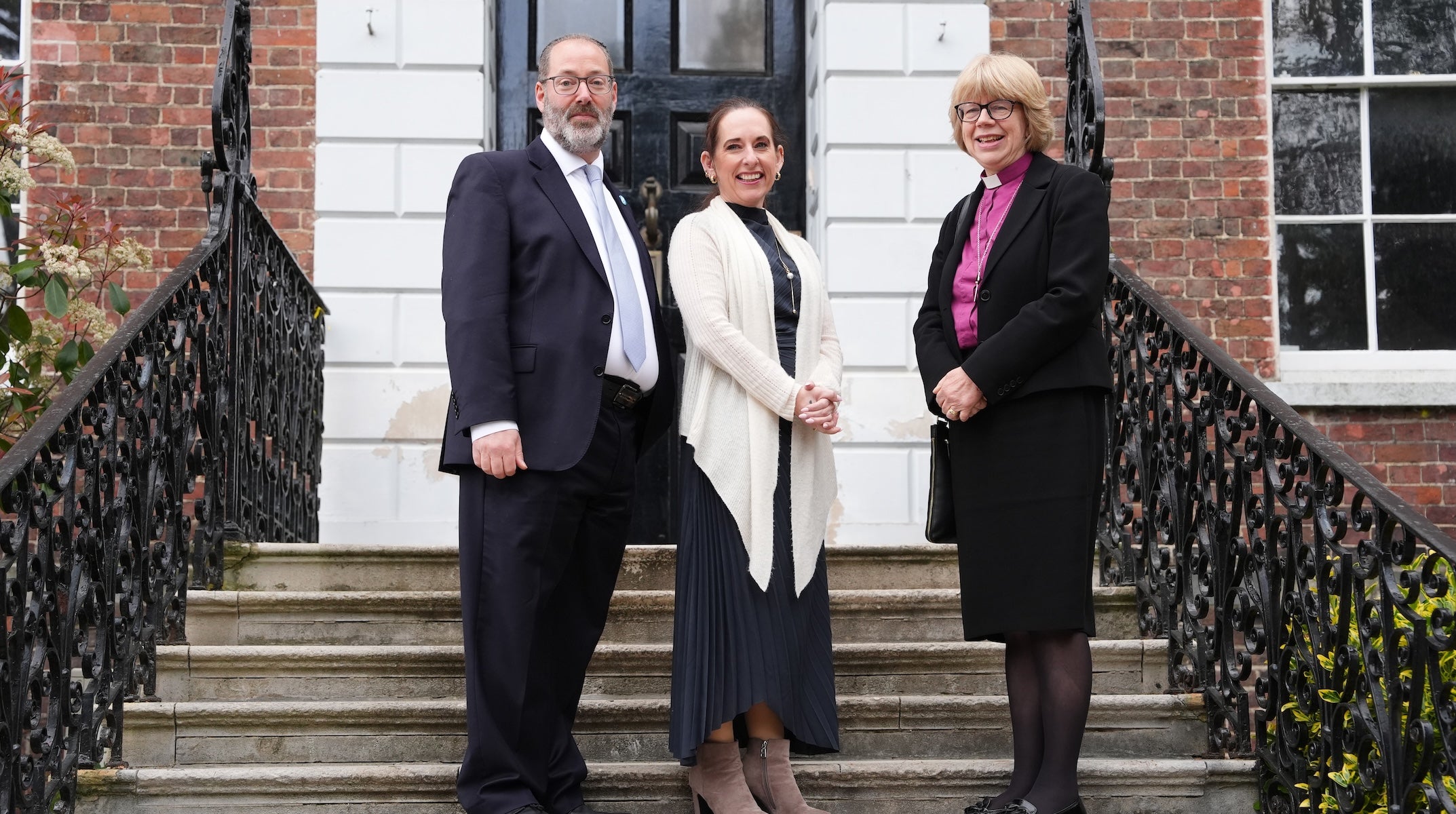
“This document reflects the pain and trauma of the Palestinian people. As a pastor, I hear the cry of our Palestinian Christian sisters and brothers — a cry that rises from the ruins of Gaza, and from the violence and oppression of the West Bank,” she said.
She added, ”I also hear the concerns of the chief rabbi, the co-leads of the Movement for Progressive Judaism, and the Board of Deputies, and I thank them for their honesty.” She said the church remained opposed to antisemitism and committed to safety for Israelis as well as Palestinians.
The Synod debate followed Mullally’s visit to the West Bank in June, where she met Palestinian Christian communities in Birzeit. During the visit she said, “I will use my role as Archbishop to seek the peace you desire and the freedom you deserve.”
The debate marks the ascendance of Israel-related issues in another major church, after the Catholic Church’s Pope Leo XIV angered Jewish groups soon after being elected last year by endorsing an investigation into whether Israel committed genocide in Gaza.
Reporting the stories that define our era. When history unfolds in real-time, the Jewish world turns to JR. Your support ensures we can document the complexities of war and the resilience of Jewish communities with integrity.