
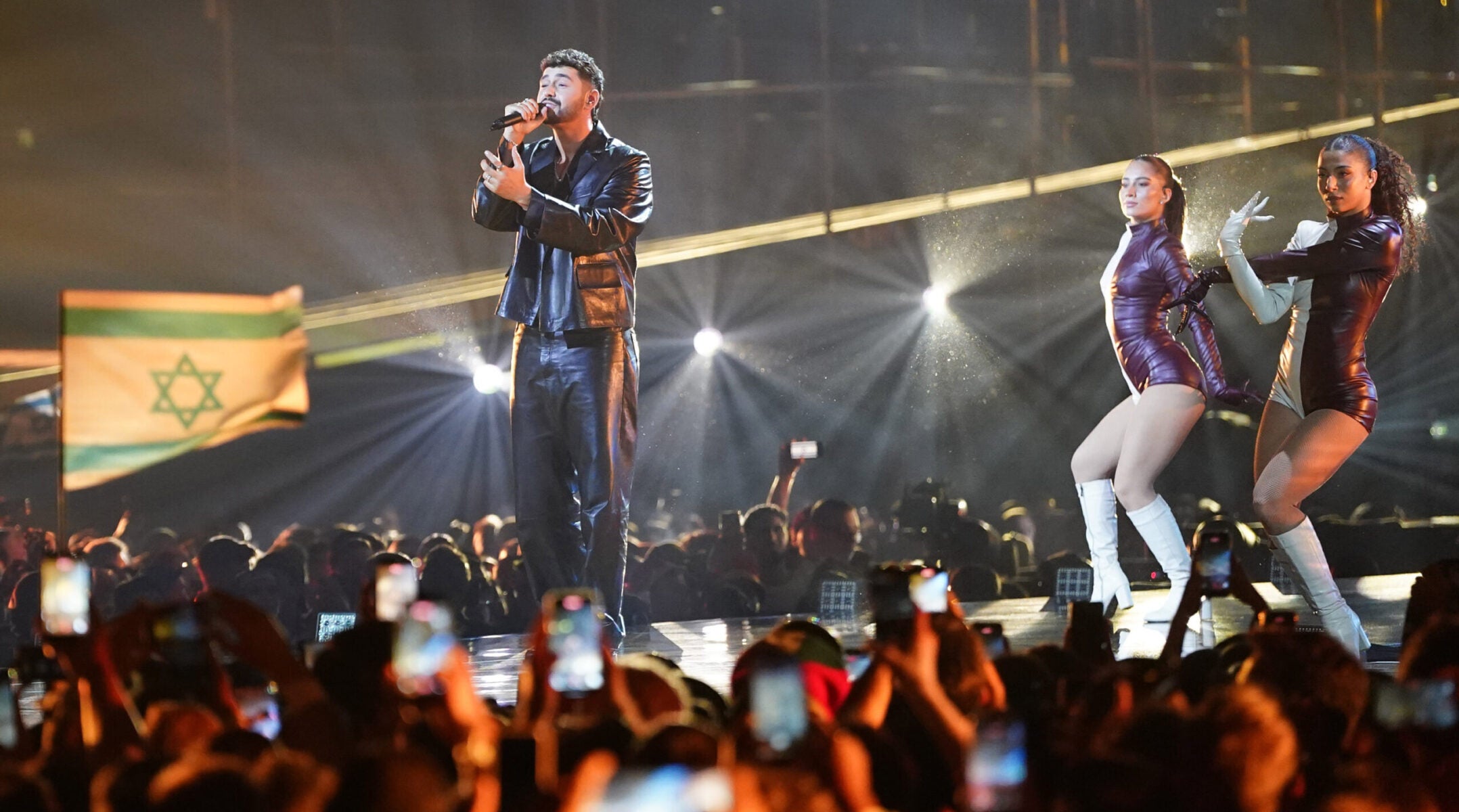
The Israeli contestant in the Eurovision Song Contest won second place for the second year in a row, drawing a strong public vote despite protests over Israel’s inclusion in the contest.
Noam Bettan and his song “Michelle” ranked third in the public vote and eighth in the jury vote, which combined to give him second place behind the entry from Bulgaria, which won the contest for the first time.
Bettan thanked his fans in a post on Instagram after leaving the stage.
“I’m still processing everything and trying to find the words for this incredible journey. You guys are amazing and this is all because of you. I love every single one of you!” he wrote. “This is just the beginning, there are so many amazing things in the way! 🤍Am Israel Chai!!!”
Five countries boycotted the contest this year over Israel’s inclusion, citing Israel’s military operations in Gaza. After the competition, a spokesperson for VRT, Belgium’s national broadcaster, said the country was unlikely to participate next year unless the European Broadcasting Union, which runs the contest, makes “a clear statement against war and violence and for respect for human rights.” Belgium came in 21st of 25 competitors in the final.
Bettan faced a smattering of boos both during the semifinal on Tuesday and during the final on Saturday in Vienna, as well as when Israel briefly led the leaderboard during the announcement of the audience votes. He told the Jewish Telegraphic Agency ahead of the final that he believed he had more fans than detractors and that he would focus on them.
Israel scored 220 points in the public vote after drawing a formal warning from the EBU for its campaign urging supporters to send all 10 of their votes to Bettan. Israel’s broadcaster called off the campaign after being told it was “not in line with our rules nor the spirit of the competition.”
Israel also drew 123 points from national juries, more than twice what it earned last year when 22 countries awarded Israel no points at all in a result seen as driven in part by political tensions.
Reporting the stories that define our era. When history unfolds in real-time, the Jewish world turns to JR. Your support ensures we can document the complexities of war and the resilience of Jewish communities with integrity.