
As news broke over the weekend of an arson attack that heavily damaged the only synagogue in Jackson, Mississippi, a few prominent individuals connected the culprit to pro-Palestinian activism.
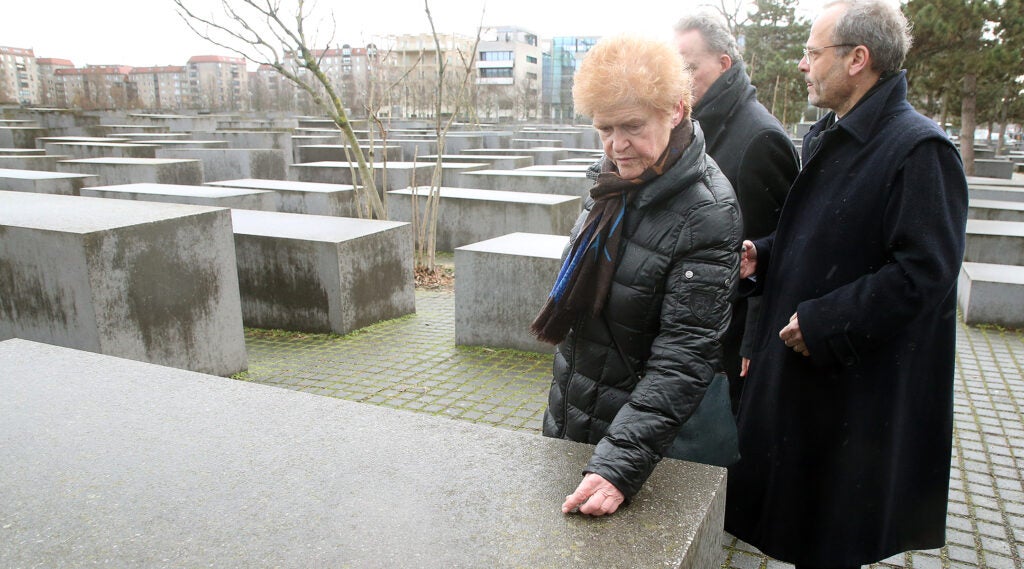
“This is a major tragedy. But it’s more than that,” Deborah Lipstadt, formerly the State Department’s special envoy to combat antisemitism, wrote on the social network X. “It’s an arson attack and another step in the globalization of the intifada.”
Later, upon learning that the arsonist appeared to have been motivated by a strain of antisemitism associated with the far right, not the pro-Palestinian movement, she walked back her comments — to a degree. But Lipstadt’s initial comments about the arsonist’s motives reflect a larger sense of disorientation among diaspora Jews as they face increased levels of antisemitism from across the spectrum of left-wing, right-wing and Islamist extremism.
Jewish activists and communities have been engaged in fierce debate over which corner poses the greatest threat, and reports of new incidents are often met with immediate speculation over the attacker’s motivations. Lipstadt, an Emory University professor who had served in the State Department under President Biden, has herself criticized the politicization of antisemitism charges. “When you only see it on the other side of the political transom,” she told the Los Angeles Times in 2024, “I have to ask: Are you interested in fighting antisemitism, or was your main objective to beat up on your enemies?”
“Globalize the Intifada” is a term commonly used in left-wing, pro-Palestinian protests. Most of the perpetrators of the large-scale antisemitic attacks in the diaspora since the Oct. 7, 2023 Hamas attacks in Israel — including in Washington, D.C.; Boulder, Colorado; Bondi Beach, Australia; and the arson attack on Pennsylvania Gov. Josh Shapiro’s home — have made their pro-Palestinian and/or Islamist affiliations public.
But when the identity of the Jackson arsonist was revealed and the suspect appeared in court, his comments and social media presence betrayed no obvious link to the pro-Palestinian movement.
Instead the suspect, 19-year-old Catholic school graduate Stephen Spencer Pittman, used language —including “synagogue of Satan” and “Jesus Christ is Lord” — popular among leading figures of the online far right who peddle antisemitism, including Nick Fuentes and Candace Owens. (“Synagogue of Satan” also has deeper roots; it was popularized by Nation of Islam leader Louis Farrakhan.)
An Instagram account appearing to be Pittman’s also contains references to a “Christian diet” and a clip from “Drawn Together,” an adult animated series, referencing an antisemitic “Jew crow.” (One of the show’s creators is Jewish.) Neither Pittman’s public statements in court, nor his Instagram account, referred to pro-Palestinian activism.
Surveillance footage shows a suspect pouring gasoline in the Beth israel Congregation in Jackson, Mississippi, on Jan. 10, 2025. (FBI)
In hindsight, was Lipstadt right to preemptively link the fire to “globalize the intifada”?
“It may have been inopportune of me to say that,” she told the Jewish Telegraphic Agency about her invocation of the phrase.
Lipstadt insisted, “I was not saying this was a leftist attack. Clearly it’s not.” Nor did she “mean to suggest that this was an Islamist attack.”
She offered that the phrase, which uses the Arabic word associated with the violent Palestinian uprisings of the late 1980s and early 2000s, could be interpreted as hatred toward Jews coming from all sides.
“If ‘globalize the intifada’ means ‘attack Jews everywhere,’ then it certainly fits,” she said. “So it depends on how you want to interpret the sentence.”
Lipstadt wasn’t the only prominent figure linking the arsonist to “globalize the intifada” and other pro-Palestinian phrases before his identity was revealed.
“It began with BDS. Some said, it’s just words,” Marc Edelman, a Jewish law professor at the City University of New York, wrote on X over the weekend.
He continued, “CUNY Law speech: ‘globalize the intifada.’ Still, just words? Recent pro-Hamas chants. Words again? And now the violence in Pittsburgh, Washington D.C., Sydney, Jackson, Mississippi and more. As the Left used to say, words matter!”

Pro-Palestinians protesters outside Park East Synagogue in Manhattan, during an Israeli immigration event hosted by Nefesh B’Nefesh, Nov. 19, 2025. (Selçuk Acar/Anadolu via Getty Images)
Even a pro-Palestinian politician condemned the arson while also addressing recent hard-line pro-Palestinian activism in her own city.
“Mississippi’s oldest and largest synagogue, and two of their Torah scrolls, were burned yesterday on Shabbat in a horrific antisemitic attack—days after protestors chanted ‘We support Hamas’, here in NYC,” Shahana Hanif, a New York City council member from Brooklyn who won re-election in a race that pivoted largely on Israel, wrote on X.
She was referencing recent pro-Hamas protesters outside synagogues in New York, who have been denounced by progressives who are critical of Israel including Mayor Zohran Mamdani and Rep. Alexandria Ocasio-Cortez.
Hanif added, “These chants are antisemitic and deeply harmful. You can oppose land sales in the West Bank without supporting violence against Jews. Yesterday’s arson in Mississippi is a stark reminder of the consequences of hate.”
She attracted some criticism from the pro-Palestinian movement for her statement — including from the group that organized the pro-Hamas New York synagogue protests, which took offense at the comparison.

A pro- Palestinian protester holds a “globalize the intifada” sign near during an anti-Israel protest in New York City, Sept. 25, 2025. (Alexi J. Rosenfeld/Getty Images)
“Linking chants at a Palestine protest that support a resistance movement of occupied people to the klan bombing of a synagogue is absolutely irresponsible and disgusting,” PAL-Awda NY/NJ, a radical group, wrote to Hanif.
In the group’s Telegram channel viewed by (JEWISH REVIEW), PAL-Awda added, “We see you, politicians who claim to support Palestine but then follow the hasbara playbook to link people resisting colonial oppression with white supremacists bombing synagogues in Mississippi.” “Hasbara” is a Hebrew term used to describe Israeli public relations efforts.
Pro-Israel groups, meanwhile, claimed hypocrisy, with some sharing a screenshot of Hanif previously retweeting a pro-Palestinian activist’s post that included the phrase “Globalize the Intifada.” (JEWISH REVIEW) was unable to verify the post.
Unlike Lipstadt, Edelman, the CUNY law professor, told (JEWISH REVIEW) he stands by his initial assessment of the arson.
“Nothing changes the fact that the actions taken in Washington, D.C. and Sydney, Australia, coalesced with an extreme left anti-Israel position,” he said, referring to the mass shootings at the Capital Jewish Museum and Bondi Beach — the former by a declared pro-Palestinian activist, the latter by declared Islamists. (Edelman noted that he recently undertook a Fulbright scholarship in Australia.)
Edelman added, “It is also not surprising that far-right rhetoric, much as it has for generations in this country, has also led to increased violence against minority groups including Jewish Americans.”
But there’s a key difference between the two sides, in Edelman’s eyes.
“The big distinction here, and I say this as a member of the Democratic Party, is that the left has historically been better than this,” he said. “And now, perhaps, they are not.”
For Lipstadt, the incident has largely taught her that Jews shouldn’t spend time trying to determine which kinds of antisemitic attacks, whether from the left or right, are worse.
“It’s all horrible,” she said. “Much of it is lethal. It’s toxic and it’s dangerous.”