

Study reveals link between household birthdays and COVID infection rates

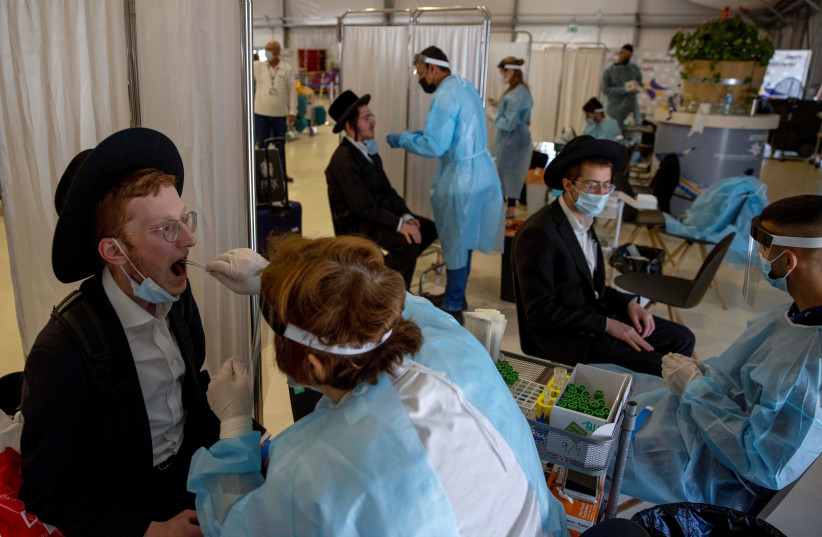
A new study from JAMA Intern Med analyzed the correlation between household birthdays and COVID-19 infections in the US.  While the study originally argued that birthdays would not lead to an increase in COVID-19 cases due to their random distribution, the results clearly proved otherwise.Authors Christopher M. Whaley, Jonathan Cantor and Megan Pera revealed that those […]

Continue Reading

Yoma 78

On Yoma 74, we noted that when the Torah says one should afflict oneself on Yom Kippur, the rabbis primarily understand that to mean fasting. But there is another custom of self-affliction: not wearing leather. Since those who practice this custom usually have to eschew their regular dress shoes, they wind up in some interesting […]

Continue Reading

Yoma 77

Some people I know really enjoy getting into the spirit of fast days like Yom Kippur, using it as an opportunity to express their more emotional sides that perhaps they keep more under wraps the rest of the year. Others, however, find such days to be burdensome or anxiety-inducing. In their determination of what counts […]

Continue Reading

Yoma 76

On today’s daf, the Gemara continues its discussion of the five afflictions of Yom Kippur that we first encountered in the mishnah on Yoma 73: abstaining from eating and drinking, bathing, anointing, wearing shoes and conjugal relations.  As we’ve seen them do many times already, the rabbis then inquire about the biblical source of two of these afflictions: […]

Continue Reading

Yoma 75

According to the Book of Exodus, manna (an edible substance that God provided to sustain the Israelites as they wandered through the wilderness) was delicious: “Its flavor was like wafers made of honey.” (Exodus 16:34) Yum! Today’s daf highlights one of the less tasty, but no less important aspects of the manna as the rabbis […]

Continue Reading

Yoma 74

In Leviticus chapters 23 and 16 the Torah commands two things explicitly about Yom Kippur: that we do no work and that we “afflict” ourselves. The Hebrew phrase, anitem et nafshoteyhem, and the verbal root of the word for affliction(ayn, nun, yud) are used in all the places that the Torah talks about the proper observance of Yom Kippur. The problem is: […]

Continue Reading

Yoma 73

With the mishnah on today’s daf, we finally arrive at a subject you probably would have expected to encounter much earlier in Tractate Yoma: the basic rules for observing Yom Kippur.  The text states:  On Yom Kippur, the day on which there is a mitzvah by Torah law to afflict oneself, it is prohibited to engage […]

Continue Reading

Yoma 72

Since antiquity, the swan has been associated with music; it was believed that swans sang sweetly just before dying — giving rise to the notion of a “swan song.” Far more interesting, though, is the fact that in medieval bestiaries the swan was a symbol of hypocrisy; the brilliant pure white plumage seen as belying […]

Continue Reading