
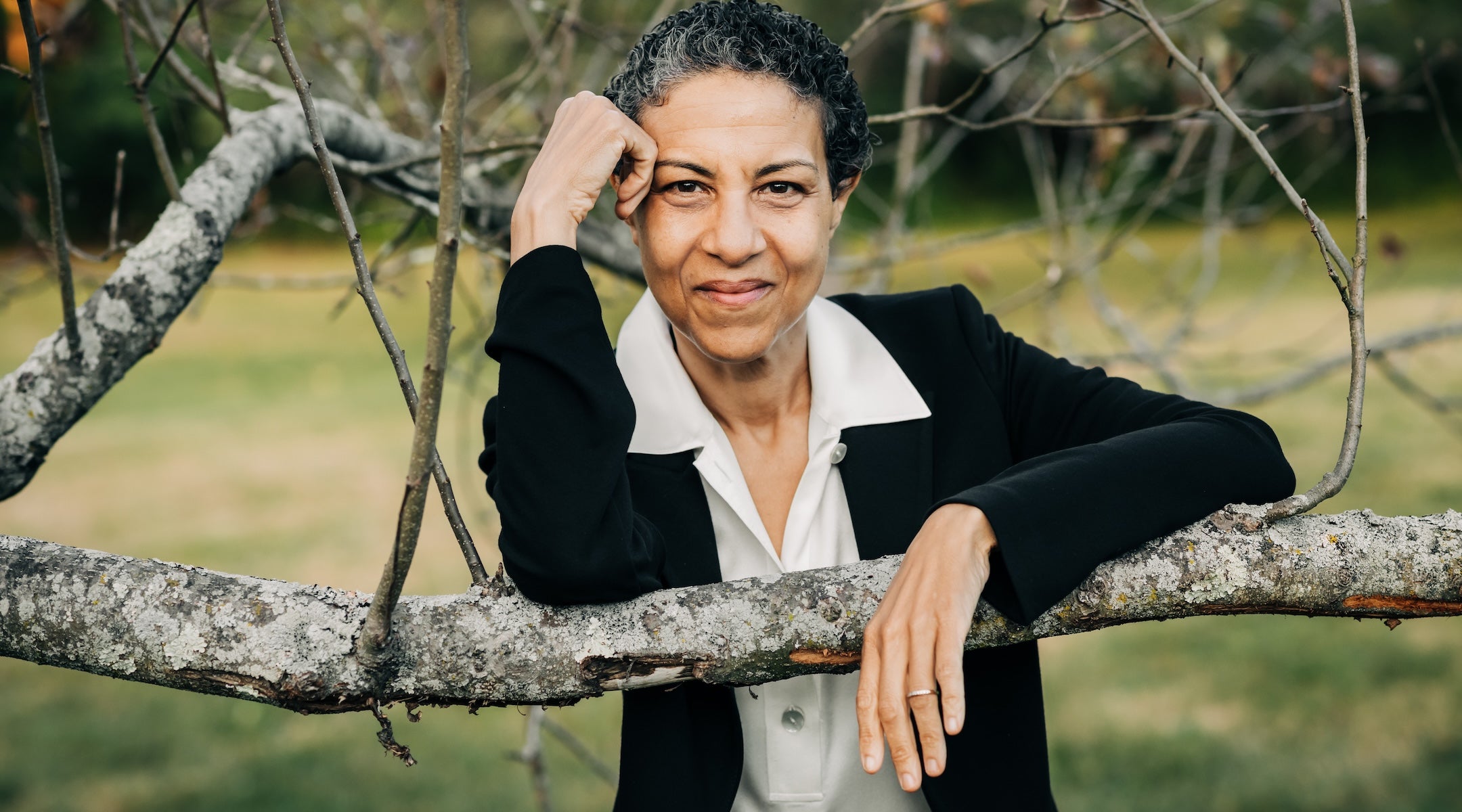
When Elizabeth Stordeur Pryor was a young girl, her Jewish mother, during an argument, once called her the N-word.
“She never used the word with me again,” Pryor, whose father is Black, recalled to the Jewish Telegraphic Agency of her mother, who belonged to the Jewish socialist group Workman’s Circle. “But she never apologized.”
The incident stuck with Pryor, today a history professor at Smith College, for many years — and not just because of the source of the remark. Pryor is the daughter of Richard Pryor, the beloved comedian and actor whose life’s work interrogated the various forms of American racism, including the N-word. Richard had deployed the word frequently in his act (as well as in the Mel Brooks movie “Blazing Saddles,” which he co-wrote) before swearing off the word entirely.
At the same time, Pryor’s mixed-race and Jewish identity meant she was never far from one prejudice or another. Her parents never married, and she was not her father’s only Jewish daughter. As she grew up, each side of her family and social circle would make bigoted remarks about the other. In the Los Angeles bat mitzvah scene in the 1970s, her Jewish classmates would make ceaseless remarks about her race. Haunted by her mother’s leveraging of the N-word against her, Pryor at one point preemptively told her classmates to call her the word.
Now Pryor has blended these personal histories with her research in a new memoir, “Something We Said: Richard Pryor: A Notorious Word, And Me,” which takes its inspiration from her Smith classes and a viral TED talk she gave in 2020. While recounting a history of the N-word itself, Pryor also recounts her own split upbringing, including how she came into both her Black and Jewish identities.
She spoke with the Jewish Telegraphic Agency about her time in Jewish spaces; the N-word’s Yiddish equivalent; and her reaction to “Blazing Saddles,” which she avoided seeing until adulthood.
This conversation has been edited for length and clarity.
(JR): You talk in the book about how you struggled with the mixed aspects of your parents, and you end at a place where you’re embracing both. How did you get there, and how do you understand your Jewish identity today?
Pryor: I’ve had so many different iterations of my Jewish identity. Certainly as a little kid, I didn’t know there was such a thing as observant Judaism. My grandmother always lit the candles, and my grandfather had all of his grandchildren named in the local synagogue, but not until I got to L.A. [after an early childhood in Boston] did I realize like people observed this more broadly.
At the same time, I was just always Jewish. You didn’t have to not be all Jewish because you were Black, in the way we spoke about it in my house. I remember my mom, when we got to L.A., she had me join a temple, like the beginnings of Hebrew school, and none of the kids there were interracial or biracial. They were all white kids, and nobody could understand [me]. They were like, “Are you adopted? Wait, how does a Black person become Jewish?” And I do think that’s something that I’ve run across a lot of my life.
I’ve always loved being Jewish. When I had kids, I had the same experience with them. I was like, “Your mother’s Jewish, so you’re Jewish, that’s it.” And they went to Jewish day schools, and one of my kids actually had a real coming-of-age in her Judaism. When she did her junior year abroad in Jerusalem, people would still ask her the same kind of questions: “Oh, your mother’s Black, was she adopted?” All these years later, she was still getting those questions.
But one of the things that I actually love: I’m a TikTok fanatic, and there are a lot of Black Jewish women on TikTok who talk about this experience of feeling 100% Jewish and owning it. And I love that, because I don’t feel like there was a lot of space for me to do that growing up.
My sister, who grew up in L.A. with Jewish grandparents as well, and a Jewish mother, they were a lot more observant. [Elizabeth’s half-sister, Rain Pryor, is an actor and comedian who has toured a play, “Fried Chicken and Latkes,” based on her upbringing.] So she had a much more observant Jewish experience than I did, and in some ways a much Blacker experience than I did.
By far the hardest part of the book for me to read was your description of your mother calling you the N-word. It was so painful, seeing those words on the page. How do you understand that, reflecting on it today? Do you think she carried hate in some way?
My mother was a fighter and scrappy as all get out, and resented all the boxes she’d been put in. I think sometimes about how hard it must have been for her to be as in love with my father as she had once been, and then see his star on the rise in such a big way. And I know she loved me, but she fought dirty. And in her mind, she wasn’t getting or hearing what she wanted, and I know that’s why she did it. She never used the word with me again. But she never apologized. “Oh, please, Elizabeth, that was five years ago.” She just couldn’t, when I brought it up — and I brought it up a lot.
I think what is deeper about racism, more broadly, is that my mother was not actively a racist, but obviously had deeply embedded racist ideas about the world. She could think that there was a universe in which it was OK to call your child that.
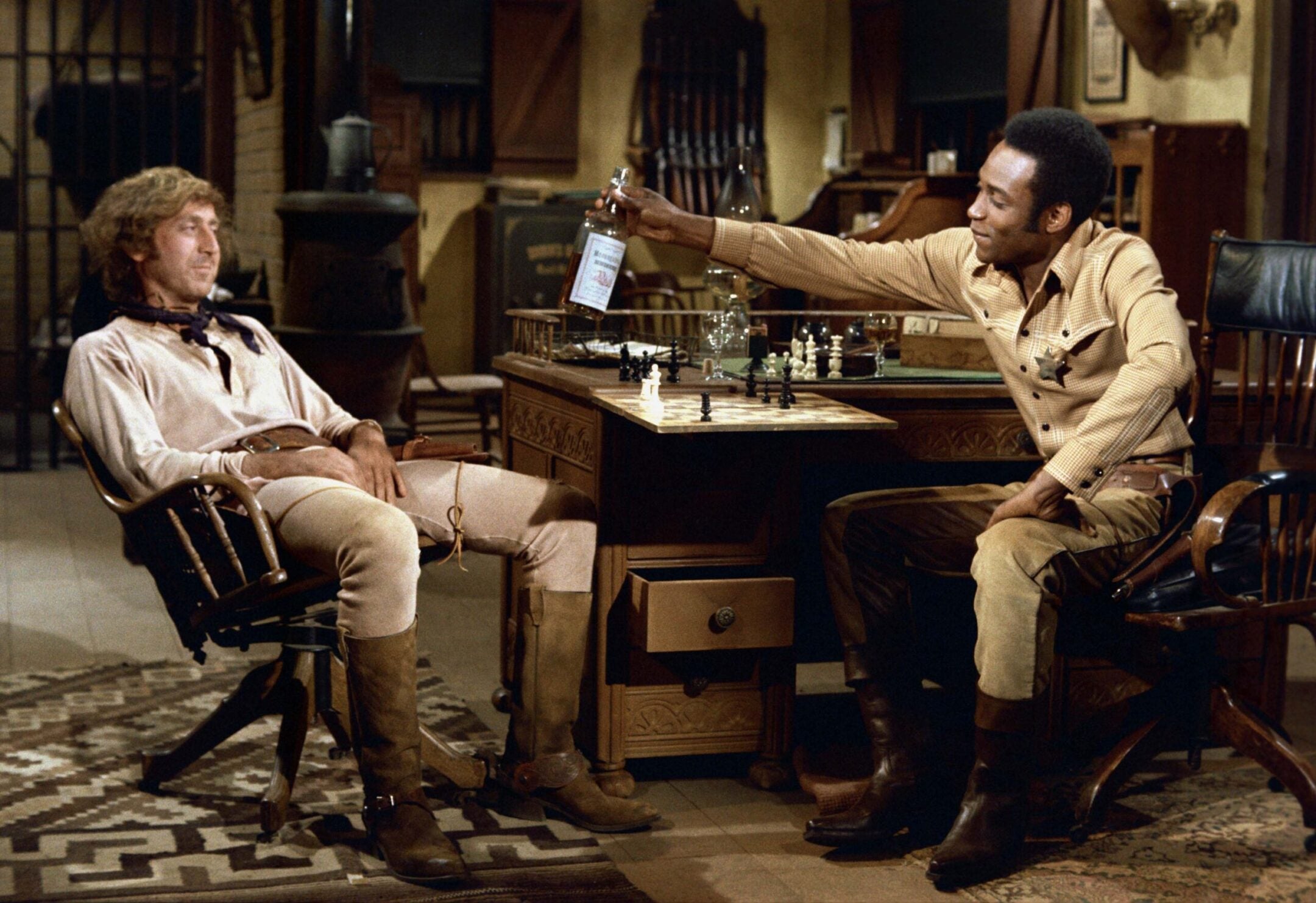
Gene Wilder and Cleavon Little appear in a scene from 1974’s “Blazing Saddles.” (Courtesy Fathom)
I want to talk about “Blazing Saddles.” I saw it when I was very young, because I was obsessed with Mel Brooks and Jewish comedy. And because of that, the movie was my first exposure to the N-word –
How interesting! That just gave me the chills.
So your dad, in addition to spending his career interrogating the N-word, part of his legacy may also just be introducing the concept of the word to future generations. I’m wondering what you make of that?
One of the things about “Blazing Saddles” that I learned, that makes perfect sense, and I feel like I knew organically after I saw it finally, was that pretty much any time the N-word appears, it’s my father’s creation. Because Mel Brooks was like, “I didn’t want to use the word,” and my father insisted that the word was at the core of the kind of satire that Mel Brooks was trying to spotlight — and that the reason to use it is because of how ridiculous white people are going to sound when they do. It’s not because we’re using the N-word to, you know, disparage people, but we’re using it to make fun of the white racists in the film.
But you know, people of your generation are coming across the word differently than people of mine. I’m 59, so I was on the schoolyard, kids were singing along with it. But I think I’m less surprised that the place you learn about that kind of racism is from a Black creator. He’s making fun of a type of racism that you have never witnessed, at that point in your life.
I have mixed feelings about it. It is very funny, but I don’t know, there are some things that don’t always stand the test of time.
Something else that’s in both the movie and your memoir is, if you’ll excuse me, the word “Schvartze.” Do you have any thoughts about the use of that specifically Yiddish word that is used to demean Black people?
I debated using it in the book. That was a hard one. I did not want to be, like, “The s-word.” I had some feelings about having done it — and people shouldn’t use that word, either. Maybe that’s ideally just kind of understood as the N-word. One of my cousins and maybe my aunt said it while driving through Mattapan Square, which was the Black part of Boston that was right by us, and they’d start describing the people who live there in this way. I think that is pretty dehumanizing.
My father has a joke, and I reference it in the book: “They’ve got the Vietnamese coming over here in refugee camps, and they’re teaching them how to say the N-word, so they can become good citizens.” I have a lot of colleagues who study whiteness, and at the core of many of those processes is anti-Blackness. If you learn who you are in [relation] to Black people, then you can kind of enter into whiteness in the United States. So I grew up with at least a casualness around the use of that word.
And your Jewish family would use it around you, but they weren’t referring to you specifically?
Exactly. They weren’t referring to me, never.
What do you make of that?
I think for many people racism is abstract and anti-Blackness is abstract. You’re afraid of, like, a creature lurking around the corner. It’s the unknown, and it’s kind of faceless, and my family knew me. So for them, other than my mother’s obvious transgression, they could hold space for both of those realities. They could think about this unknown entity around them at the same time as loving me with no irony at all.
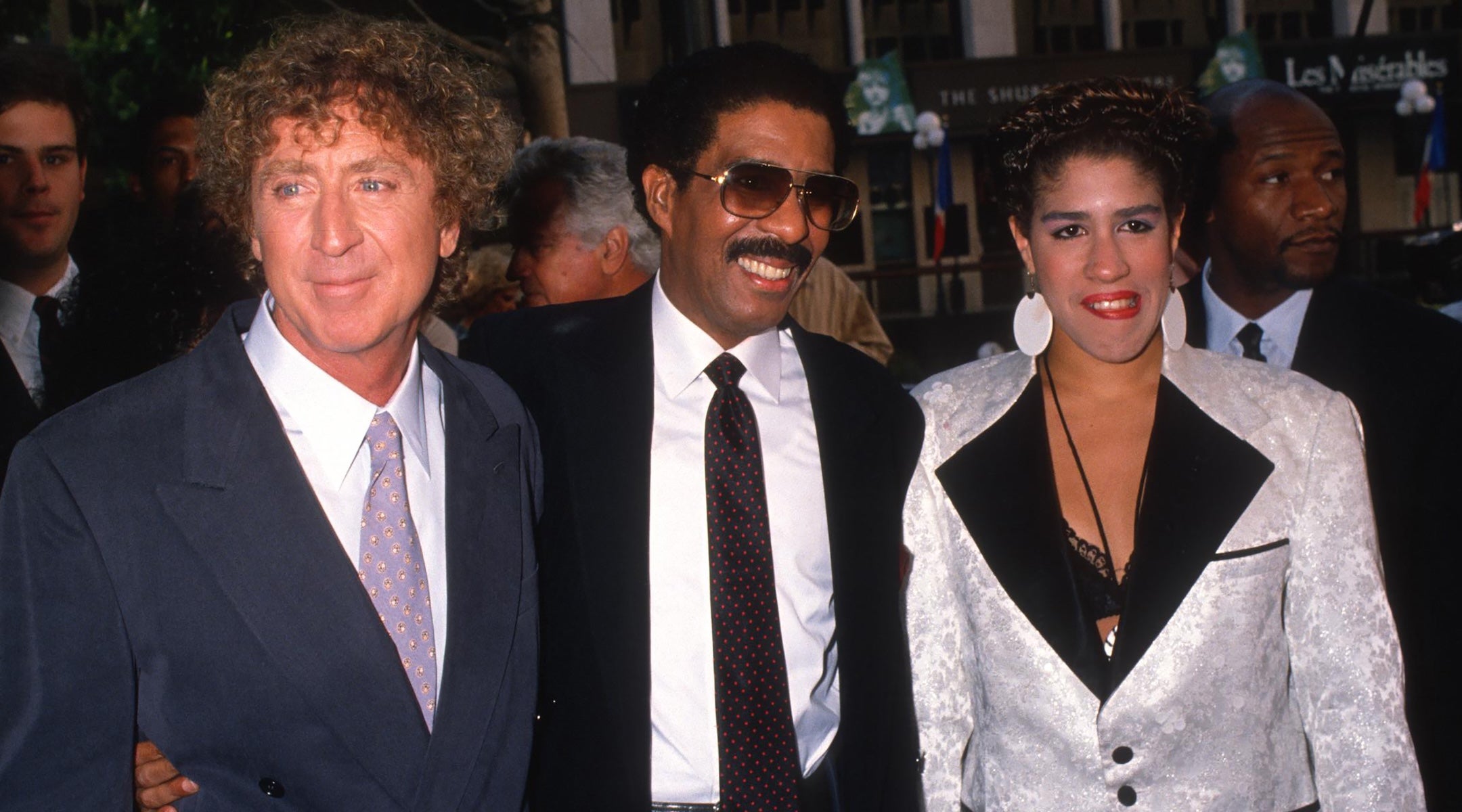
From left, American actors Gene Wilder (1933 – 2016) and Richard Pryor (1940 – 2005), with the latter’s daughter, Rain Pryor, as they attend a premiere party for ‘Hear No Evil, See No Evil’ at the Century Plaza Hotel, Century City, California, May 7, 1989. (Ron Galella, Ltd./Ron Galella Collection via Getty Images)
I also want to ask about the flip side of this, where members of the Black side of your family would tell you that the Jews killed Jesus, again to your face. But at the same time, your dad fathered two children by two different Jewish women —
And dated others! I think my father was just, honestly, an openhearted person. I don’t think those things mattered in that way to him whatsoever.
I think my grandmother on my father’s side [who made the comment about Jews], much like my grandmother on my mother’s side, was very provincial in her own way. And I would have been kind of a novelty to her: the idea that I was Black, not biracial, because there are a lot of biracial people in the Black community, but that I was Black and Jewish.
I’m sure she believed it. I don’t think she was teasing me. I’m sure she believed what she was saying, and I think at the time it was a little scary, and it’s funny to me now. Also, my mother would tell me all the time how Black people and Jewish people work together in the Civil Rights movement, and that was the kind of narrative I think I preferred.
More Jewish organizations these days are trying to create spaces for Jews of color. What do you make of that? Do you feel like there’s been a shift?
The way I experience it is that these young people feel like they’re allowed to talk about it. They’re allowed to talk about the racism, they’re allowed to talk about the antisemitism that they experience from all sides. I felt like people were telling me, “You need to think Black,” and then on the other side, “You need to think Jewish.” But nobody really knew how to create space for me to be the intersectionality of it. These folks that I see on TikTok are 100% intersectional.
Today, to the extent that there is any sort of meaningful discourse about racism and antisemitism, it feels like people know it’s bad to be labeled as those things. So there’s a lot of cageyness around, “Well as long as I don’t use the N-word, or as long as I don’t say I hate Jews specifically, then you can’t label me as those things.” To bring your research into it, do you feel like we’ve progressed at all?
No, no, I don’t. I think that we are in a really frightening historical moment, where rights are being stripped from people left and right, and I even think, in some ways, thinking about the progress narrative is not necessarily useful.
I don’t think the word has receded quite as much as the way you move through the world has shown you. Because the word is being used and deployed all the time against people in the very hard-r, white racist version. When I’m writing about the N-word, I’m really writing about racism. It is like you said, a proxy. It’s a stand-in for racism. I think it’s really important for us, among our friends in the classroom, dinner tables, communities, and even more broadly, to be having these really hard conversations, and I hope that by revealing my own vulnerabilities around this process, that I’ll create like a safe kind of open-hearted jumping off point for people to have these hard conversations.
Reporting the stories that define our era. When history unfolds in real-time, the Jewish world turns to (JR). Your support ensures we can document the complexities of war and the resilience of Jewish communities with integrity.