
TEL AVIV — Oren Pesso, a Tel Aviv performance artist and the frontman of the avant-garde musical group Jilber and the Cats, opened his performance on Friday at HaTanacha Park in Tel Aviv with a difficult question.
“Do you want the heat or the war? You have to pick one,” he called out to the crowd, before beginning to sing alongside his bandmate daughter, both of them wearing cat ears as part of their regular costumes.
Israel is notching its highest temperatures of the summer, with the mercury reaching 112 degrees in Tel Aviv earlier this week. At the same time, hostilities between the United States and Iran have been heating up and, after several weeks in which Iran has targeted multiple other Middle East countries, the war could soon reach Israel once again.
In anticipation of potential strikes, several Israeli cities have reopened their municipal bomb shelters, which have been closed since shortly after the U.S.-brokered ceasefire on June 17. So far Israel’s Home Front Command, which tells civilians how to stay safe in moments of crisis, has not issued any specific new instructions.
Israeli Prime Minister Benjamin Netanyahu said on Friday he was traveling to the United States on Monday ahead of a meeting with President Donald Trump, leading to speculation that the threat of an Iran strike was receding.
The United States and Iran resumed their conflict two weeks ago. The U.S. Central Command completed its 13th consecutive night of strikes on Iran overnight Thursday, and Iran retaliated Friday morning, launching drones at U.S. military targets in Bahrain, Kuwait and Jordan.
Exactly why Israel has not yet been ensnared in the renewed exchange of fire is not clear, but both Iran and the United States have reasons to keep Israel out, even as Israeli officials emphasize that they do not think the war curbed the Iranian nuclear threat. Iran knows that targeting Israel would escalate the conflict, andTrump is trying to sustain his Iran campaign amid dwindling public support for Israel.
For Israelis, the situation has yielded a state of suspended animation, akin to the eve of the war in February.
Now, Tehran has announced that if the United States expands its strikes on the country, it will retaliate against Israel. With additional American strikes expected, and a likely Iranian response designed to exact a higher price for each round of tit-for-tat escalation, Israeli analysts and officials are increasingly speculating that Israel will be drawn back into the fighting.
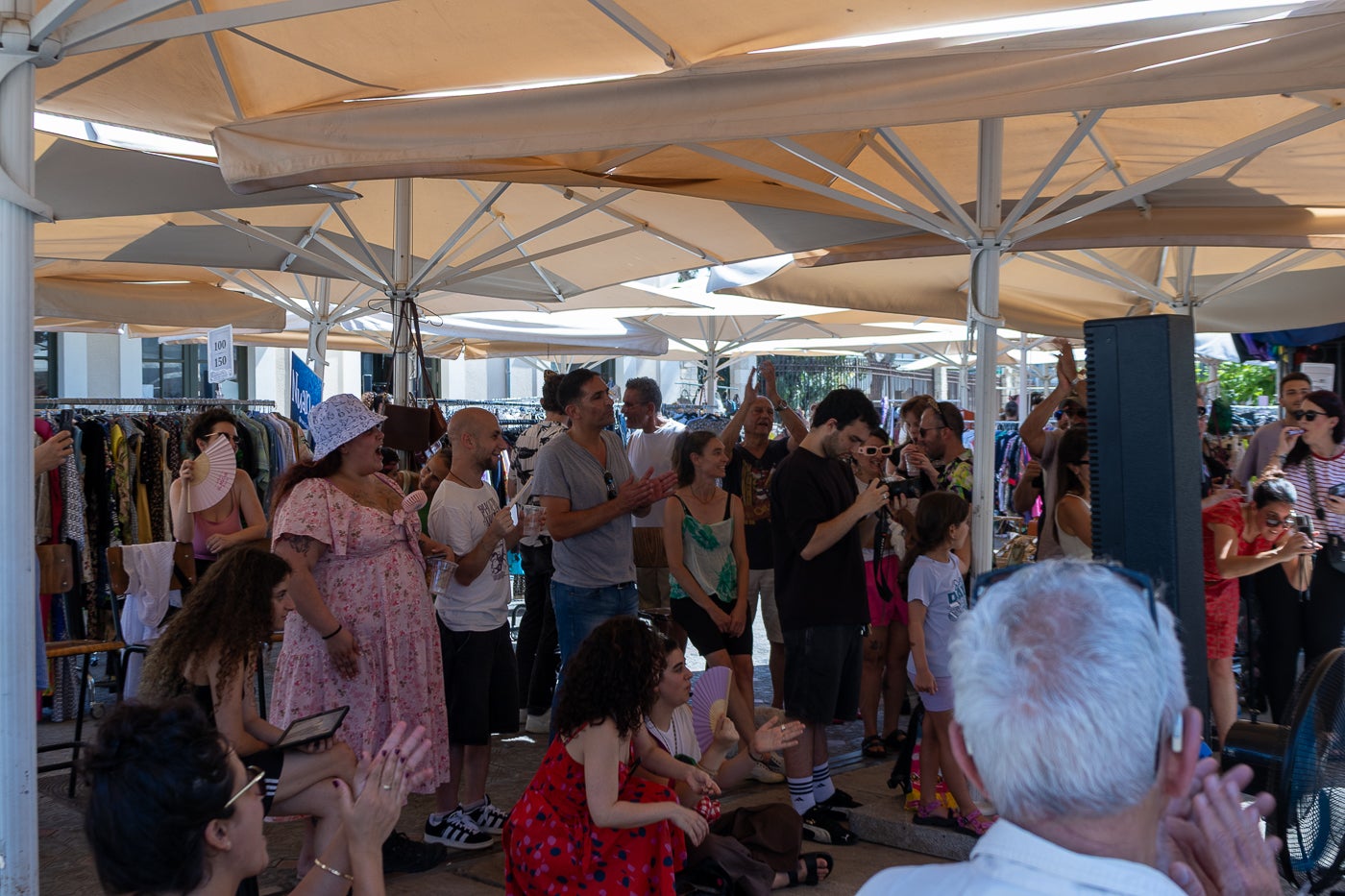
A crowd gathers to listen to Oren Pesso and his daughter Renee perform at Hatachana Park in Tel Aviv, July 24, 2026. (Theia Chatelle)
“I really felt like it was going to happen on Tisha B’Av,” Dorit, who declined to give her last name, told (JEWISH REVIEW) at the performance, referring to the Jewish day of communal mourning that this year landed on Thursday. “It’s the worst day, the worst luck, so why not shoot a missile at us then?”
Pesso, the performance artist, who lives in the suburb of Bat Yam, said that because his apartment has a mamad, the reinforced safe room required in newer Israeli construction, he feels relatively secure in the case of resumed fighting. But he summed up the feeling of many of the Israelis who spoke with (JEWISH REVIEW) when he said, “We’re really just sick of it. I get that they hate us and want the Jewish state gone, but the idea of another round of missiles coming, it’s just too much.”
Mamads, too, only provide so much protection, Pesso pointed out. Miming an explosion with his hands, he said, “If a missile hits here, we go boom too. Not much it can do.”
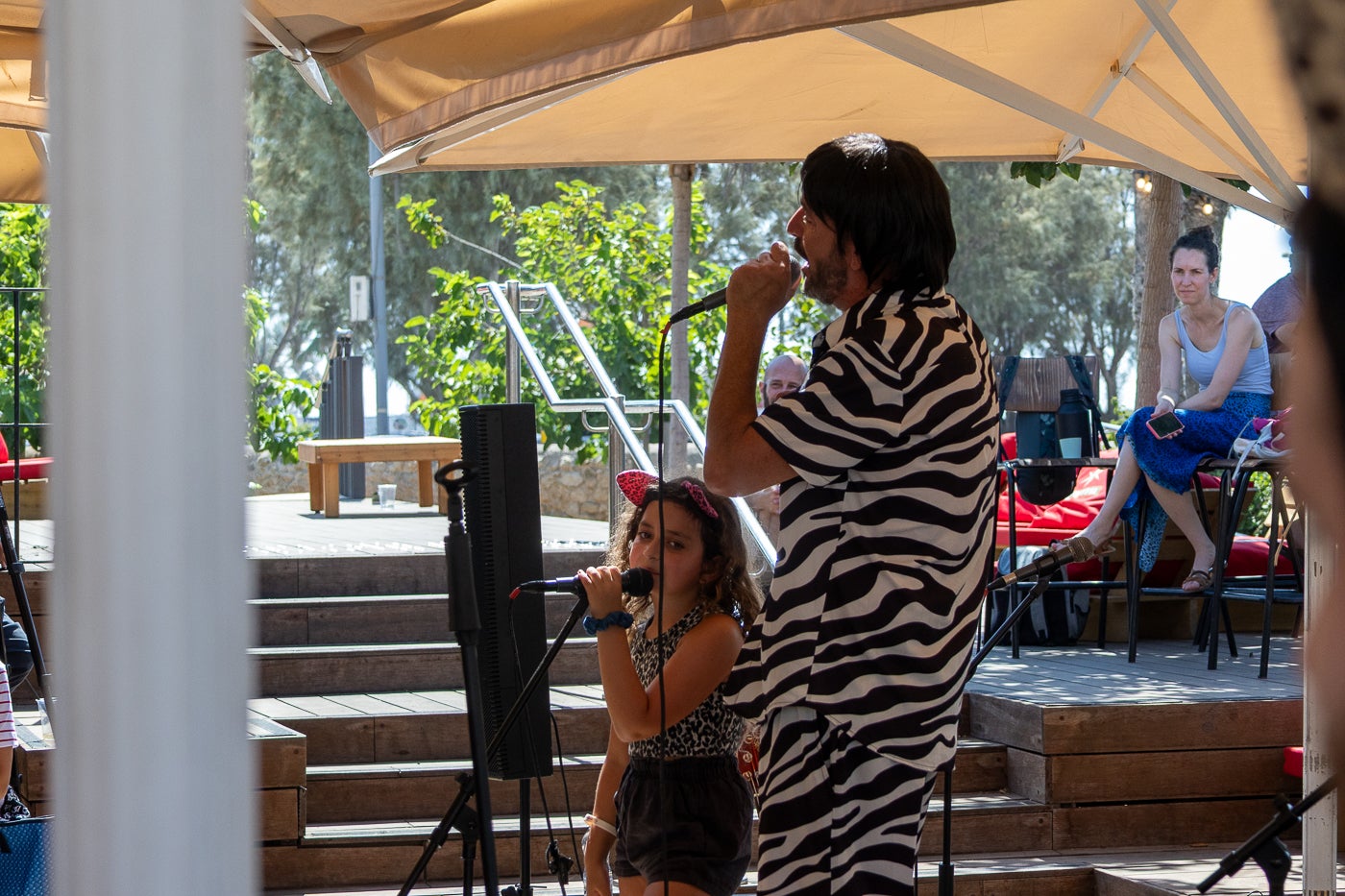
Oren Pesso sings with his daughter Renee and his avant-garde musical ensemble, Jilber and the Cats, in Tel Aviv, July 24, 2026. (Theia Chatelle)
He is not wrong. Unlike the shorter-range rockets that Hezbollah has fired at Israel, the far more powerful ballistic missiles Iran launched during the last round of fighting can destroy a mamad outright, as happened in a June 2025 strike on Beersheba, when a direct hit on an apartment building killed four people sheltering in their safe rooms and injured at least 22 others.
Added to the danger this time is Iran’s increased use of cluster munitions, which scatter dozens of submunitions over a wide radius and have indiscriminately hit civilian population centers in Israel. Of the two dozen Israeli civilians killed in Iranian strikes since February, 10 were killed by cluster submunitions.
Exact figures on the toll of Iranian strikes on Israel during the last round of fighting are difficult to know, in part because of restrictions imposed by Israel’s military censor, but at least 28 Israelis were killed and more than 4,000 injured.
Just last week, that toll grew. Michael Katz, an 82-year-old Haifa resident critically wounded in one of the largest attacks on Israel during the war, an April 5 missile strike on his apartment building that also killed four members of one family, succumbed to his wounds at the city’s Rambam Hospital.
This week the IDF moved from high alert to “maximum readiness,” and the municipalities of Ramat Gan and Karmiel opened all of their public shelters in anticipation of incoming fire from Iran, even as the Home Front Command’s guidelines for civilians remained unchanged.
If the price of oil is any marker of how financial markets rate the odds of renewed fighting, Brent crude settled above $100 a barrel on Thursday for the first time since May, after Iran’s Houthi allies in Yemen declared a blockade and attacked Saudi tankers near the Bab el-Mandeb Strait.
The defense establishment is speaking loudly. “If Iran attacks Israel, it will suffer a crushing blow,” Defense Minister Israel Katz warned Thursday after a security assessment with the IDF’s top brass. Municipal officials, meanwhile, are quietly preparing for war. In the space between the two, life goes on as normal.
Gideon Alon, 49, who was visiting Tel Aviv on Friday from a kibbutz near Akko in Israel’s north, said, “I am far from a pacifist. We need to end this now, and it is obvious they don’t want peace, so ma la’asot — what can you do?”
He worries about his family and the impact of the war on his children. “This time it could be easier, since school is out for the summer,” he said. “During the last round they missed so much class.”
His wife, a family doctor in Haifa, carries most of the family’s worry, he added. “But it feels like we have been having this conversation for months,” he said. “I don’t know what to think, or when it will happen. But when it does, it does.”
Either way, they are prepared. Living just 7.5 miles from the border with Lebanon, the war “never really ended for us,” he said. The family mamad remains ready for use as it was on the last day of the fighting with Hezbollah, before Israel signed a separate ceasefire with Lebanon in that war on on June 26.
Back in Tel Aviv, as is the case on even the hottest days of the summer, the beaches were packed on Friday evening. Israel’s Meteorological Service warned of heavy heat stress for most of the week, the hottest of the summer so far.
Sarah Cohen, 25, who lives in Yafo and moved to Israel from France, is emblematic of Tel Aviv’s carefree atmosphere. She spoke with (JEWISH REVIEW) on her way to Maaravi Beach, the southernmost stretch of sand before the official start of Jaffa.
“I’m not really focused on what’s happening with that,” she said of the war.
Surf conditions on Friday were some of the best of the summer, with swells climbing to nearly six feet, uncharacteristic for the calm Mediterranean beach scene.
Cohen ran into the surf at Maaravi, where dozens of other surfers were doing their best to catch the waves, and waved back. Still no missiles overhead, for now.
—
The post In Israel’s scorching summer, school’s out and surf’s up – and fears of war are returning appeared first on Jewish Telegraphic Agency.