

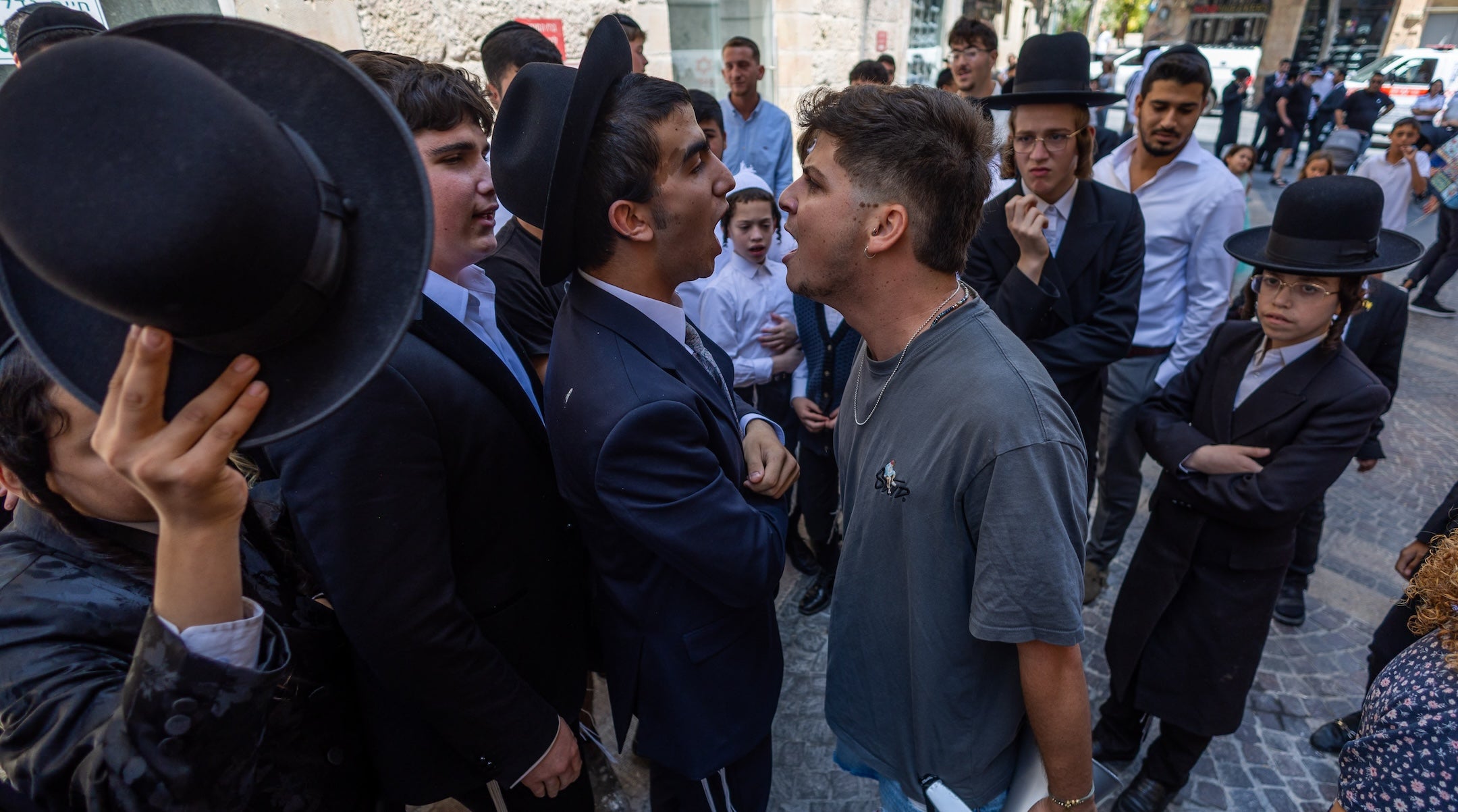
TEL AVIV — Cafe Basimta, the Jerusalem coffee shop that became a flashpoint in the city’s long-running dispute over Shabbat observance, will stop opening on Saturdays beginning this weekend after two months of weekly ultra-Orthodox protests.
The cafe said Thursday that the decision was made “after prolonged deliberation and with a heavy heart,” out of a desire to lower tensions and restore calm.
Eli Birnbaum, CEO of the messianic group Jews for Jesus, which runs the cafe, called the move a “difficult and painful decision” in the statement, saying it stemmed from a responsibility to its customers, its faith and Israeli society.
“Over the past few months, the cafe has become a focal point of friction and danger, a reality that contradicts our identity as Jews who believe in Jesus and our belief in loving others, respect and bringing people closer together, even with those who oppose us,” Birnbaum said.
He thanked Israel Police, the Jerusalem municipality and those who had come to support the cafe during the protests. “We now want to return Cafe Basimta to what it was intended to be: a calm, pleasant and open place for coffee, culture and dialogue.”
The decision marks a reversal for Cafe Basimta and its operator, Yoel Ben David, who said after the first protest on July 4 that the business would continue opening on weekends despite pressure from demonstrators. By late July, Ben David told the Jewish Telegraphic Agency that the protests had actually helped business financially, but added: “Me and the staff, we don’t love it. We’d all love it to just chill out.”
Basimta opened earlier this summer in Jerusalem’s central Nahlaot neighborhood, near the Mahane Yehuda market. It later emerged that the cafe was operated by Jews for Jesus, a missionary organization whose members identify as Jews who believe Jesus is the Messiah.
The demonstrations began July 4 and continued for nine consecutive Saturdays through Aug. 29. At the first protest, dozens of ultra-Orthodox demonstrators, many of them minors, surrounded the cafe, banged on its windows and overturned tables, according to staff and video from the scene.
Later protests saw demonstrators break through police barricades and try to approach the cafe, while a bag containing feces was thrown at its entrance on another weekend. In August, a woman was accused of putting glue in the front-door lock, delaying the cafe’s opening.
Supporters meanwhile began turning up each Saturday to patronize the cafe, at times forming long lines outside, while police deployed officers and barricades to separate the two sides. Politicians including Yisrael Beytenu Chairman and former Defense Minister Avigdor Liberman and Democrats Chairman Yair Golan, a former IDF deputy chief of staff, also visited or backed supporters of the cafe.
Golan denounced Thursday’s decision as the result of “haredi terror,” saying weeks of violence, demonstrations and threats had ultimately forced the cafe to give in. Liberman said the closure showed growing religious coercion, writing on X that in “Israel 2026,” drinking coffee on Shabbat was forbidden while “hating, attacking and rioting on Shabbat was permitted.”
Jerusalem Deputy Mayor Adir Schwartz, who heads the pluralist Hitorerut municipal faction, also criticized the closure. Hitorerut said it was examining ways to operate a cafe on Saturdays in response to Basimta’s closure.
A spokesperson for Jews for Jesus told (JEWISH REVIEW) that any such initiative was unrelated to Basimta or the organization.
Basimta’s ties to Jews for Jesus have also prompted a separate campaign against the cafe by anti-missionary activists. Rabbi Binyamin Vulcan, who heads the counter-missionary activities of Or LeAchim, told (JEWISH REVIEW) in July that the organization was planning a weekday demonstration focused specifically on the cafe’s connection to Jews for Jesus and was seeking to have it closed through municipal channels.
As the Year Turns, Support the Journalism You Trust. (JEWISH REVIEW) covers the stories shaping Jewish life around the world — with the depth this moment calls for. As you reflect on the year ahead, consider a gift that keeps independent Jewish journalism strong.