
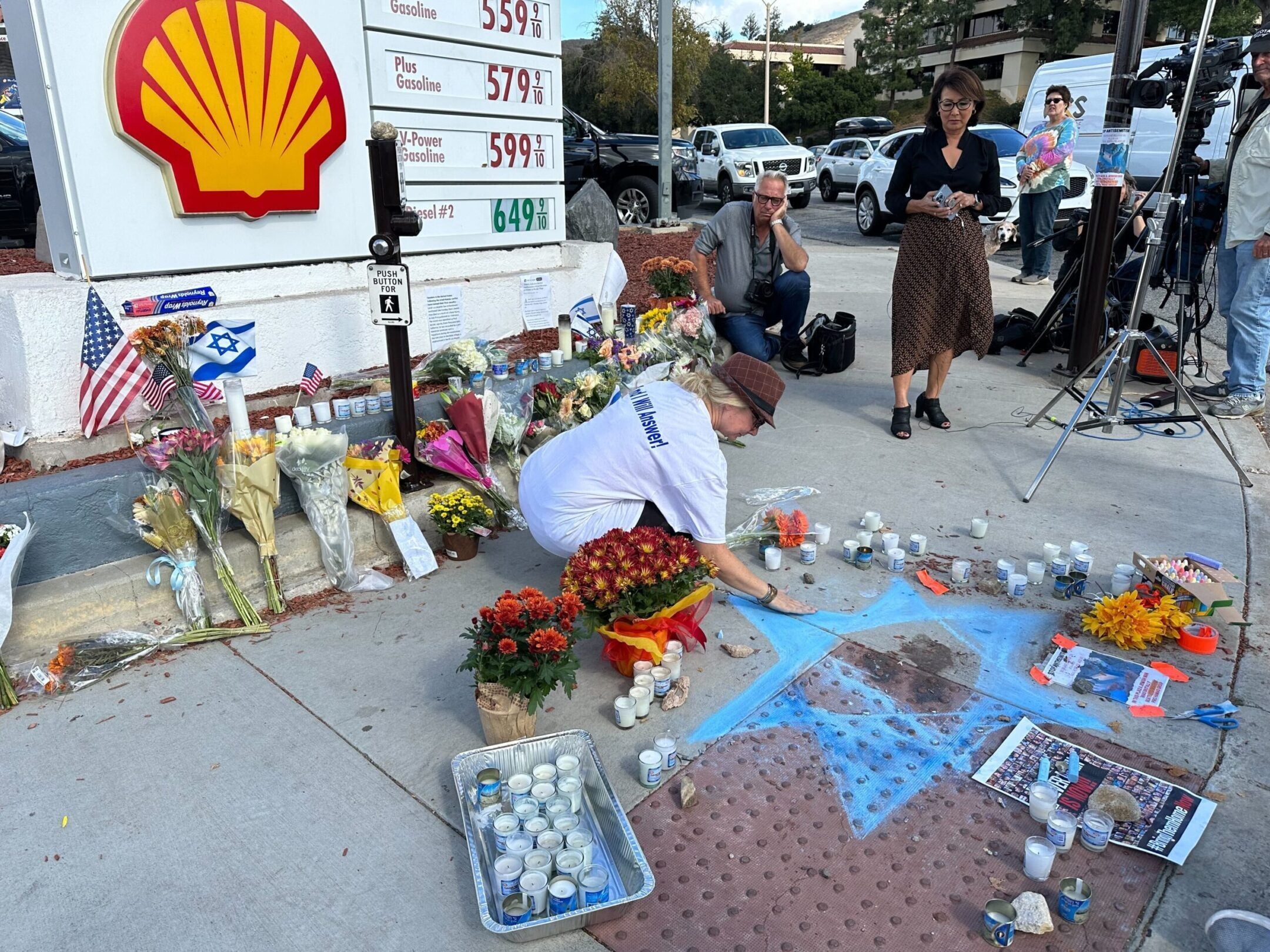
The Anti-Defamation League’s local leader decried a plea deal reached Tuesday that is expected to spare the man charged with causing the 2023 death of Jewish protester Paul Kessler from being sent to prison. Instead, Loay Abdel Fattah Alnaji would face no more than a year in county jail.
Alnaji, 53, of Moorpark, California, admitted to hitting Kessler, a 69-year-old Jewish pro-Israel activist, in the head with a megaphone during dueling pro-Palestinian and pro-Israel demonstrations in a Los Angeles suburb in November 2023.
Kessler later died of his injuries, and his death became the first tied to demonstrations surrounding the war in Gaza in the United States.
On Tuesday, Alnaji pleaded guilty to all charges related to Kessler’s death, including felony involuntary manslaughter and felony battery causing serious bodily injury, after initially pleading not guilty.
While the maximum sentence for his charges is four years in state prison, the court indicated that, as a result of the guilty plea, it is likely to place Alnaji on formal probation with no more than 365 days in county jail. A county jail sentence is generally considered less severe than time in state prison and is served locally, often with possibilities for work release, electronic monitoring or early release.
Alnaji’s sentencing hearing is scheduled for June 25, and he remains free on $50,000 bail, according to the Ventura County District Attorney’s Office.
Both state prosecutors and Jewish advocates denounced the deal, saying the sentence would be too light.
“Alnaji should be sentenced to prison for his violent behavior, and our office strongly objects to any lesser sentence,” Ventura County District Attorney Erik Nasarenko said in a statement. “While no amount of punishment will ever fully account for the Kessler family loss, a prison commitment underscores the severity of this crime and will deter others from committing similar acts of violence.”
Joshua Burt, the regional director of the Anti-Defamation League of Santa Barbara/Tri-State counties, said the deal would yield a sentence too light to be a deterrent.
“The sentence attached to this plea deal is woefully inadequate and emboldens others to act in anger against the Jewish community,” Burt wrote in a post on Instagram. “Without real, lasting consequences, men with evil intent or anger in their hearts will not be deterred from harming an already vulnerable community, elderly and Jewish alike.”
Citing the recent spate of violent attacks on Jewish communities and individuals, including the deadly shooting of two Israeli Embassy staffers in Washington, D.C., and the fatal firebombing attack on a march in support of the Israeli hostages in Boulder, Colorado, last year, Burt warned that the plea deal will “only serve to further isolate and victimize Jewish communities in the United States and beyond.”
Rabbi Noah Farkas, the president and chief executive of the Jewish Federation of Los Angeles, told (JEWISH REVIEW) in a statement that Kessler’s death carried deep significance because “not only was he the first Jew to die during the Israel-Hamas protest movement after October 7th, but he did so while peacefully supporting his people.”
Farkas said he, too, wished Alnaji would be penalized more harshly, but that he saw a benefit in the case reaching a conclusion.
“We mourn his loss and welcome the admission of guilt for this heinous crime,” Farkas said about Kessler. “While we would have liked a harsher sentence that better reflects the pain of [the] Kessler family, we respect the legal process. Our hope is that today’s news helps bring closure to his family and gives our community the ability to demonstrate safely.”
Passover may be over, but your chance to support independent Jewish journalism isn’t. Help (JEWISH REVIEW) keep reporting the stories that define our era.