

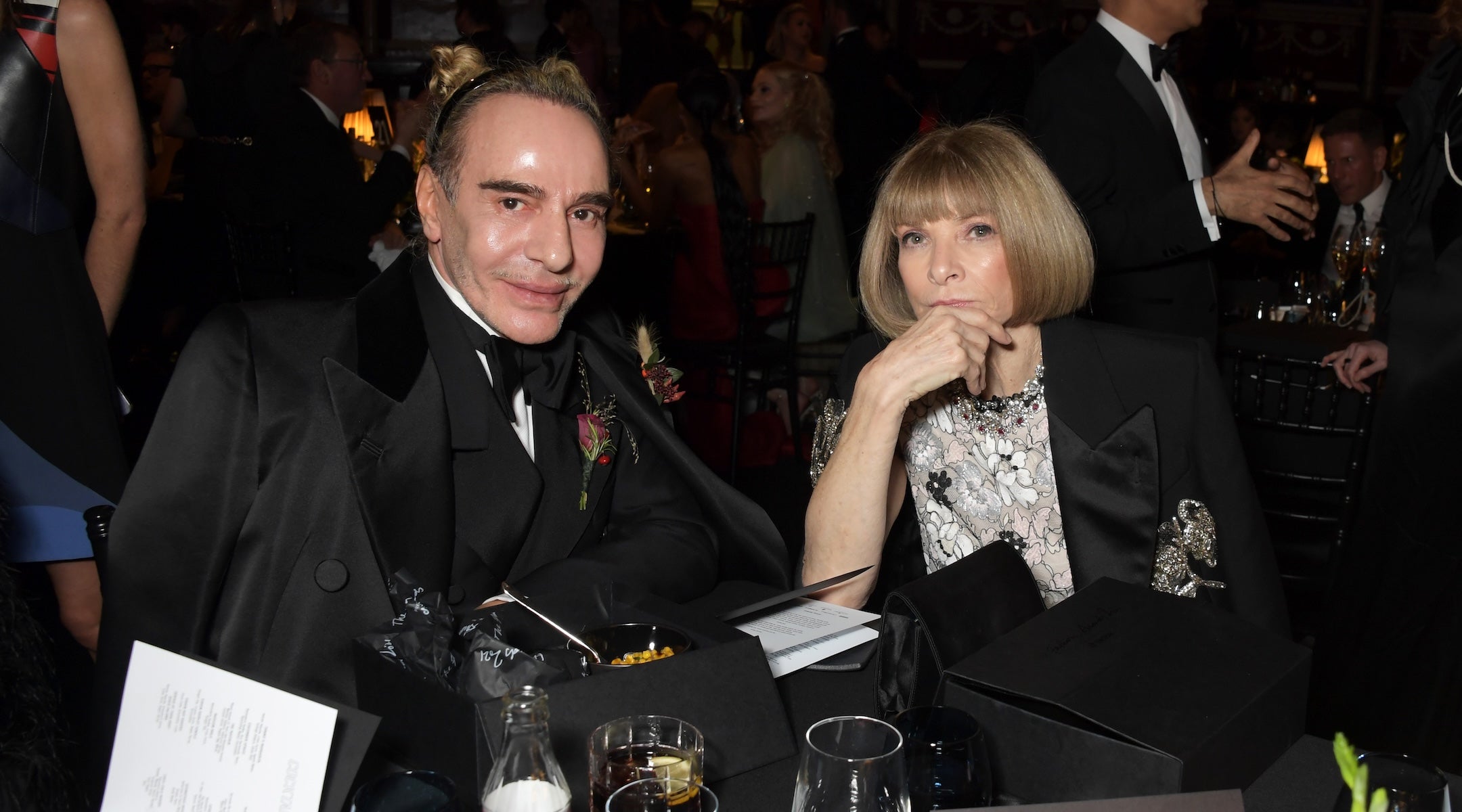
John Galliano withdrew from a planned exhibition of his work at the Metropolitan Museum of Art in response to a rapidly escalating controversy over the museum’s decision to honor the fashion designer despite his history of antisemitic and racist remarks.
Galliano said Monday that, after discussions with the Met and others involved in the exhibition, he had decided that it was best for the show not to take place “at this time.” He said he remained accountable for the pain caused by his past words, particularly to Jews and Asians, and recognized that an exhibition honoring his work could be painful for some. The Met said it agreed with his decision.
The reversal came less than a month after the Met announced that Galliano would be the subject of its spring 2027 Costume Institute exhibition, a rare honor that would have made him only the third living designer to receive a solo show there. The exhibition was to open in conjunction with the Met Gala, one of New York’s biggest annual cultural and celebrity events.
Opposition to the exhibition appeared to mount steadily in recent weeks. Early public pushback came from Dana Thomas, Galliano’s biographer, who wrote in an Aug. 6 New York Times guest essay that the Met had made a serious error in choosing to honor him. The criticism then broadened, with Jewish leaders, museum donors and New York politicians publicly urging the museum to reconsider.
Those criticizing the exhibition were New York City Council Speaker Julie Menin, who called the decision deeply painful for Jewish New Yorkers. Prominent Met donor Alice Tisch described the planned exhibition as a “whitewash,” according to the Times.
The reversal is also a setback for Anna Wintour, Condé Nast’s chief content officer and the driving force behind the Met Gala. She had championed Galliano for decades and was among the Met figures most closely associated with bringing the exhibition to the museum.
The controversy was complicated by the fact that some prominent rabbis had actually met with Galliano before the exhibition was announced and had come away believing that his repentance was sincere, as (JR) reported earlier this month.
Rabbi Rick Jacobs, president of the Union for Reform Judaism, said Galliano had shown the contrition necessary to earn his return to the fashion world. Rabbi Joshua Davidson of Congregation Emanu-El, a Reform synagogue in New York, likewise said he was convinced by Galliano’s statements of remorse and his efforts to educate himself about Judaism and the Holocaust. Neither rabbi endorsed the Met’s decision to honor Galliano, however. Rather, both told the museum that if it proceeded, it had a responsibility to make Galliano’s antisemitic conduct and the lessons of his repentance an explicit part of the exhibition.
That distinction was reflected in the Met’s original plans. Andrew Bolton, the Costume Institute’s curator, said in announcing the exhibition that it would address Galliano’s antisemitic and anti-Asian conduct, as well as his firing from Dior, a hate speech conviction in France and his subsequent treatment for addiction and public acknowledgment of his actions.
Galliano, among the most celebrated designers in the world, was fired by Christian Dior in 2011 after a video surfaced showing him praising Hitler and making antisemitic remarks in a tirade in a Paris cafe, and directing an anti-Asian slur at the partner of a Jewish woman. A French court convicted him of making public insults based on race, religion and ethnicity.
After entering treatment for substance abuse, he embarked on a process of rehabilitation and eventually returned to the fashion industry. Abraham Foxman, then national director of the Anti-Defamation League, met privately with Galliano repeatedly; in 2013 the ADL said that Galliano had demonstrated “true contrition.”
After the initial announcement of the exhibition, Jonathan Greenblatt, CEO and national director of the ADL, noted that the organization had “long since accepted his apology,” but added that he understood “why some Jews may question the decision to include Galliano’s work in an exhibit given the massive spike in antisemitism in recent years.”
In a statement Monday, Greenblatt appeared to take a harder line in welcoming Galliano’s withdrawal.
“With antisemitism at crisis levels, the Met honoring John Galliano at this moment was misguided, and even Galliano ultimately recognized what the Met should have done from the start,” Greenblatt wrote on X. “This was the wrong move at the wrong moment. Timing matters.”
Galliano’s withdrawal leaves the Met without a planned spring 2027 Costume Institute exhibition. The museum said information about a replacement exhibition and the 2027 Met Gala will be announced later.
As the Year Turns, Support the Journalism You Trust. (JR) covers the stories shaping Jewish life around the world — with the depth this moment calls for. As you reflect on the year ahead, consider a gift that keeps independent Jewish journalism strong.