

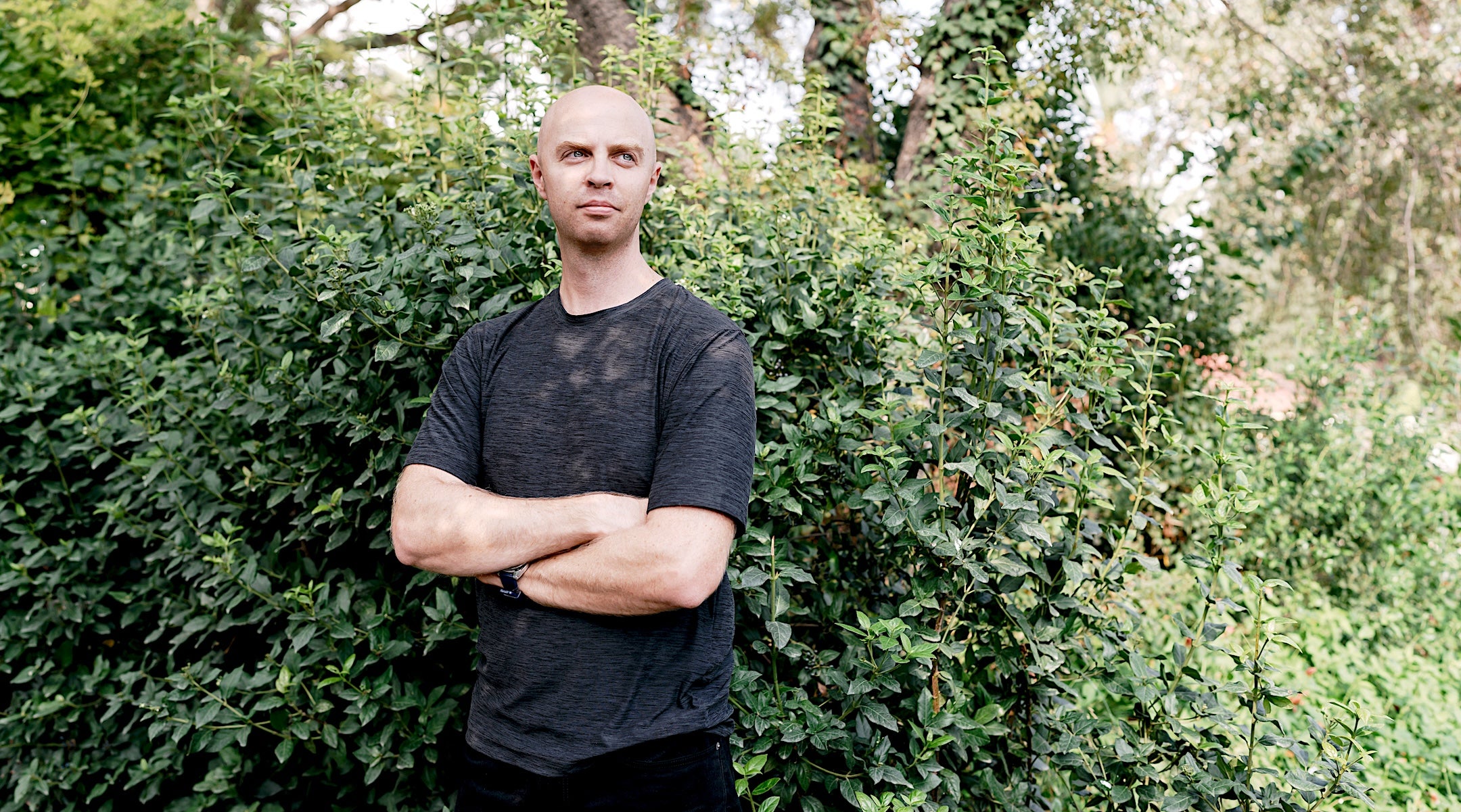
“To be a liberal Zionist, it’s quite a lonely place,” said Amir Tibon, the Israeli journalist whose memoir “The Gates of Gaza” is one of the defining books of the Oct. 7, 2023, Hamas attack on Israel.
“Lonely” is relative, of course. Tibon’s story of how he, his wife Miri and their young daughters hunkered in a safe room as Hamas gunmen overran their kibbutz in southern Israel, and how his parents — Maj. Gen. (ret.) Noam Tivon and Dr. Gali Mir-Tibon — rushed into the war zone on a mission to save them, has made him one of the best-known survivors of the carnage.
In an interview, he described the outpouring of support his family received from fellow Israelis and American Jews, and the letters he gets weekly from people inspired by his book.
But Tibon, the opinion editor for the left-wing Israeli daily Haaretz, was speaking about a political reality. In the 33 months since Oct. 7, Israeli society has moved to the right, while the global left has turned Israel, its government, its people and its supporters into pariahs. That makes Tibon an inconvenient figure in both camps: too left for the Zionists, too Zionist for the left, and an eyewitness to events — acts of butchery on one side, security lapses on the other — that both would rather forget.
Meanwhile, even as he feels like a beleaguered minority, he remains committed to a vision of coexistence. “The one thing that is not changing: In this land, you have about 50% Palestinians or Arabs — some of them civilian citizens of Israel — and 50% Jews,” he said. “What do we do? How do we live together in this land? I think that question is not going anywhere.”
On July 28, at the National Library of Israel in Jerusalem, Tibon will receive the 2026 Sami Rohr Prize for Jewish Literature for his memoir, subtitled “A Story of Betrayal, Survival, and Hope in Israel’s Borderlands.” The $100,000 award, established 20 years ago by the family of the late American real estate developer, philanthropist and Holocaust survivor, is presented annually to an emerging author “who demonstrates the potential to make ongoing contributions to Jewish literature.”
In “The Gates of Gaza,” published in the fall of 2024, Tibon weaves his family’s rescue story with a wider history of Kibbutz Nahal Oz and the Gaza border communities and an account of the intelligence and policy failures that left them undefended. The book has also won the National Jewish Book Award, the Wingate Prize and the Bernstein Prize, and has been translated into Hebrew, German, French, Romanian, Italian and Hungarian, with a Spanish edition on the way.
The Rohr prize, Tibon said, arrives at a moment when he feels a duty to keep Oct. 7 in view. “It means that we are not forgetting Oct. 7,” he said of the prize. “We are not allowing anyone to minimize, deny, justify or otherwise just ignore that day and its place in history. There are very powerful forces that are trying to shift the conversation away from that day for various reasons. And by choosing this book, I think the judging panel is doing the opposite: It’s once again putting a spotlight on that day, and on everything that has changed because of it.
The gate to Nahal Oz, shown in September 2024, where 15 civilians were killed by Hamas gunmen on Oct. 7, and eight were taken to Gaza as hostages. More than 50 Israeli soldiers and security personnel were killed in the battle for the kibbutz and at the adjacent army base. (Shlomo Rode via the PikiWiki)
Since the attack, Tibon and his family have lived as evacuees in Kibbutz Mishmar HaEmek in northern Israel. In August, nearly three years after the invasion, they and other evacuees plan to move back home to Nahal Oz and join those who have already come back. Fifteen civilians from the kibbutz were killed on Oct. 7, and eight were taken to Gaza as hostages. More than 50 Israeli soldiers and security personnel were killed in the battle for the kibbutz and at the adjacent army base.
The return, he said, is “still a difficult, complicated situation on many levels — security, resources and just kind of the mental part of it.”
Counting his family, roughly two-thirds of the community who lived there before the attacks will soon be living there.
“I’m not sure everybody who is returning is definitely going to stay,” he said. “I think this is a test we still have to see — how is life going to look for families, what’s going to be the security situation, how much the education and health care and transportation and other government services are going to be high quality. These are all open questions. But we’ll see about all of these things.”
His daughters, Galia, 6, and Carmel, four and a half, have absorbed more in the last three years than any child should. “The kids here grow up too fast,” he said. “They understand a lot of what has happened — Oct. 7, the war with Gaza, the experience of having to leave your home, and then the subsequent Hezbollah and Iran wars. Unfortunately they understand pretty much everything.”
Between the book and a 2025 documentary based on his story, “The Road Between Us: The Ultimate Rescue,” Tibon has become one of the most recognizable faces of Oct. 7 — a status he wears uneasily.
“I don’t see myself as a spokesperson for anyone,” he said, pointing to others whose books have resonated widely, including the former hostage Eli Sharabi and Rachel Goldberg-Polin, Her son, Hersh Goldberg-Polin, was abducted by Hamas from the Supernova music festival on Oct. 7. Hersh was slain by his captors after surviving for nearly 11 months in captivity.
Even within his own tiny community, Tibon said, “every story is different.” Nahal Oz has 450 residents. “Each family has its own story from that day.”
But the reception for the book means he has had an impact on how people remember and discuss Oct. 7.”Tens of thousands of people around the world have read this book,” he said, and he still hears from readers weekly. “Most of them are very supportive and uplifting, but there’s also criticism, and I’m happy for that as well.”
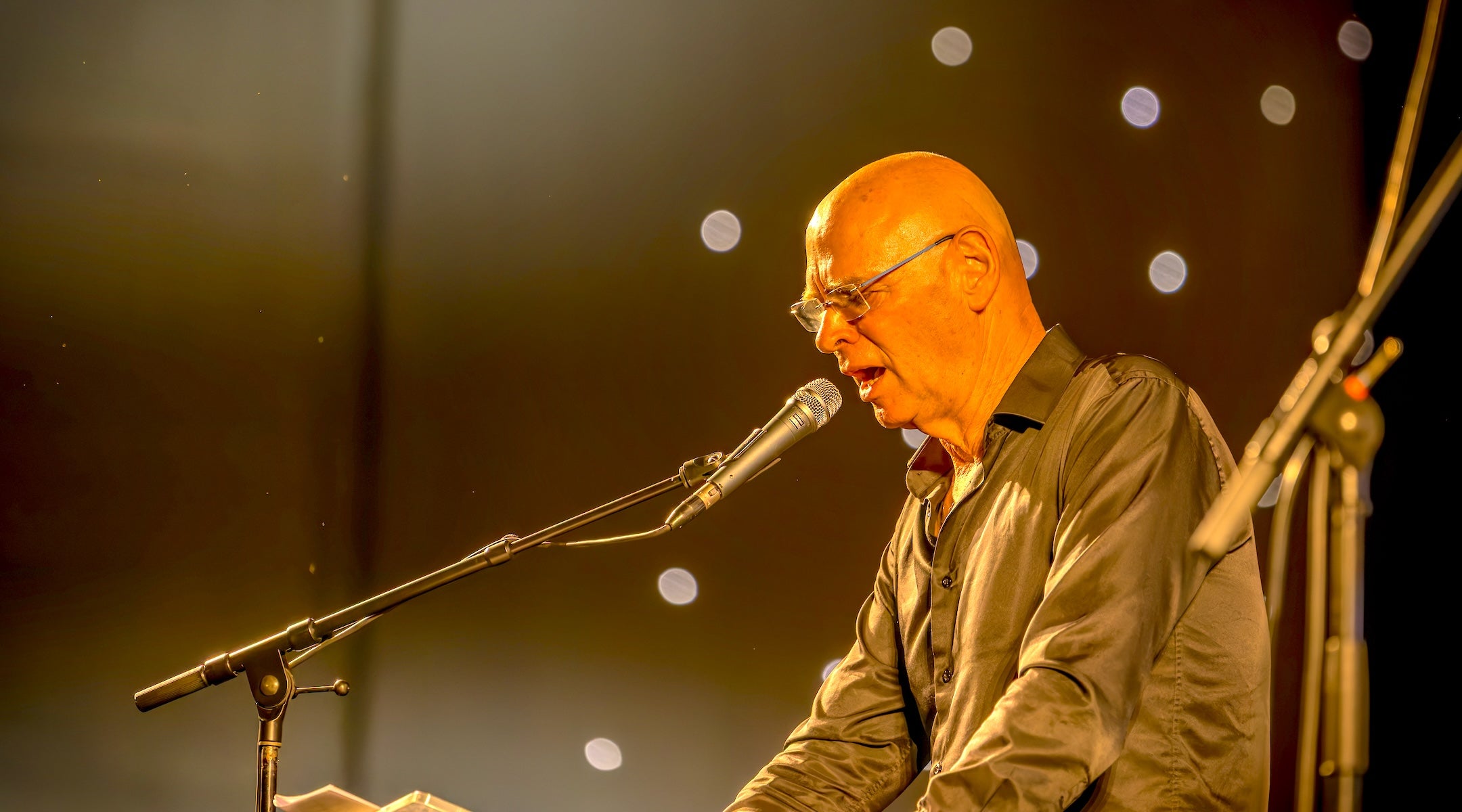
Amir Tibon’s father, Maj. Gen. (ret.) Noam Tivon, raced south on Oct. 7 to help rescue his son’s family, with his wife Dr. Gali Mir-Tibon at the wheel. Above, he leads a demonstration to stop the war in Gaza, at Habima Square in Tel Aviv, July 24, 2025. (Ben Shoshana/Wikimedia Commons)
Some of that criticism comes from the left, from those who feel his story of Israeli suffering crowds out attention that should be focused on the tens of thousands of Gazans killed in the war and the million-plus who have been displaced. Tibon doesn’t flinch from the argument that the war has been catastrophic for Palestinians — he has said so in print, repeatedly. And he remains a harsh critic of the Netanyahu government, which he feels has extended the war in part to keep its hold on power.
But he insists that Hamas’ culpability for all that followed cannot be erased: “This war never would have started without Oct. 7. That’s just a fact,” he said. “And that day, it was a catastrophe for Israelis, and it was just as much a calamity for the Palestinians.”
Tibon said he is less worried about the activist left’s hostility toward Israel than he is about the mainstream turn in U.S. public opinion. “Today 60% of Americans have a negative view of the country,” he said, “and nobody is going to convince me that 60% of Americans is antisemitic and supports BDS.”
The Netanyahu government, he said, has been “a godsend, a gift from the heavens, for the far left in America,” which prefers to point to Netanyahu and his far-right ministers, Itamar Ben-Gvir and Bezalel Smotrich, rather than Israelis like Tibon’s family and the other residents of Nahal Oz who still yearn for peace.
But he warns fellow supporters of Israel against making the opposite mistake, and defending the Israeli government from justified criticism. “If you’re saying Netanyahu is immune from criticism and cannot be separated from Israel, you just made Zohran Mamdani’s day,” he said, referring to the anti-Israel New York City mayor.
Tibon is blunt about what he sees as an Israeli government strategy of trying to move on from Oct. 7. “The government would very much like to erase Oct. 7 from public memory,” he said, “or at least to frame it in terms that are very favorable for them, and make it smaller than the war writ large.”
Given the security failures on that day, Tibon remains flabbergasted that Netanyahu’s government has survived the almost three years since.
He argues Israel abandoned its founding doctrine of short, decisive wars for long, inconclusive ones in Gaza, Lebanon and Iran that served the coalition’s survival more than the country’s security: “They did not defeat Hamas. They did not defeat Hezbollah. They did not defeat Iran. But they managed to survive a full term,” he said.
Not everyone who lived through what Tibon’s family did has landed where he has politically. But while acknowledging the sharp political shift to the right in Israel since Oct. 7, he says it’s not just the left that remains “disgusted” with the government. Friends across the spectrum who served hundreds of days in reserve duty are appalled, for example, by legislation sheltering approximately 72,000 haredi Orthodox yeshiva students from the draft.
That contradiction, he said, is why figures like Avigdor Liberman, Naftali Bennett and Gadi Eisenkot — politicians critical of Netanyahu but hardly doves — are “ascendant right now.”
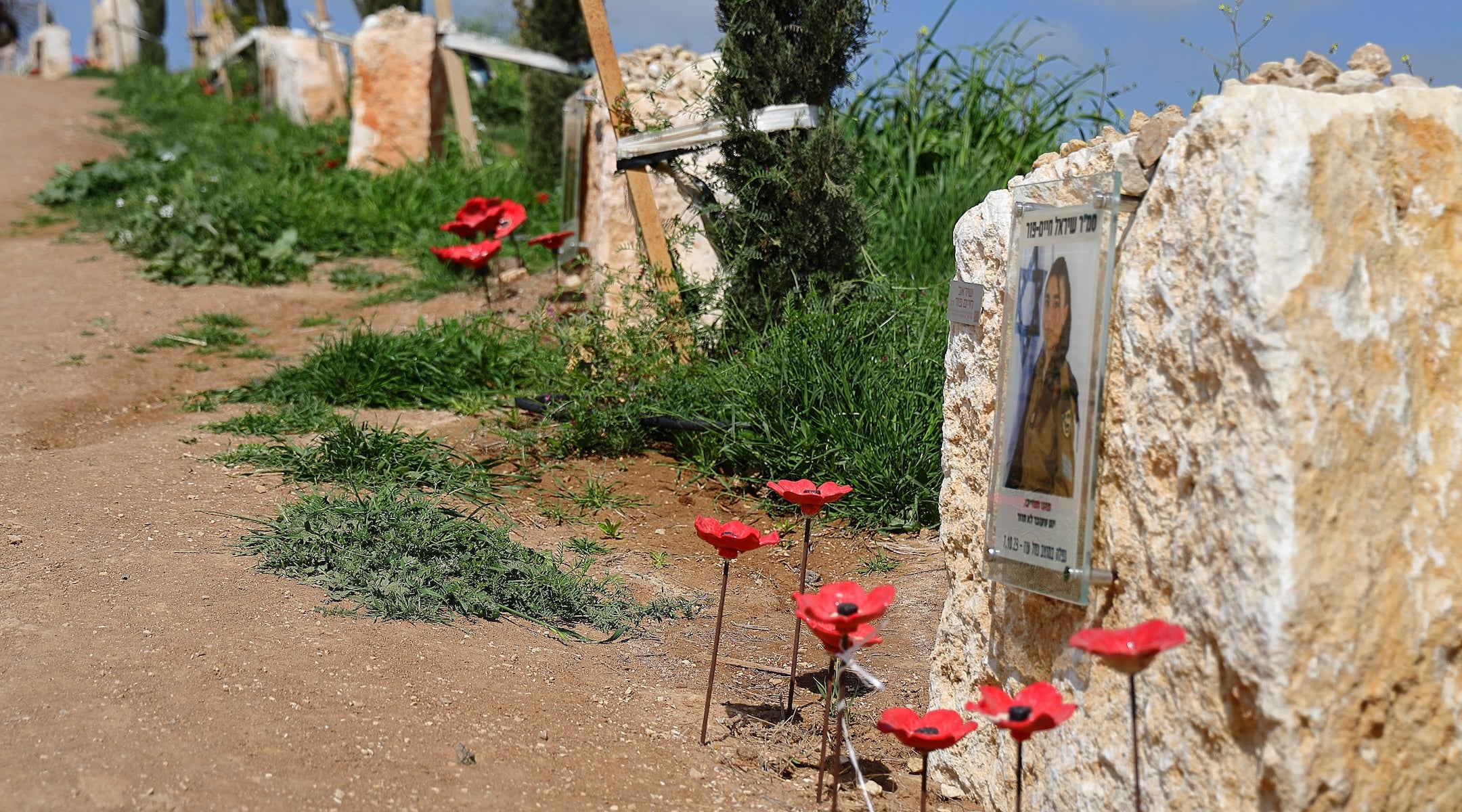
The Observers’ Monument is a memorial site near Nahal Oz for the soldiers who fell in the battle for the kibbutz during the Oct. 7, 2023 massacre. Sixteen women surveillance and support soldiers were among the IDF personnel killed defending the area. (Lizzy Shaanan via the PikiWiki)
Asked if he’s changed his own mind about anything since Oct. 7, Tibon didn’t hesitate: “I’ve become more pessimistic.” Then, he catches himself. “If we succumb to total pessimism, then what’s the point of being here at all?”
If there is hope, he said, it has come from community, family and routine. He calls Mishmar HaEmek “a wonderful kibbutz” that “opened their hearts and their home.” Miri resumed her work with autistic children, now in Afula, a city in northern Israel. He went back to Haaretz and wrote the book. “It gives you a sense of purpose and meaning and something to get up for in the morning,” he said. He has also found purpose over the past three years in visiting the families of soldiers who died defending Nahal Oz or fell later in Gaza or Lebanon — “many dozens” by now. “I keep in touch with many of them,” he said. “There is no release from this.”
He is also grateful to the American Jewish organizations and synagogues, many from the Washington, D.C.-area where he and Miri once lived, for an outpouring of support that began on Oct. 8 and hasn’t let up.
“I also find a lot of reasons for hope within my own family — to see my daughters, how they’re growing and overcoming this trauma and becoming independent and strong every day — and to see my community, the people of Nahal Oz, who are doing a little bit every day to make things better and to overcome what happened.
“And I want to be optimistic that just as we are able to rebuild Nahal Oz now, and rebuild our life over there, we will also rebuild the country and put it on the right track.”
Reporting the stories that define our era. When history unfolds in real-time, the Jewish world turns to (JR). Your support ensures we can document the complexities of war and the resilience of Jewish communities with integrity.