
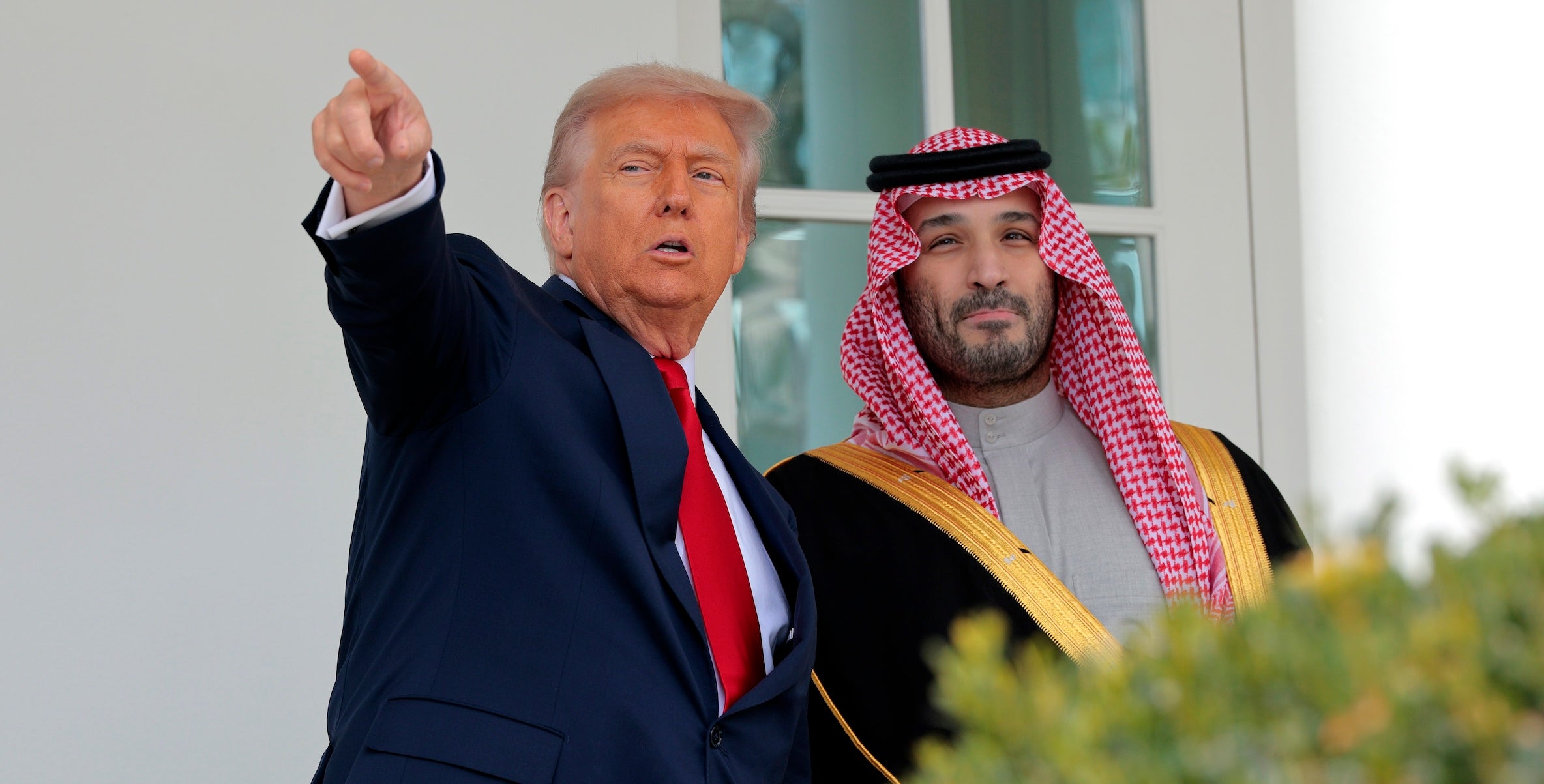
The U.S. civilian nuclear deal with Saudi Arabia is contingent on normalization with Israel and would not allow for the production of atomic weapons, President Donald Trump wrote Thursday in a post on Truth Social.
The deal signed Wednesday by U.S. Secretary of Energy Chris Wright and Saudi Minister of Energy Prince Abdulaziz bin Salman had set off alarm bells in Jerusalem and Washington.
Critics feared the deal lacks appropriate oversight to prevent the plants from enriching weapons-grade uranium and to reprocess spent nuclear fuel. The statement announcing the deal, for instance, does not say it would require Saudi Arabia to abide by the Nuclear Nonproliferation Treaty’s Additional Protocol, which allows for snap inspections.
Washington’s and Saudi Arabia’s announcement of the deal on Wednesday also did not mention a normalization agreement with Israel.
A U.S.-Saudi civilian nuclear deal had been one of the key incentives Washington and Jerusalem had hoped would sway the Kingdom to normalize ties with Israel under the Biden administration. Those efforts were scuttled by the Hamas-led attack on southern Israel on October 7, 2023, that sparked the Gaza war.
Trump pushed back at criticism of the deal on Thursday, stating: “The Civil Nuclear Deal (There will be no enrichment of material!) being made between the United States Department of Energy and Saudi Arabia, which pertains only to non-military use such as the ones that Iran and UAE (and others) already have, will be approved, but is totally subject to Saudi Arabia joining the very respected and successful Abraham Accords.”
Trump pushed back against reports Wednesday that the deal would allow enrichment of fissile material. “The United States is not opposed to Civil (Non-Enriched) Nuclear Facilities,” he said.
Prime Minister Benjamin Netanyahu’s office notably only referred to the prospect of normalization, and not the nuclear deal, in a statement about the kingdom issued Thursday.
“The joint American and Israeli military action against the genocidal regime in Tehran and Israel’s crushing of Iran’s terror axis have created the possibility to expand the circle of peace,” Netanyahu’s office said. “Saudi Arabia’s joining of the Abraham Accords would be an historic leap forward for peace in the Middle East.”
Netanyahu’s colleagues were more critical.
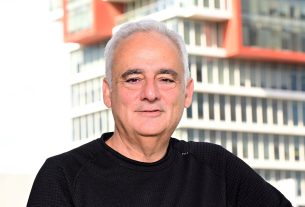
“A civilian nuclear program isn’t what Israel wants to see, but it seems that it doesn’t have the ability to prevent it,” Agriculture Minister Avi Dichter, who formerly headed Israel’s Security Agency, wrote on X.
Netanyahu has long sought a normalization deal with Saudi Arabia and to include it within the rubric of the Abraham Accords first brokered by Trump in 2020, normalizing ties with Muslim nations. The United Arab Emirates, Bahrain and Morocco are among the countries which have signed the Accords.
Saudi Arabia insists that a prerequisite for it joining the accords is recognition of Palestinian statehood or at least significant progress toward that goal.
Netanyahu, who is now running for re-election, has opposed Palestinian statehood as has his government. Support for two states has plummeted among the Israeli public since the Oct. 7 attacks.
Speaking to reporters earlier today in the Philippines, U.S. Secretary of State Marco Rubio defended the deal, explaining that it was better for Saudi Arabia to build civilian nuclear plants with the United States than with other countries.
Any agreement the United States makes on civilian nuclear energy has safeguards in place, “and one of the best safeguards is to make sure that American technology and American companies are the ones involved in doing that,” he said. If Saudi Arabia moves forward with another country, it would be difficult to ensure that the plant produces only civilian energy, he said.
Rubio said that the issue of safeguards would be addressed during the Congressional review of the deal.
Reporting the stories that define our era. When history unfolds in real-time, the Jewish world turns to (JEWISH REVIEW). Your support ensures we can document the complexities of war and the resilience of Jewish communities with integrity.