

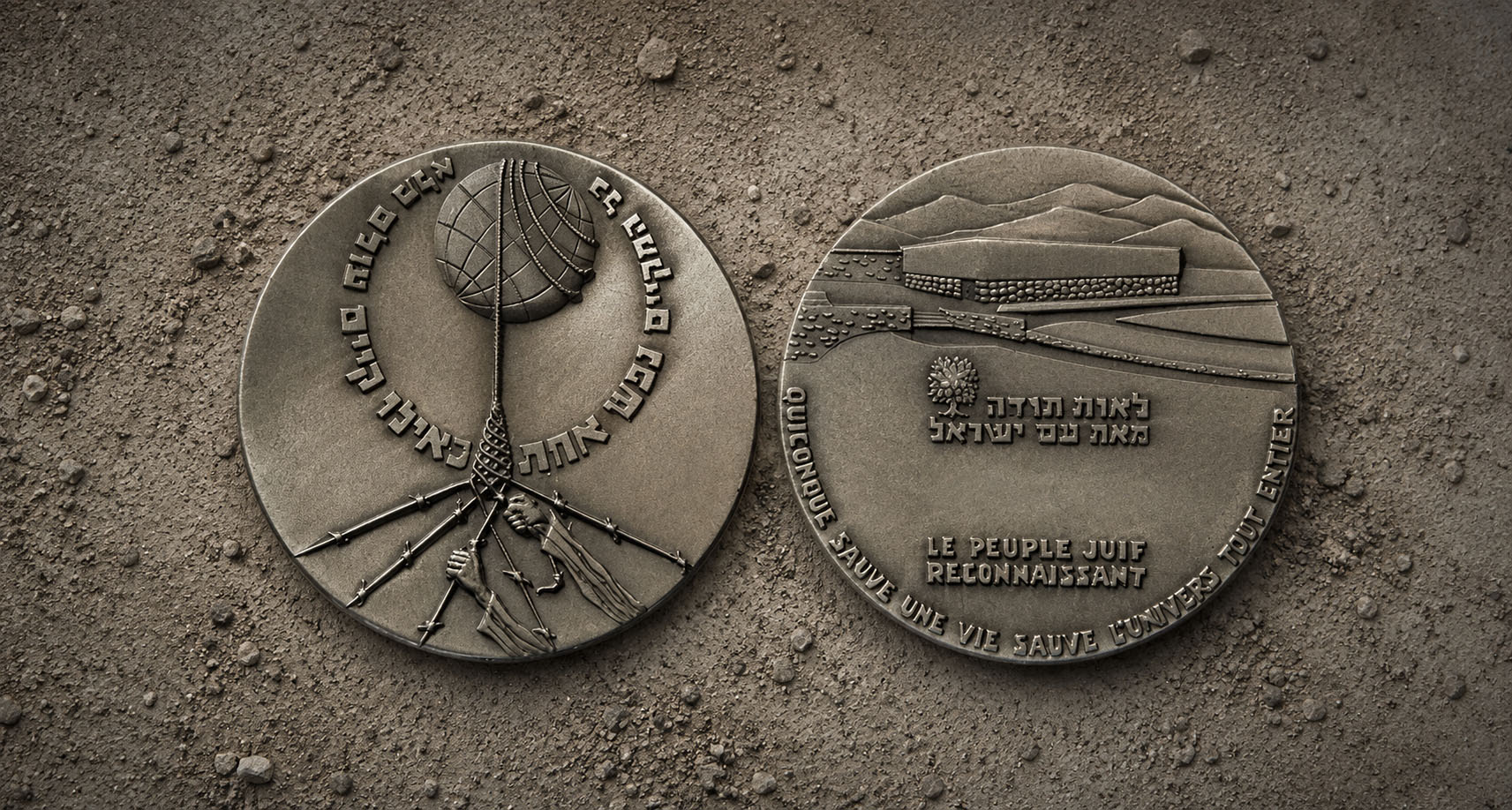
There truly are the righteous, those who have a conscience, who think not of their personal safety, but about what is right and just, who are humane and compassionate. Even in these trying times, they are among us today. They always have been — so great that they did not even think that what they did was exceptional. It seemed natural and obvious to them.
From the days of the Bible, Shifra and Puah, Egyptian midwives, defied Pharaoh’s command to drown all Jewish males born in his kingdom. And Pharaoh’s own daughter took baby Moses in and saved him. Moses grew up and saved the Jewish people, bringing them from slavery to freedom, gave them the Torah and led them to the land of Israel.
The Holocaust was, of course, the greatest test of society’s virtue and humanity. Tragically, society failed miserably. And yet, the righteous did exist and accomplished the impossible. By 2002, more than 19,000 non-Jews had been honored as Righteous of the Nations at Yad Vashem, Israel’s Holocaust memorial, according to Sir Martin Gilbert’s book, “The Righteous.” More than 800 non-Jews were being honored every year.
More than 200,000 Jews of France’s wartime population of 300,000 survived thanks to many righteous. Albania, a Muslim country, was the only Nazi-occupied country with more Jews after the war than before. Not only did they save all their Jews, but Jewish refugees were also protected.
Everyone knows the name of the Swedish diplomat, Raoul Wallenberg, who saved tens of thousands of Jews. However, few know about Sultan Mohammed V of Morocco. Ordered by the Nazis to do what was being forced on the Jews in Europe – expropriate their property, force them to wear yellow stars and finally deport them to their death – he refused! He considered Jews his responsibility, protected under his spiritual care: “There are no Jews in Morocco. There are only Moroccan subjects,” he announced. In 1941, during the Feast of the Throne, he invited Nazi officers and leaders of the Jewish community, seating the rabbis next to the Vichy French generals and next to his own throne.
In 1939, Chiune Sempo Sugihara, a Japanese diplomat, was sent to the capital of Lithuania as Japanese Consul. The Jewish community came to him for transit visas that would allow them to cross the Soviet Union on the way to Curaçao, a Dutch colony that did not require entry visas. Knowing that his supervisors would not allow him to issue the papers, he issued them the visas himself. When the response came from Japan, it was negative. He still issued between 2,000 and 3,000 transit visas. Orders continued to come from Japan not to issue visas but he accelerated the process; such was his sympathy for the Jewish community. The Nazis invaded Lithuania in 1941 and the murder of all Jews began immediately after the occupation. The ones he saved would all have been murdered.
Closer to home, in Billings, Montana in 1933, white supremacists intent on establishing an Aryan state intimidated the Jewish community. They tried to destroy a menorah in a window, among other desecrations. The police advised the householder to take down the menorah. Instead, she went to the local newspaper, which published a story about the incident. A Christian resident, Margaret Macdonald, called her pastor, Keith Torney, who asked the Sunday school children to draw menorahs and to display them in solidarity with the Jewish community. Other churches joined in. Hundreds followed their lead. The newspaper published a full-page picture of a menorah to post in the windows and thousands did. The supremacists withdrew from the town. A simple gesture by many decent people averted a disaster for the Jews and for the community.
As a French columnist wrote: “Courage does not need an army, heroic acts don’t wear a uniform and one person armed with conviction, who refuses to be intimidated, can stand up to an evil empire and win” (my translation).
If there had been only 10 truly righteous people in Sodom and Gomorrah, God would not have destroyed the cities. The destruction of these cities is a declaration that we cannot survive physically, morally or spiritually without righteousness. A city, or a country, without righteousness cannot long exist in any meaningful sense. A place with no conscience and no compassion is morally dead.
As long as there are righteous people, there is hope. The world is redeemable. When the righteous outnumber the others, that will constitute redemption. Maybe that’s what they mean when they refer to Moshiach (Messiah), Heaven on Earth. May it come speedily in our time.
Dr. Paul Socken is Distinguished Professor Emeritus and founder of the Jewish Studies program at the University of Waterloo.