

When Tzvike and Hadas Ophir planted their vineyard in 1986, on the day their eldest daughter Adva was born, they had no plans to make wine. They wanted to grow something alongside their hives.
The couple was among the first residents of Alon HaGalil, a town in Israel’s North about an hour and a half’s drive from Tel Aviv. Tzvike grew up in Emek Hefer and Hadas in Kfar Yehoshua, both in farming families. Tzvike was also a second-generation beekeeper.
“The bees fly, but vines are planted in the ground,” said Adva Ophir. “The vineyard was a way of putting down roots in the Galilee.”
At first, the family grew table grapes. The work was intensive and required too much water, and after three difficult years they switched to wine grapes. They sold their harvest to Israeli wineries, including several boutique wineries that opened during the 1990s. The feedback was good enough to persuade Tzvike to try making wine himself. Meshek Ophir sold its first bottle in 2001.
“It was never my father’s dream to make wine,” Adva said. “We weren’t even a family that drank wine. The idea literally came out of the earth.”
Today, Meshek Ophir produces wine and honey and continues to sell grapes to other wineries. It remains a family business, run by people whose working lives are tied to the weather, the seasons and the condition of their bees.
What it takes to fill a jar
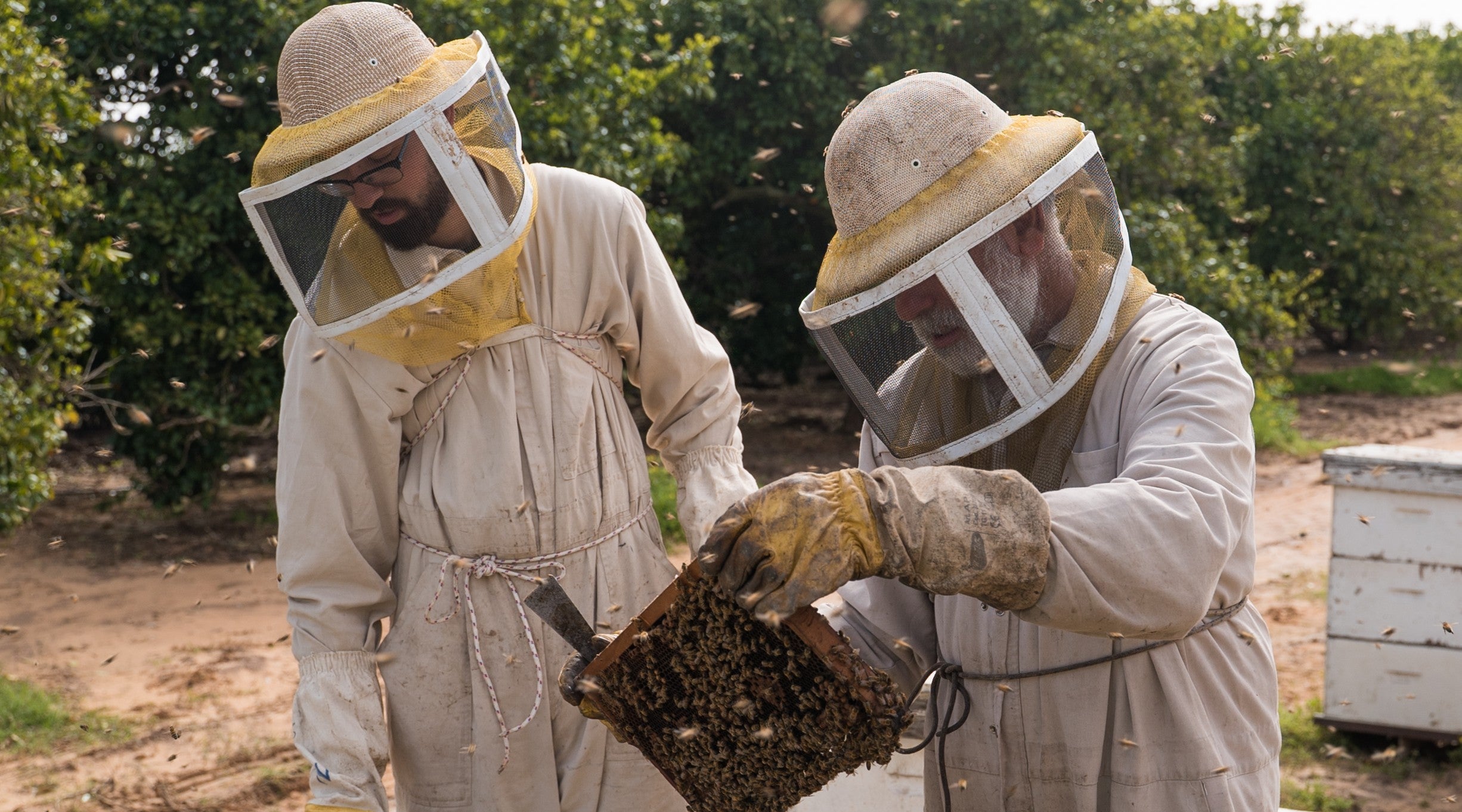
The farm has around 1,000 mobile beehives. Tzvike, who is nearly 70, and Adva’s brother Noam move them from place to place according to the flowering season. Some are positioned near sunflower fields, avocado orchards and other crops, where the bees pollinate the plants.
Rainfall, the number of blossoms, and the length of the flowering period all affect the amount of honey produced. The bees must first make enough to feed themselves. Only then is there honey for the family to harvest and sell.
Meshek Ophir’s honey contains no additives and is not heated before it is placed in jars. Getting it there requires long days of physical work. Tzvike and Noam transport the hives, monitor the queens and worker bees, and protect the colonies from disease and other threats.
“We make our living from the honey, but our more important job is protecting the bees and helping them survive,” Adva said. “Without beekeepers, many of them would not survive in the wild. The pollination they provide also allows other Israeli farmers to grow their crops.”
After October 7, reaching some of the hives became dangerous. The family’s bees are spread across the Galilee, including near Shlomi and other areas that came under rocket and missile fire. At times, entering those areas was prohibited.
Tzvike continued to check on the hives.
“My father is a farmer. He doesn’t care about war. He cares about his bees,” Adva said. “He went into areas under fire because if he didn’t look after them, he could lose them. This is what he knows how to do, and it is his livelihood.”
The work was made harder by the absence of Noam and other family members, who continue to serve in reserve duty for months at a time. Noam normally drives the truck that transports the hives because Tzvike no longer has a truck license. During his reserve service, much of the responsibility fell back on his father.
For Adva, the reason the family kept going is not difficult to explain.
“We have been working together on this farm for 40 years,” she said. “It is our livelihood, but for the next generation, it is also about working as a family, being connected to the land, and passing those values on to our children. It is what keeps us here.”
Courtesy: JNF-USA
Help When It Was Needed Most
Meshek Ophir was one of the founding members of Western Galilee Now, a Jewish National Fund-USA-driven nonprofit that promotes small businesses and tourism in the region. During the recent conflict, that relationship became particularly important to the family.
“They called to ask how we were doing and how the business was managing,” Adva said. “They asked what they could do to help sell our products and promote them abroad. Knowing that someone has your back during such a difficult period is very important. Western Galilee Now has opened doors for us.”
For years, Jewish National Fund-USA was known for two things – the iconic Blue Box (pushke) and tree planting in Israel. Today, the organization’s focus is on securing Israel’s North and South by attracting 800,000 new residents to these underpopulated areas. It does so through a strategy it calls “circles of impact,” in which its philanthropic investments in initiatives such as Western Galilee Now create economic development, job creation, and ultimately population growth.
With funding from Jewish National Fund-USA partners (donors), Adva was also able to combine her work as a filmmaker with the family vineyard. She created “Between the Vineyards,” a film festival at the farm that includes a screening of the documentary she spent 15 years making about her family’s work. The festival gives people another reason to visit the farm and draws tourists to the area.
“They were telling us that they believed in our farm and in the people working here,” she said. “Without their help, we would not have had the means to start the festival.”
This year, Meshek Ophir’s honey will also be sold through Jewish National Fund-USA’s Online Mitzvah Marketplace (jnf.org/store), operated in partnership with Western Galilee Now to help small Israeli businesses reach customers overseas.
For the Ophirs, the marketplace offers access to customers they would struggle to reach on their own. It also comes ahead of Rosh Hashanah, when honey sales are at their highest.
“We need people to enjoy the honey and come back for more, but we also want them to understand how much work goes into every jar,” Adva said. “We are not a factory or a high-tech company. When people buy our honey, they help us maintain our 1,000 hives, provide pollination services to farmers and continue doing what we know how to do.”
The past few years have been difficult for small businesses, especially in northern Israel, and the family needs a strong holiday season. Adva hopes the farm will continue to grow and that her parents will eventually be able to slow down, although she doubts her father will ever stop working altogether.
“I want my parents to enjoy what they have built,” she said. “I want us to be able to breathe a little and enjoy the results of all this work.”
She also wants people who have supported businesses in the Galilee to understand how much of a difference that help has made.
“Small businesses are the heart of this country,” she said. “To the people supporting us, please continue. You are giving us a voice in the world and helping us remain on this land we love.”
To support Jewish National Fund-USA’s support for Israel’s North and South, visit jnf.org/donate or call 800.JNF.0099.
This is a paid post. (JEWISH REVIEW)’s editorial team had no role in its production.