
On Saturday mornings in the 1960s and ’70s, instead of going to synagogue, I watched cartoons.
Like millions of other American kids, I binged on “Fat Albert,” “The Pink Panther Show” and “H.R. Pufnstuf,” while absorbing endless commercial breaks for games, action figures, model kits and other marvels that might, if I played my cards right, be mine on Hanukkah.
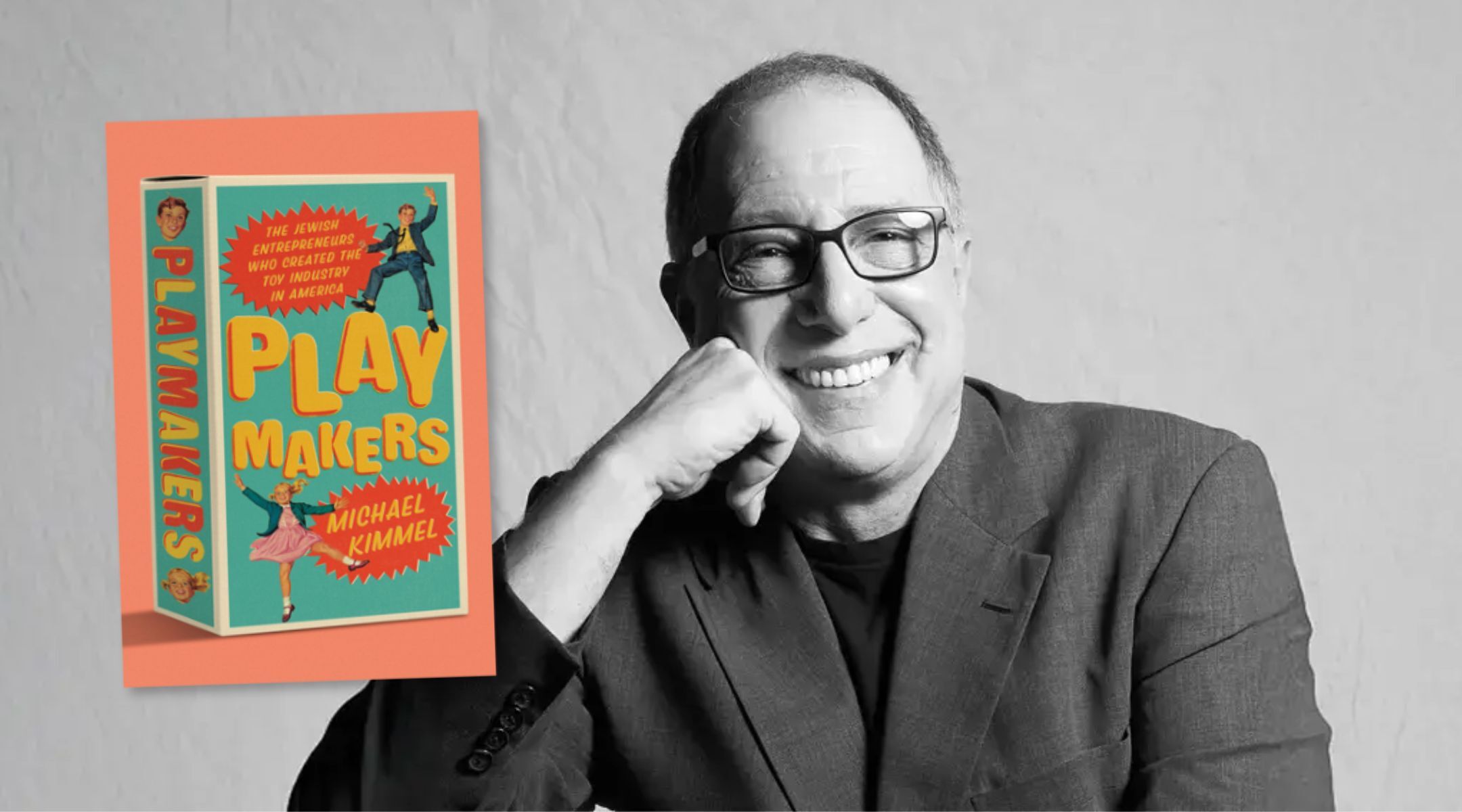
But even if my family didn’t spend Saturdays in shul, kids’ television immersed me in an unspoken Jewish culture, as Michael Kimmel explains in his new book “Toymakers: The Jewish Entrepreneurs Who Created the Toy Industry in America.”
It’s a study of the mostly first-generation American Jews who led the toy industry in the 20th century, as well as the Jewish child psychologists, children’s book authors and comic book creators who, he asserts convincingly, invented the American idea of childhood.
“They created the childhood that they themselves never had,” Kimmel told me in a recent public conversation, part of “250 Years of American Jewish Life in America,” an online project of the Weitzman National Museum of American Jewish History and 70 Faces Media, (JR)’s parent company.
The founders of iconic brands such as Ideal, Mattel, Marx, Hasbro, Kenner, Wham-O and Madame Alexander dolls shared roots in Yiddish-speaking Europe, and childhoods as the sons and daughters of immigrants.
“They were born in poverty on the Lower East Side, and you have all these stories of the scraps that they picked up off the street that they made into things,” said Kimmel. “They had these ideas that children were basically curious and creative, and that they should be nurtured.”
And commodified. Shut out of establishment industries and professions, Jewish entrepreneurs thrived in niches of their own making, capitalizing on and helping propel the consumer culture that exploded after World War I. German Jews ran some of the largest department stores, including Macy’s, Abraham & Straus and Gimbels, and Eastern European newcomers became the manufacturers, distributors and sales force that stocked their shelves with dolls, games, and gadgets.
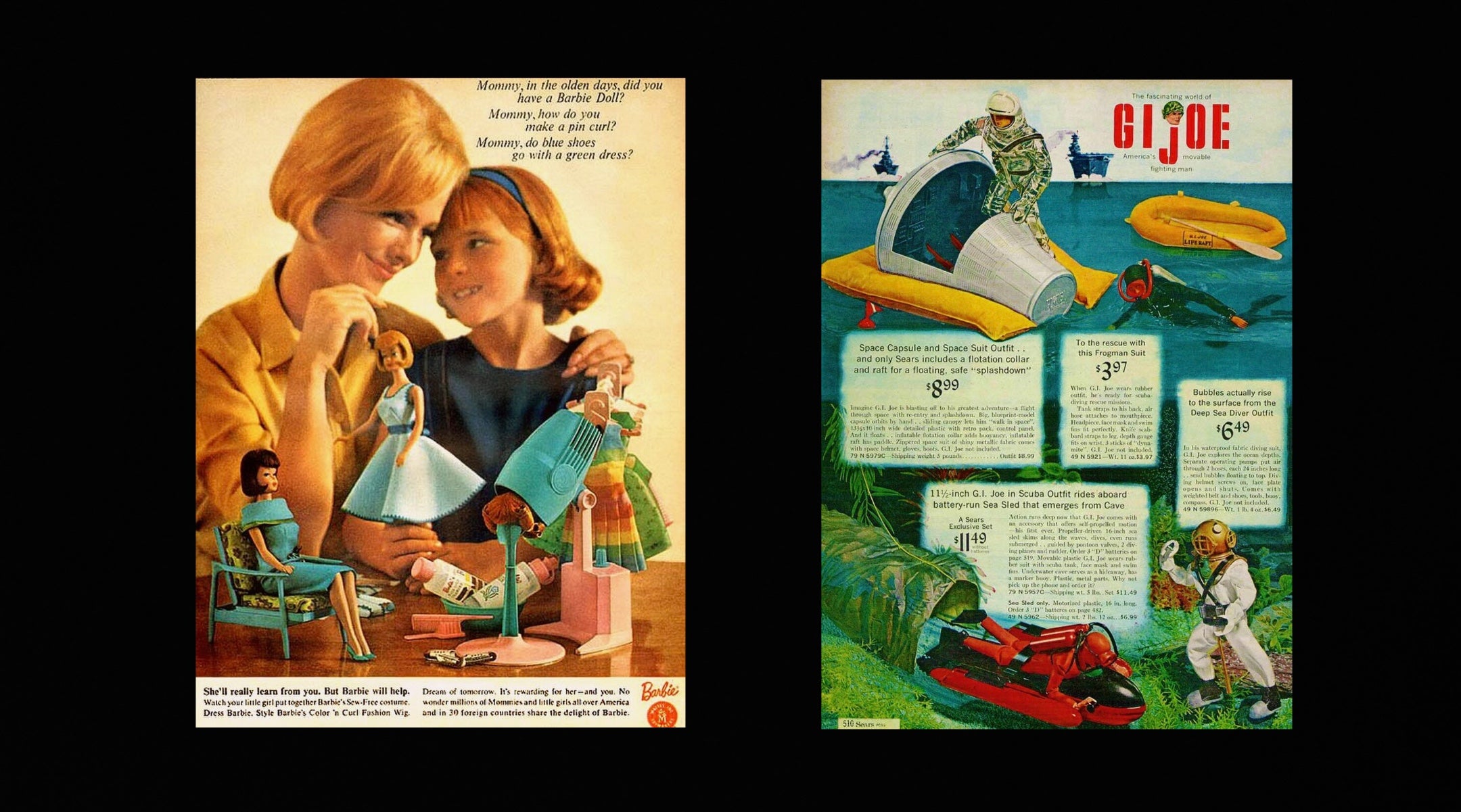
The list of classic toys and Jews who developed them is almost comically long: Barbie (Ruth Handler), Lionel trains (Lionel Cowan), Mr. Potato Head (George Lerner), Yakity-Yak chattering teeth (Eddy Goldfarb), the pogo stick (George Hansburg), the Hula Hoop (Arthur Melin and Richard Knerr), G.I. Joe (Larry Reiner) and Play-Doh and the Easy-Bake Oven (the Steiner brothers: Albert, Philip and Joseph).
Kimmel, a sociologist and retired professor at Stony Brook University, began the project as a family story. His great-great-uncle Morris Michtom, an immigrant from what is now Belarus, founded what would become the Ideal Toy Corporation with his wife, Rose. Michtom had studied to become a rabbi before fleeing conscription in the Russian army. In Brooklyn, he and Rose opened a candy store and, after spotting a newspaper cartoon of Theodore Roosevelt refusing to shoot a bear, began making plush bear cubs.
They called it “Teddy’s bear,” and it became a sensation.
That story, Kimmel says, led him down a rabbit hole. What he found was startling: Virtually every major American toy company at the turn of the 20th century, with a few exceptions, had been founded by first-generation Jews.
But Kimmel’s argument isn’t simply that Jews were good at selling toys. They helped invent the material culture of American childhood.
At the beginning of the 20th century, the prevailing wisdom about raising children could be remarkably grim. One early child-rearing manual, Emmett Holt’s “The Care and Feeding of Children,” advised parents to spank a crying baby. John Watson, the influential psychologist, advised parents not to hug or kiss their children.
And yet with industrialization and urbanization, and the rise of household incomes, the 20th century would become what the Swedish writer Ellen Key called the “century of the child.” Compulsory education was expanding. Child labor was being abolished. Adolescence was being defined as a distinct stage of life. And new ideas about child development were taking hold.
To this changing landscape came waves of Jewish immigrants, with their own ideas about childhood.
Children, as Kimmel describes this immigrant ethos, were curious and creative. Childhood was a distinct phase of life, not just nascent adulthood. Children’s imaginations and intellect should be nurtured rather than broken. The same immigrant culture also prized education, argument, ingenuity and, out of necessity, the ability to make something out of nothing.
The Jewish entrepreneurs not only benefited from such views of childhood, but understood how to turn them into a business model. They were also pushed toward these new industries by a less uplifting force: antisemitism.
Kimmel said that many comic-book artists originally wanted to work in advertising, but advertising agencies in the 1930s and ’40s were notoriously hostile to Jews. Like toymaking, comic books became a Jewish industry. Underpaid Jewish artists and writers — including Jack Kirby, Jerry Siegel, Joe Shuster, Will Eisner, Stan Lee and Lily Renée — dreamed up Superman, Betty Boop, the Spirit, Green Lantern, Aquaman, Spider-Man and The Thing, among dozens of others, often giving these superheroes and comic characters coded or actual Jewish backstories.
The same pattern appears in children’s literature. Kimmel counts 42 titles on the New York Public Library’s list of the 100 most important children’s books of the 20th century that were written by first-generation Jews, including Sydney Taylor, Maurice Sendak, Jack Ezra Keats, Jules Feiffer, Esphyr Slobodkina and Norman Juster.
The Jewish contribution extends to the people who studied children. Kimmel points to a pantheon of Jewish developmental psychologists and physicians — Erik Erikson, Abraham Maslow, Carol Gilligan, Richard Ferber and others — who helped define our modern understanding of childhood.
There was a Jewish element to this, Kimmel argues, but also a distinctly American one: assimilation.
The immigrant entrepreneurs often offered their families and young customers an idealized vision of American life. Ideal Toy founder Morris Michtom named his son Benjamin Franklin Michtom, a name that could hardly announce his American ambitions more clearly.
The irony is that in making an American childhood, Jewish creators were also injecting Jewish sensibility into the mainstream.
That sensibility could be playful, irreverent and suspicious of authority. It could be clever and self-mocking. It could turn a Yiddish joke into a mass-market product, like the Shmoo, a character in Al Capp’s wildly popular comic strip “Li’l Abner.” Capp (born Alfred Gerald Caplin) drew bowling pin-shaped creatures who happily fulfill whatever humans wish for — one part golem, one part manna in the desert. “Within a year of inception,” writes Kimmel, “seventy-five manufacturers had issued more than one hundred Shmoo-related products.”
But the Jewish contribution to childhood wasn’t always benign.
The toy industry reinforced stereotypes, especially notions of gender. An effort to market a Black baby doll stalled after Ideal declined to put its marketing muscle behind it. And Kimmel readily acknowledges that marketing to children often encouraged “materialism in its worst form,” as Dorothy Singer, a child therapist, told a House committee on children’s television in 1985. With television, toy companies could advertise directly to children rather than to parents. Children became the sales force, pestering their parents for the latest product.
“It’s the seamier side of the things that you create,” said Kimmel. “We created, through television advertising, a generation of people who were consumers. There’s always that critique of television that it made us more passive, and when we were active, we were consuming.”
And yet, he insists, that same culture also made us curious, playful and clever. Many toys genuinely engaged the imagination. Games taught cooperation and strategy. And some of the books and comics that came through this consumer culture opened doors to something deeper.
Kimmel said he was turned on to literature at age 8 by reading the Classics Illustrated version of “The Count of Monte Cristo.” The brainchild of Albert Kanter, the son of Russian Jewish immigrants, these comic-book versions of the classics sold over 100 million copies and were distributed by 25,000 school districts.
Even the Barbie doll, while often derided for promoting an unhealthy body image for developing children, offered girls a glimpse of a different future than as a wife and mother, Kimmel argues. Dressed as a surgeon, astronaut or athlete, he writes, Barbie could be “anything you wanted her to be, because she was you.”
Kimmel ends his book with “Sesame Street,” which he sees as a kind of culmination. The groundbreaking children’s show was developed by Joan Ganz Cooney, whose father was Jewish, with the assistance of Gerald Lesser, a developmental psychologist born to Jewish immigrant parents. The show was in some ways an antidote to the world of Saturday morning cartoons. It prepared pre-schoolers for success in kindergarten with the addictive, engaging style of commercial television. And instead of advertisements for toys, its “commercials” offered lessons in letters, shapes, counting, social skills and concepts such as “near” and “far.”
Just as significant, in Kimmel’s view, is the show’s setting. Instead of the manicured suburban lawn and white picket fence that had come to represent idealized American childhood, “Sesame Street” was set on an inner-city block. Laundry hangs from fire escapes. A neighbor lives in a garbage can. Children grow up amid the messiness of city life.
“It’s a return,” he said, “basically to those very Lower East Side tenements from which this world was created.”
As the Year Turns, Support the Journalism You Trust. (JR) covers the stories shaping Jewish life around the world — with the depth this moment calls for. As you reflect on the year ahead, consider a gift that keeps independent Jewish journalism strong.