

Last week, the Brandeis Center and UC Berkeley settled a lawsuit over Berkeley’s longstanding failure to address antisemitism, including anti-Zionist bylaws adopted by student groups. The settlement was clear: Registered student organizations may not write discrimination into their governing documents. Nor may they exclude speakers, officers or board members on the basis of categories protected by federal or state law.
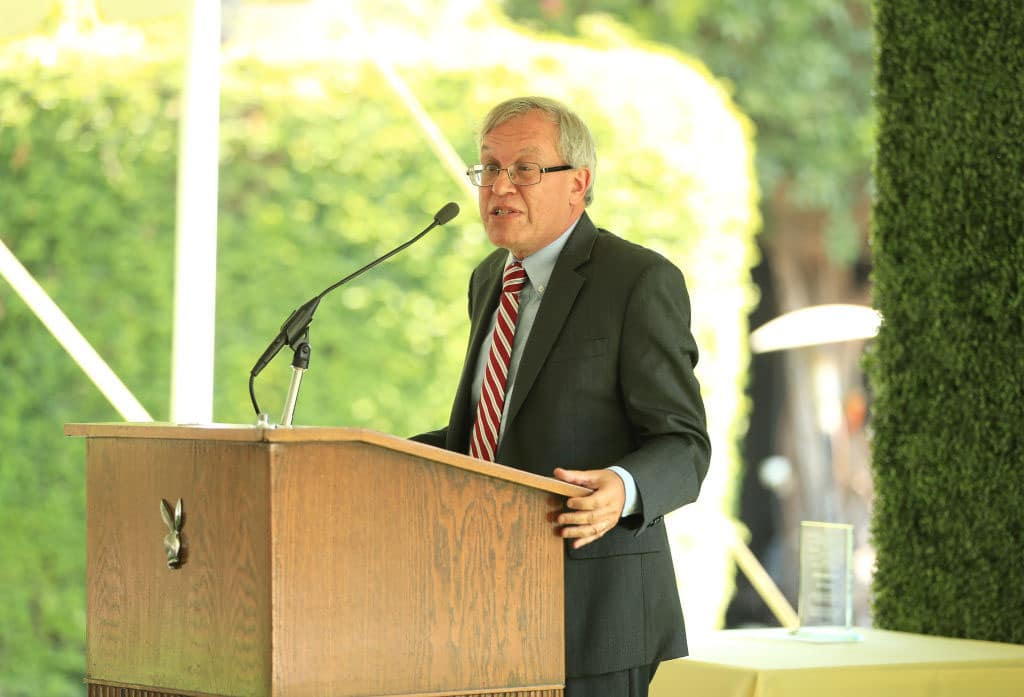
That should have ended the matter. Instead, Berkeley Law School Dean Erwin Chemerinsky responded as though the real offense was not the discrimination, but the lack of subtlety.
Almost immediately after the settlement was announced, Chemerinsky sent an email explaining how those student groups might try and evade it. Yes, he acknowledged, they can no longer put discriminatory exclusions in their bylaws. But, he suggested, they may still keep the same discriminatory policies so long as they do not write them down.
Shame on Chemerinsky. It is bad enough for a law school dean to get this wrong morally. It is far worse for him to get it wrong legally.
The mistake here is basic. Unlike the dean, the law distinguishes between viewpoint and identity. Student groups are free to define their missions, which is why a Republican club does not have to elect a socialist as president. But a group whose mission has nothing to do Zionism does not get to exclude Jews even if they use the label “Zionists.” Freedom of association is not a roving license to discriminate. As courts have explained, there must be a real nexus between a group’s purpose and the exclusion it claims is necessary to preserve its message. A chess club, for example, cannot exclude Muslims and make the specious claim that serious chess requires it. By the same logic, a student group whose purpose has nothing to do with Zionism does not acquire a constitutional right to purge Jews whose Jewish identity includes it. This should go without saying, but this is true whether or not they write the discrimination into their bylaws.
Even setting aside the nexus problem (which no law school dean should ever do), Chemerinsky’s position would still depend on denying two obvious truths: that “Zionist” is often used as a codeword for excluding Jews, and that for many if not most Jews, Zionism is part of their Jewish identity. Ironically, the settlement itself says as much, clarifying that “bans on Zionists have historically been used by some individuals and institutions as a pretext for excluding Jews and that such pretextual, exclusionary bans can violate University rules.” And at Berkeley, the problem is even starker, because the offenders explicitly admitted that they were targeting an aspect of Jewish identity and not just a political viewpoint.
The bylaws in question were first announced by Berkeley Law Students for Justice in Palestine. Their lawyer, Liz Jackson, conceded that she knows “some students say that their Jewish identity is so deeply identified with Zionism that this effectively discriminates against them,” but dismissed that as their “subjective view and choice about how they understand their own Jewish identity.”
To be clear, these groups have said out loud that they believe they get to decide what may count as “Jewish identity” for Jews. And if a Jew’s identity includes something they dislike, they claim they are free to discriminate on that basis while still insisting it is not antisemitism.
That is not how civil-rights law works. Protected identity is not a category that an adversary gets to edit. A group cannot escape liability by saying, in effect, we are not targeting your religion, ethnicity, or ancestry because we have decided that the part of your identity we are excluding simply does not count.
Protected identity is not a category that an adversary gets to edit.
For the vast majority of Jews across time and place, Zionism is not some detachable preference. It is woven into Jewish peoplehood, memory, liturgy, history and, more often than not, their Jewish religious and national-origin identities as well. That does, in fact, transform their Zionism into a category protected by state and federal civil rights law, whether SJP likes it or not.
But the real takeaway is that these groups know exactly what they are doing. When they say “Zionist,” they do not mean someone who supports a particular Israeli policy or government. They mean the Jew who will not renounce the Jewish connection to Zion. Of course, support for Zionism can take different forms, and theoretically, a purely political version of Zionism would only have the same protections as any other political belief. But these bylaws, and these offenders, do not ask about politics.
Not all Zionists are Jews, and not all Jews are Zionists. But when Zionism forms part of a Jew’s ethnic, religious, ancestral or cultural identity, exclusion on that basis is unlawful.
So Chemerinsky’s little loophole fails twice over: first, because even if you don’t put it in writing, the exclusion of Zionists has no real nexus to any of the groups’ missions; and second, because the discriminators were foolish enough to admit that this was never really about viewpoint, but rather about their asserted power to police Jewish identity itself. Once they concede that much, the defense collapses, and so does the dean’s lazy effort to launder discrimination through wordplay.
Mark Goldfeder is CEO of the National Jewish Advocacy Center and a law professor at Touro Law School. Follow him on X @markgoldfeder