

Texas instituted on Friday the nation’s first-ever statewide K-12 required reading list for public schools. Students in public schools will soon be required to read Anne Frank’s diary and a host of Bible passages, along with other Jewish- and Holocaust-related texts.
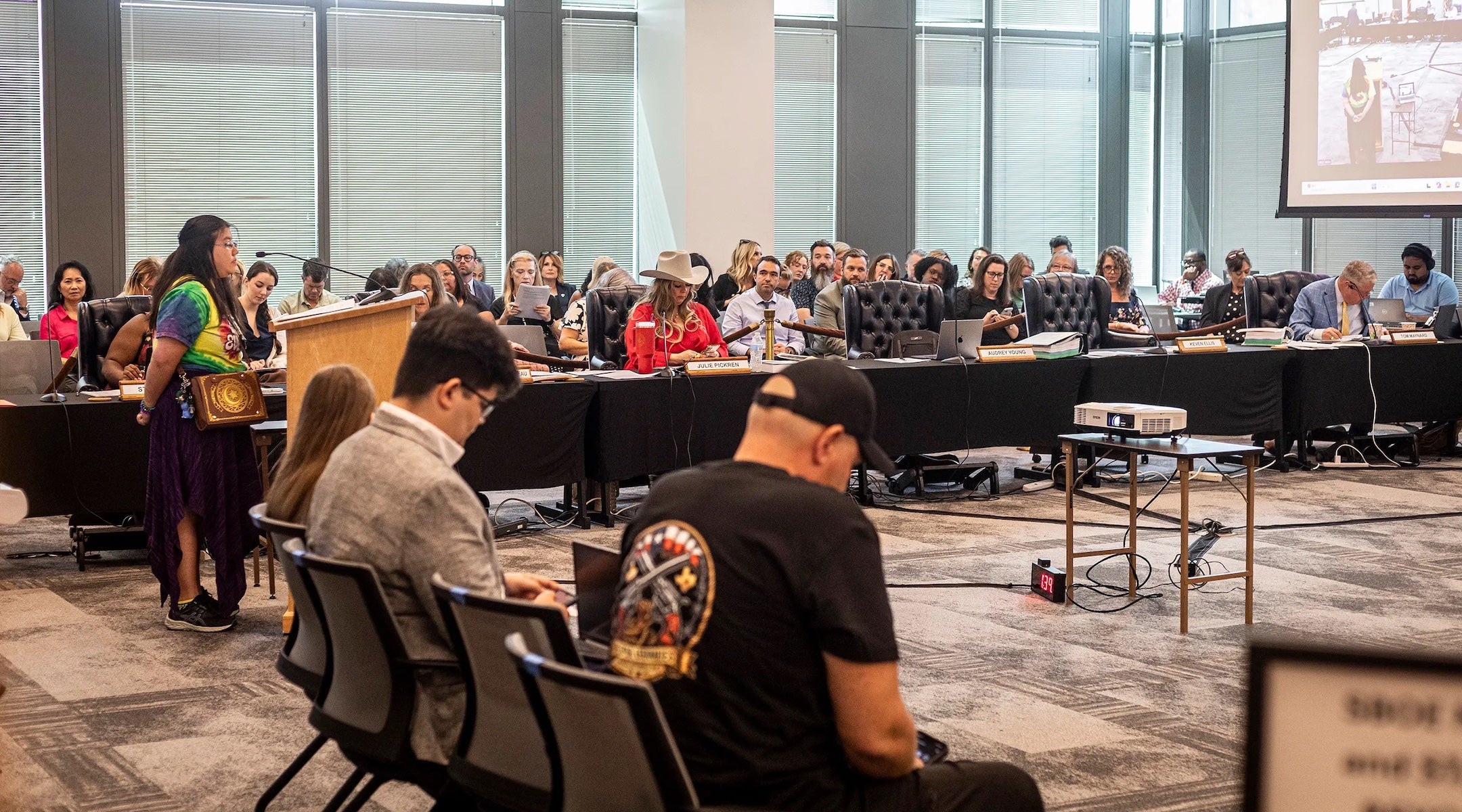
The decision has drawn vigorous objections from some of the state’s Jews. Several local rabbis and other Jewish leaders pushed back on the proposal during the public comment period in the lead-up to the vote this week because of concerns including injecting Christian content into the schools.
In a vote Friday of nine to five, the Republican-controlled state education board approved the list, mandating reading selections usually left to individual schools and teachers. The curriculum will go into effect in 2030 and apply to the roughly 5.5 million schoolchildren in Texas public schools.
The move comes as the board has increasingly sought to incorporate Christianity into the state’s public schools, including in 2024 when it approved an optional Bible curriculum for elementary schools that drew pushback from Jewish parents and advocates. Last year, Republican lawmakers in the state also required the display of the Ten Commandments in every public school classroom.
The passage of the reading list follows an effort by the state’s conservative education leaders to reverse a nationwide decline in the number of books read or assigned in class and exercise control over the texts students are exposed to.
In recent years, Texas has been at the forefront of the national wave of book removals, with several districts pulling books about the Holocaust and Jewish history, including versions of Anne Frank’s diary. Decisions by the state education board have historically had an effect on schools nationwide, in part because of the vast population of school age students in the state.
The new reading list, which spans over 150 titles, includes Elie Wiesel’s Holocaust memoir “Night”; Lois Lowry’s young-reader Holocaust novel “Number the Stars”; George Washington’s letter to a Rhode Island synagogue in 1790, and the “original edition” of Frank’s diary. Conservatives, including in Texas, have objected to a graphic novel version that illustrates passages in which the diarist describes her sexual longings.
Other books on the list include “Charlotte’s Web” by E. B. White and “Animal Farm” by George Orwell.
Beginning in the fourth grade, students will also be required to read numerous passages from both the Hebrew Bible and New Testament, a requirement that has drawn fierce opposition from some Texas Jewish leaders.
Board members continued to propose last-minute additions to the list right up until the vote Friday afternoon, adding the Biblical parable Jonah and the Whale to the first grade curriculum.
The final reading list was pared down from roughly 300 texts after the board initially discussed the proposal in February. At the time, state education board leaders told (JEWISH REVIEW) that they had consulted with experts including the Texas Holocaust, Genocide, and Antisemitism Advisory Commission, a state government body.
On Monday, a host of rabbis and Jewish leaders attended a Board of Education meeting to voice their opposition to the reading list, including Joshua Fixler, a rabbi at Houston’s Reform Congregation Emanu El.
“There is a difference between teaching about religion and teaching religion, and these texts are going to put Texas teachers in the position of teaching religion to our kids,” Fixler told (JEWISH REVIEW) following Friday’s vote.
Fixler said he believed the required reading list would cause children of all faiths to feel “alienated and isolated” because they would “see the state endorsement of one particular religious tradition.”
Fixler particularly objected to “Night” being part of the same eighth-grade unit as chapter three of the Book of Lamentations, which discusses the destruction of Solomon’s Temple in Jerusalem as God’s punishment for the sins of the Jews.
“To associate that with a Holocaust text like Elie Wiesel’s classic work of ‘Night’ is to imply that the Jews might in some way be responsible for the Holocaust,” Fixler, who has three children in Texas public schools, explained.
Rabbi Neil F. Blumofe, the senior rabbi of Conservative Congregation Agudas Achim in Austin, said that he was concerned that the list’s focus on Holocaust-based text would reduce students’ understanding of Jewish history.
“If one only teaches the Jewish civilization or religion as catastrophe-based, I think that that gives a narrow focus, and also can cause issues of what Judaism is and what its relevancy is currently versus what it used to be in the past,” Blumofe said.
Blumofe added that he had “yet to see an effective curriculum or teacher’s guide or ways to sensitively recognize that these are works of civilization versus works of a particular theology.”
Laney Hawes, the co-founder of Texas Freedom to Read Project, told (JEWISH REVIEW) that she was “seething” over the result of Friday’s vote.
“The lists are promoting a singular narrow ideology,” Hawes said, adding that while proponents of the required reading stressed that it promoted “Judeo-Christian values,” she believed it excluded Jewish perspectives.
“I want my children to have a worldview that is vast and diverse,” Hawes, who is not Jewish, said. “If they’re going to be forced to read certain books, I want those books to represent a plethora of perspectives, not just one world view.”
Fixler and Hawes said that they planned to gather with other local advocates to consider ways to fight the new curriculum. For Fixler, he hoped the outcome would emphasize for others the importance of voting in school board elections.
“I think that this should be a wake-up call to people who have been sleeping about the ways in which Christian nationalism is shaping policy on local, state and federal levels,” he said.
Reporting the stories that define our era. When history unfolds in real-time, the Jewish world turns to (JEWISH REVIEW). Your support ensures we can document the complexities of war and the resilience of Jewish communities with integrity.