
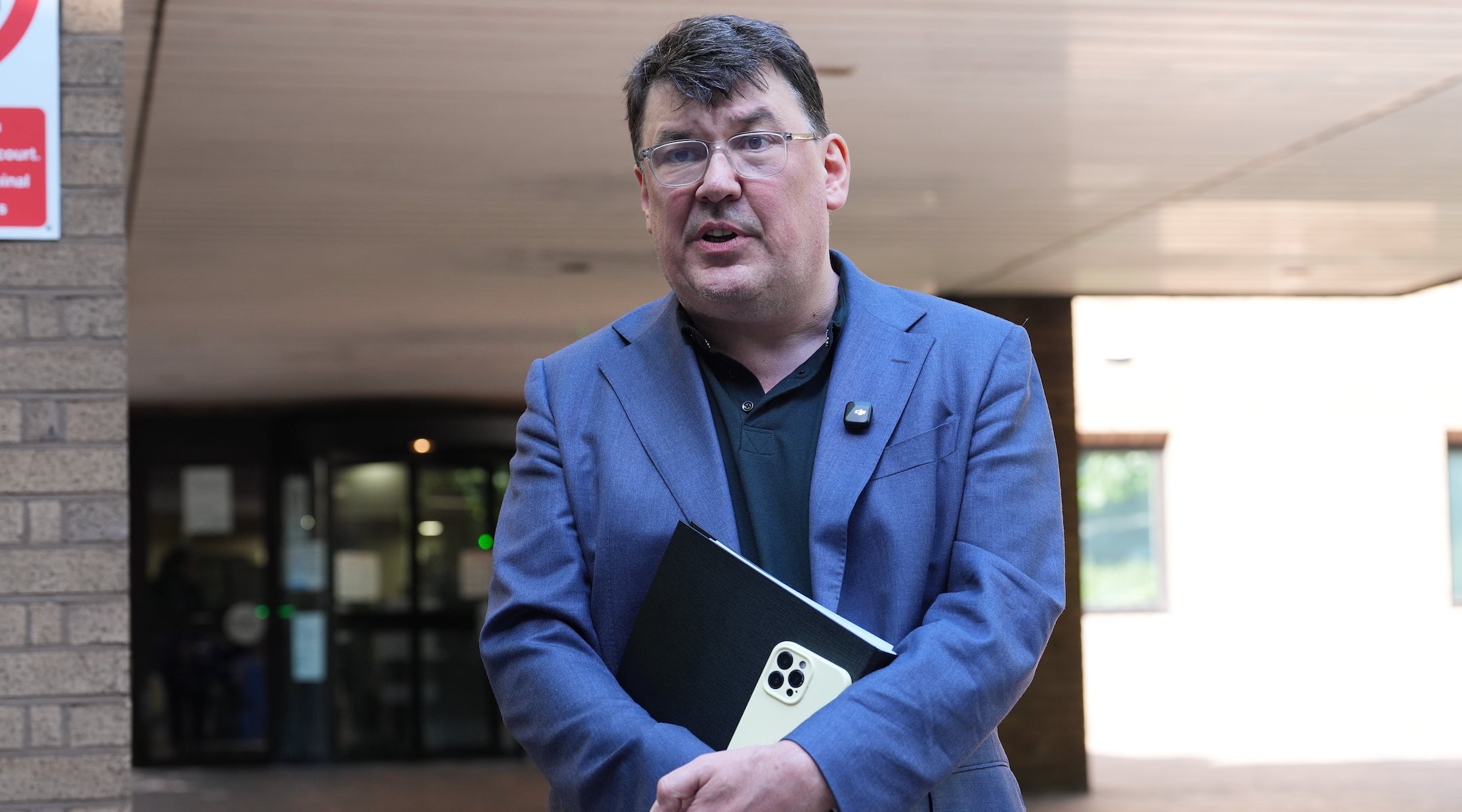
Irish comedy writer Graham Linehan accused Ireland’s public broadcaster of “disgraceful antisemitism” over its decision not to air this year’s Eurovision Song Contest because of Israel’s participation — even as his work will get prime airtime as a result.
Instead of airing the annual international song contest’s finale Saturday, which Ireland and four other nations have boycotted this year over Israel’s participation, the country’s public broadcaster, RTÉ, is scheduled to air an episode of “Father Ted,” a beloved Irish sitcom that Linehan co-created.
“I am disgusted that Father Ted is being used as a fig leaf to cover RTE’s disgraceful antisemitism,” Linehan wrote in a post on X on Tuesday. He later added that the broadcaster was “turning Father Ted into an antisemitic dogwhistle.”
Linehan, who has become a prominent anti-transgender activist in recent years, also posted an online petition on Monday calling for the resignation of RTÉ Director General Kevin Bakhurst over the broadcaster’s decision not to air the Eurovision finale because of Israel’s participation.
“I did not give my permission for Father Ted to be used as a prop in an antisemitic political gesture. I object to it in the strongest possible terms,” Linehan wrote. “This is not the Ireland I know. This is not the Ireland that gave Father Ted to the world. RTÉ’s institutional antisemitism is poisoning Irish public life, normalising Jew-hatred under the guise of solidarity, and it must be confronted.”
Linehan’s petition, which had garnered over 4,000 signatures by Wednesday afternoon, comes months after RTÉ announced plans to boycott the competition in December, writing in a statement at the time that its participation “remains unconscionable given the appalling loss of lives in Gaza and the humanitarian crisis there.”
On Tuesday, Israel’s Eurovision contestant Noam Bettan was met by chants of “stop the genocide” as he performed his song “Michelle” in Vienna. Bettan’s semifinal qualified him to perform in Saturday’s finale, where he will compete against entrants from 25 other countries.
Bettan told the BBC that he was shocked by the protests, and hoped that the public broadcasters of Iceland, Ireland, Spain, the Netherlands and Slovenia would return for next year’s competition.
“It’s bad for them,” Bettan said. “They’re losing the opportunity to be in this amazing experience. So I am full of hope that next year they can sing and spread their light.”
Reporting the stories that define our era. When history unfolds in real-time, the Jewish world turns to JR. Your support ensures we can document the complexities of war and the resilience of Jewish communities with integrity.