

It’s said that no dog barked when Israelites prepared
to leave the land of Egypt in the middle of the night.
The reason surely isn’t that no canine dared
to bark, but that they felt that only Jews had earned the right
to praise the Lord for saving them and that they tried
to be just like the celebrated Hound in Silver Blaze
whose nighttime silence would to Sherlock Holmes provide
an answer that is like the question the fourth son won’t raise,
solved by the great detective as the fourth son’s father
should try to solve the problem of his son, non-asking lamb,
whose silence is a problem that implies we’d rather
his mother answered, Sherlock look-alike, midrash madame.
It occurred to me, rereading this, the reason why no dog
barked is since, like Kafka’s investigative dog, they suffered from brain fog.
Exod. 11:6-7 states:
ו וְהָיְתָה צְעָקָה גְדֹלָה, בְּכָל-אֶרֶץ מִצְרָיִם, אֲשֶׁר כָּמֹהוּ לֹא נִהְיָתָה, וְכָמֹהוּ לֹא תֹסִף. 6 And there shall be a great cry throughout all the land of Egypt, such as there hath been none like it, nor shall be like it any more.
ז וּלְכֹל בְּנֵי יִשְׂרָאֵל, לֹא יֶחֱרַץ-כֶּלֶב לְשֹׁנוֹ, לְמֵאִישׁ, וְעַד-בְּהֵמָה–לְמַעַן, תֵּדְעוּן, אֲשֶׁר יַפְלֶה יְהוָה, בֵּין מִצְרַיִם וּבֵין יִשְׂרָאֵל. 7 But against any of the children of Israel shall not a dog whet his tongue, against man or beast; that ye may know how that the LORD doth put a difference between the Egyptians and Israel.
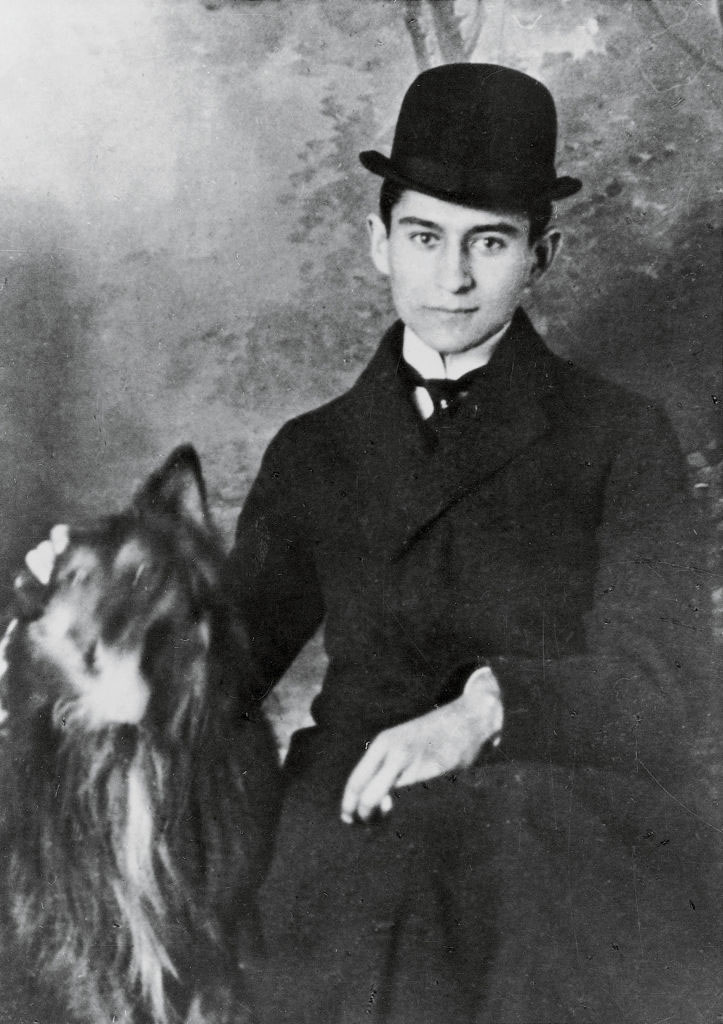
This poem proposes that the silence of the fourth son in the haggadah , who does not know how to ask any question, is comparable to that of the dogs who didn’t bark when God was killing the Egyptian firstborn, not only foreshadowing the failure of the hound in Conan Doyle’s Silver Blaze to bark but also foreshadowing the dog in Kafka’s story, “Investigations of a Dog.”
Aaron Schuster writes in “Kafka’s Screwball Tragedy: Investigations of a Philosophical Dog,” 12/13/24:
Written toward the end of Franz Kafka’s life, “Investigations of a Dog” is one of the lesser-known and most enigmatic works in the author’s oeuvre. Kafka didn’t give the story a title, writing it in the autumn of 1922 but leaving it unpublished and unfinished. It was published posthumously in 1931 in a collection edited by his friend and biographer Max Brod, who named it Forschungen eines Hundes — which could also be translated as “Researches of a Dog,” to give it a more academic ring.
The name Kafka is popularly associated with the horrors of a grotesquely impenetrable legal system, but there is another aspect to his work, which concerns knowledge. “Investigations of a Dog” presents a brilliant and sometimes hilarious parody of the world of knowledge production, what the French psychoanalyst Jacques Lacan called “the university discourse.” And the contemporary academy might easily be qualified as Kafkaesque, with its nonsensical rankings and evaluations, market-driven imperatives, and exploding administrative ranks.
But Lacan’s term was less about targeting the mismanagement of the modern university and more about highlighting the broad shift in the structure of authority — where knowledge and power combine to establish systems of administration operating in the name of reason and technical progress. And this is where Kafka’s dog comes in, to question this new order, to excavate the underside of its supposed neutrality, to propose another way of thinking, even, perhaps, a way out.
Gershon Hepner is a poet who has written over 25,000 poems on subjects ranging from music to literature, politics to Torah. He grew up in England and moved to Los Angeles in 1976. Using his varied interests and experiences, he has authored dozens of papers in medical and academic journals, and authored “Legal Friction: Law, Narrative, and Identity Politics in Biblical Israel.” He can be reached at [email protected].