

So much keeps happening around the world daily—and the brainwashing spin cycle of social media is so distracting—it’s difficult to glean the significance of certain events, especially when they converge.
And if you’re singularly obsessed with Donald Trump—whether as a die-hard America Firster, a brainless Bolshevik, or a gullible, needy Jew clinging to the cool kids in the school cafeteria—you’ll easily miss the most monumental takeaway of the week.
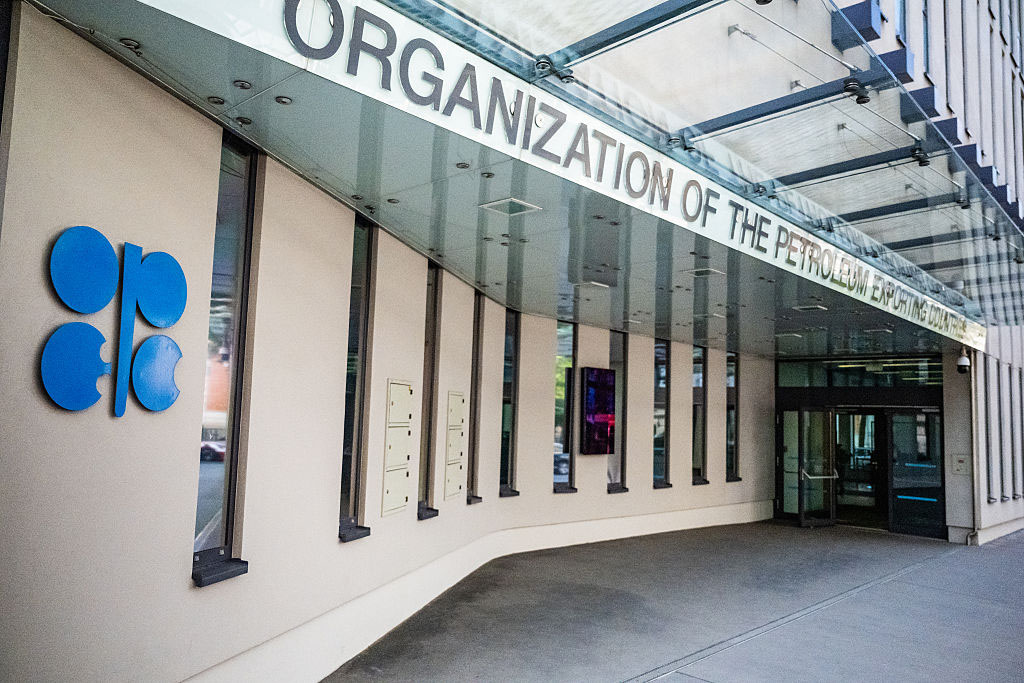
The United Arab Emirates (UAE), a leading exporter of oil within the cartel known as OPEC, which regulates the production and pricing of global energy markets, abandoned its largely Arabic brothers and has decided to go it alone—after nearly six decades and without consulting with Saudi Arabia, the cartel’s ostensible leader.
The departure of the UAE is devastating news for Arab alliances and great news for Israel. It demonstrates that the Abraham Accords, initiated by the first Trump administration (with appallingly insufficient fanfare), weren’t merely symbolic. They were transactional. Israel offered investment opportunities, access to first-tier technology, and perhaps most important of all, national security.
The UAE, third on the list of OPEC’s major oil producers behind Saudi Arabia and Iraq, has wanted to export more of its natural resources but has been constrained by the cartel’s quotas. Saudi Arabia is now left to wonder whether its grip on oil markets is in jeopardy. Does the UAE’s move portend more OPEC defections? The UAE might also withdraw from the Arab League and the Organization of Islamic Cooperation.
After all, the Emirates has the second‑largest economy in the Gulf. Dubai, its financial hub, is the Wall Street of the Persian Gulf. The Emirates also has the most advanced fighting force in the Arab world. Its investments and partnerships in such enterprises as culture, sports, finance, luxury brands, and technology make it resemble a Western nation stuck in the time warp of the “Arabian Nights.”
At a time when the United States is at war with Iran (also an OPEC member state), resulting in a blockade of the Strait of Hormuz and the destabilization of energy markets, the UAE’s exit is not a good sign for Arab and Muslim solidarity.
If anything, it signals that the Emirates is prepared to go solo in pursuing its own economic interests, especially when it comes to its deepening ties with Israel. The old alliances of the region—and the enmity demanded against Israel—have undergone a dramatic change.
But not really a surprising one, however, at least from the UAE’s perspective. After all, this neighbor of Iran became a casualty of the war the United States and Israel launched against the Islamic, fanatical regime. The UAE was forced to withstand 550 ballistic and cruise missiles and more than 2,200 drone strikes, which killed Emiratis and damaged military sites and civilian infrastructure.
Israel responded to the distress call from its newest ally by providing Iron Dome batteries—its most lethal defensive weapon and something it has never done before. Dozens of Iranian missiles never reached their targets as a result. One Emirati official said, “We are not going to forget it.”
This wasn’t Israel’s first foray in rescuing the UAE from a mortal enemy. Two years after the Abraham Accords were signed, Houthi terrorists launched missiles at Abu Dhabi. Israel sent air-defense batteries to protect against further attacks.
These were all the unintended consequences and much welcomed gratuities of entering into the Abraham Accords. The UAE was, in fact, the first nation to normalize relations with Israel, which led to full diplomatic, economic, and cultural ties, and almost immediately paid dividends in trade, tourism, and technology.
Undoubtedly Iran has been aiming at the Emirates for the same reason it armed and trained Hamas for its October 7, 2023 surprise attack: to torpedo the Abraham Accords and to punish the UAE for developing a regional friendship with the Jewish state—a relationship that continued even after Israel bombed Gaza and Lebanon to root out and eliminate Iran’s proxies.
Israel certainly knows how to treat an ally, especially one that has borne the brunt of its new alliance. No other Gulf or Arab nation has come to the UAE’s defense.
The other Abraham Accord signatories surely have come to realize that they, too, face a common adversary: radical Islam and its terror outfits—all of which emanate from Iran, as chief sponsor.
Israel may still not be surrounded by close friends, but it’s a much different world from that which existed in the aftermath of its Six-Day War back in 1967. After routing three armies and turning Egypt’s Air Force into a scrap metal junkyard, Israel offered to return the Sinai Peninsula and the Golan Heights, which it had just captured from Egypt and Syria, respectively, in exchange for peace.
The Arab League hosted a summit less than two months later in Khartoum, Sudan, to discuss Israel’s proposal. There it issued the Khartoum Resolution, otherwise and colloquially known as the “The Three No’s”: No peace with Israel; no recognition of Israel; no negotiations with Israel.
Now that Iran is on its last legs and the Emirates sees how much taller it stands beside Israel, the Islamic nations joining the Abraham Accords are no longer so antisemitically obstinate. And their numbers are likely to swell.
Now that Iran is on its last legs and the Emirates sees how much taller it stands beside Israel, the Islamic nations joining the Abraham Accords are no longer so antisemitically obstinate. And their numbers are likely to swell.
My God (perhaps, Allah?), did Iran misread the motivations of the Middle East and misjudge Israel’s resilience and military might. They also underestimated the first-strike cowboy determination of Donald Trump.
They also ruefully discovered that the monarchs of the Persian Gulf appreciate money more than martyrdom, are more suspicious of Shia Muslims than Israelis, and have an abject aversion to terrorism because it’s bad for business and leads to lives lost and property blown to bits. Besides, what kind of a nation thinks having its people scream “Death to America!” and “Death to Israel!” is a good look?
It didn’t have to be this way. Islam is a relatively new religion—500 years younger than Christianity. During biblical days, Jews and Arabs, both Semitic peoples, traded in souks and traveled in caravans. It wasn’t always civil, but overall, it was far less murderous.
In the 1959 epic “Ben-Hur,” which received 11 Academy Awards, a Jewish prince leads a team of Arabian horses to victory in Roman-occupied Jerusalem. The stadium is filled with ecstatic Arab spectators cheering on the Jew.
Centuries later came political Islam, which was a disaster for Semitic harmony, and even worse for the Western World. Political Islam simply won’t reform. We no longer hear about moderate Muslims because such a characterization has become a misnomer.
To practice Islam is to assiduously follow a Sharia-loving, anti-infidel, Jew-hating, global-conquest script. For the world to be rid of terrorism and the fetishization of caliphates, Islam must do what Catholics did under Vatican II: modernize its practices and improve relations with other faiths. That’s what denominational Judaism and Talmud study seeks to achieve each day—taking a critical look at Jewish laws and customs and debating their contemporary relevance.
The sibling biblical rivalry between Isaac and Ishmael never had a chance. But today’s Israelis and Arabs do.
The sibling biblical rivalry between Isaac and Ishmael never had a chance. But today’s Israelis and Arabs do.